Blog
Refer-a-Friend Examples
5 Powerful Examples of Referral Programs in Fintech Marketing
Courtenay Roche

Products
Enterprise platform
Platform features
Acquisition programs
Retention programs
Learn
Resources
Developers
Documentation
SDKs & GitHub
Blog
Courtenay Roche
Many of the world's leading fintech brands can attribute their early success to high-visibility (even viral) referral programs that drove fast, low-cost user growth. PayPal famously offered a $20 referral bonus in its startup days, a move that is still studied by businesses today looking to emulate their impressive scaling. Since PayPal, referrals have become a staple in fintech marketing, as these five examples prove. Here is why referrals are especially effective for financial services:
These five innovative payments solutions, banks, and investment platforms have one thing in common: they all leveraged the power of referrals to drive user acquisition and retention. Here’s is what each of their programs looks like, and why they are so successful.
Mobile-only banking service Chime drew attention and users to their platform when they announced a $100 referral reward for both advocates and their referred friends. Per program rules, users can receive a referral bonus only after their friend makes a new account and sets up a direct deposit of at least $200 within 45 days. With the opportunity to earn up to $500, this referral bonus is one of the highest currently offered by any fintech brand. [caption id="attachment_22484" align="aligncenter" width="277"]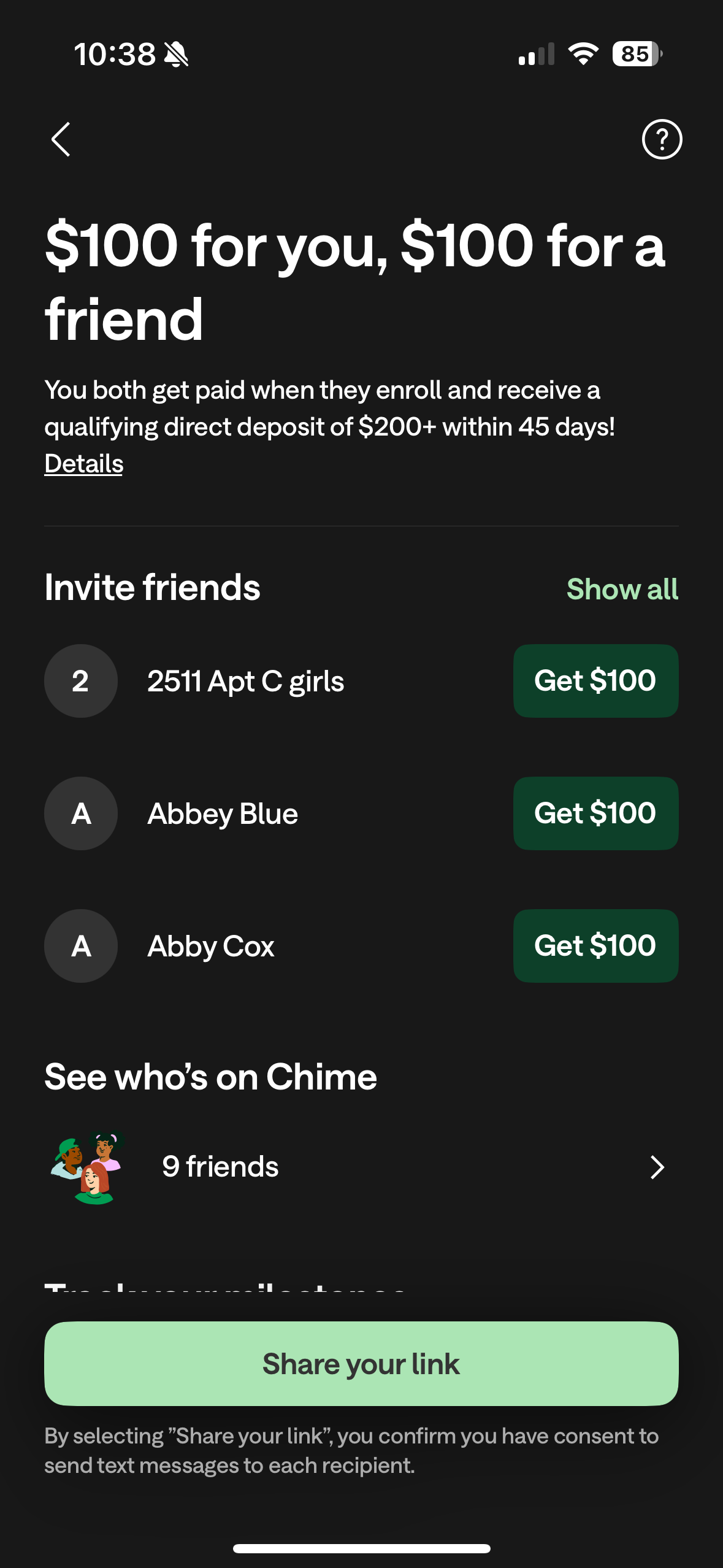 Chime's referral program share page highlights their compelling reward to entice participants.[/caption]
Why Chime’s Referral Program works:
One of the earliest fintech giants to prove the power of referrals, PayPal famously offered $5–$20 sign-up bonuses to both parties in its program. This strategy not only fueled PayPal’s viral growth in the early 2000s but also set the standard for how fintech companies could scale through peer-to-peer referrals. [caption id="attachment_22485" align="aligncenter" width="694"]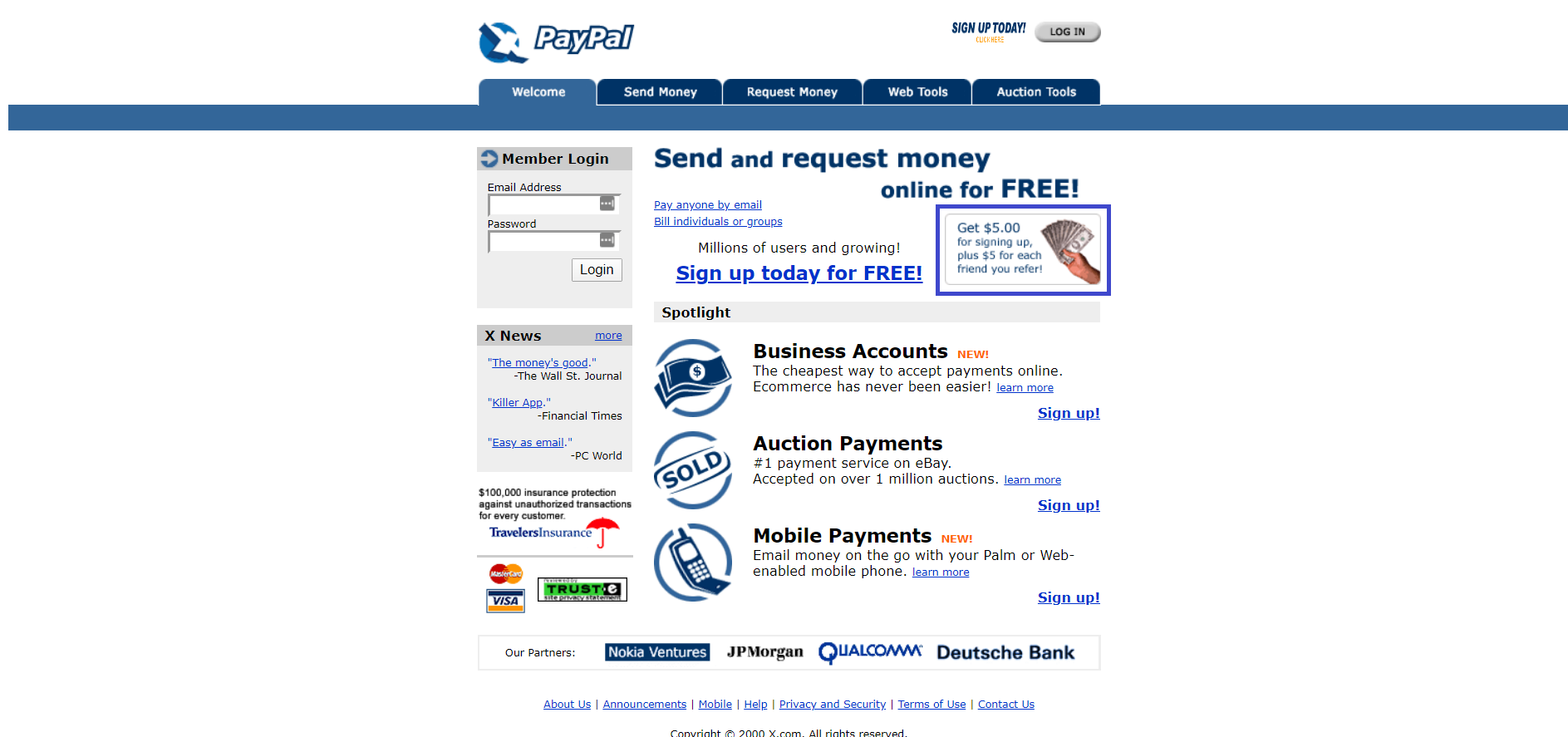 PayPal's website (pictured here circa 2000) advertised its referral program on the homepage.[/caption]
Why PayPal's Referral Program Works:
Robinhood tapped into its millennial audience by gamifying referrals. Instead of a flat cash reward, Robinhood offers free stocks to both the advocate and the referred friend. This approach feels relevant to the product, creates excitement, and encourages users to check back and engage with their portfolio. [caption id="attachment_22486" align="aligncenter" width="257"]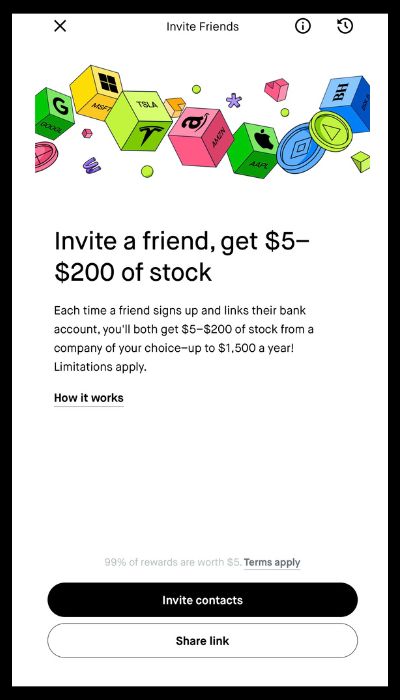 By offering customers a mystery stock, Robinhood made referral rewards exciting in a whole new way.[/caption]
Why Robinhood’s Referral Program Works:
As one of the leading crypto exchanges, Coinbase incentivizes referrals with cryptocurrency rewards. Coinbase gives both users a piece of Bitcoin worth $200 for signing up and completing a deposit and an eligible cryptocurrency trade. The reward aligns perfectly with the interests of its crypto-savvy audience. This strategy drives signups and encourages immediate product engagement. [caption id="attachment_22487" align="aligncenter" width="515"]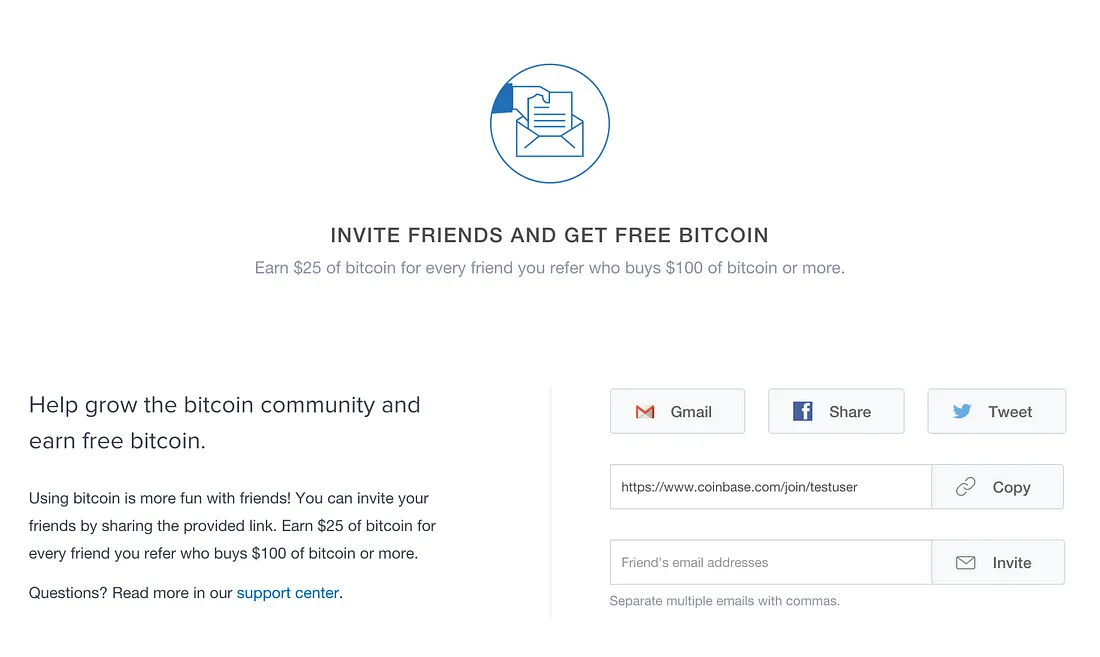 A reward tailored to user interests like Coinbase's feels more personal — and compelling.[/caption]
Why Coinbase's Referral Program Works:
SoFi, a leading personal finance platform, offers cash bonuses to both advocates and their referred friends once the new user opens an account and meets certain criteria, such as making a qualifying deposit. The referral reward amount varies depending on the specific product being referred; some products, like private student loan refinancing, let customers earn up to $1,500 from a successful referral. [caption id="attachment_22489" align="aligncenter" width="555"]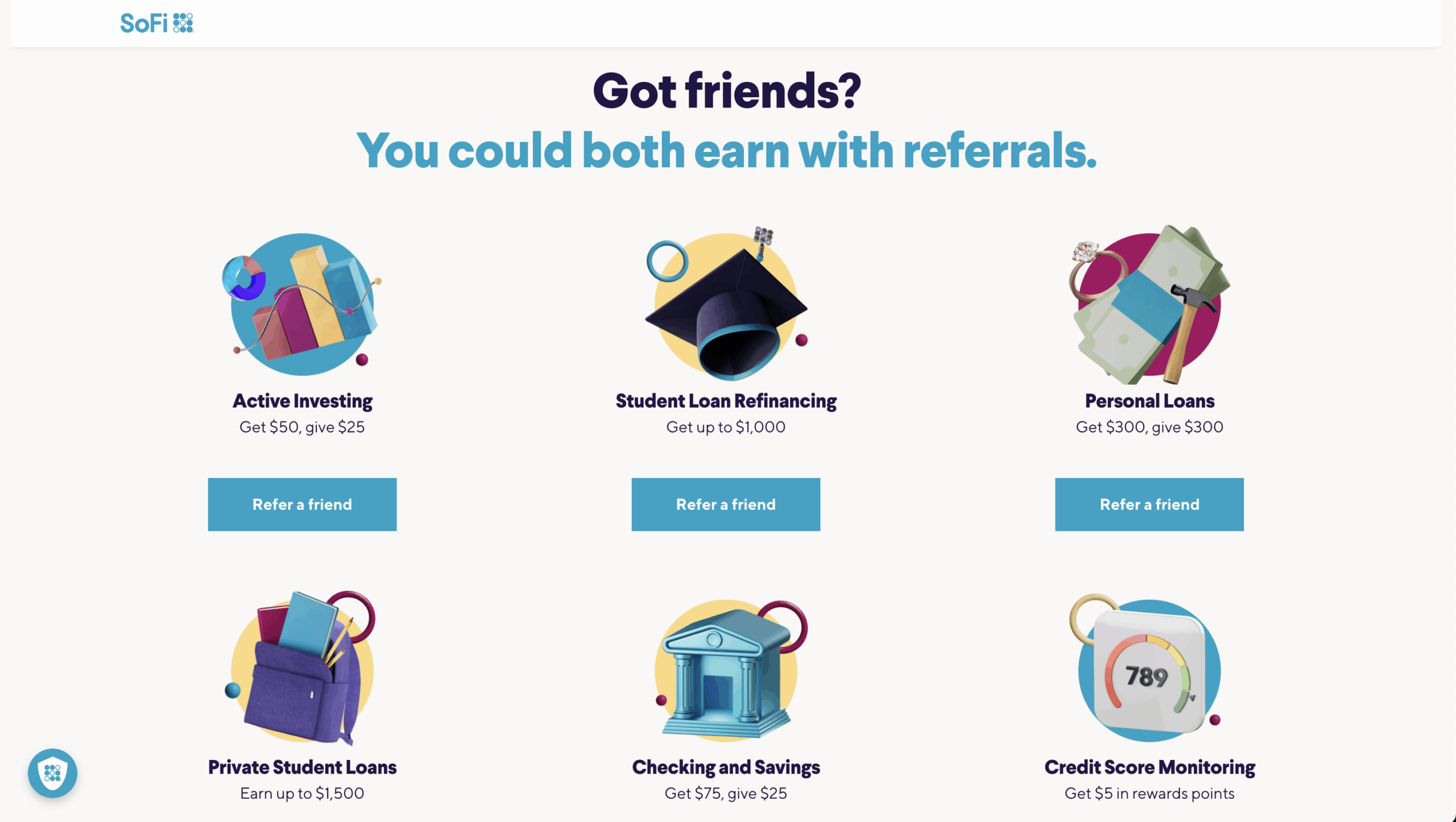 Sofi encourages engagement with multiple products by offering separate rewards for each one.[/caption]
Why SoFi's Referral Program Works:
High-value referral rewards in fintech attract not only loyal customers, but also bad actors looking to exploit the system. A $100 referral bonus or a $200 crypto reward is a meaningful financial incentive — and fraudsters will attempt to collect it through fake accounts, self-referrals, and coordinated abuse schemes. The referral programs above work in part because of the fraud controls built into the platforms and program designs behind them. Here is how modern referral tools reduce fraud:
The best referral programs — and the platforms that power them — treat fraud prevention not as a bolt-on afterthought but as infrastructure. For fintech brands where trust is foundational and rewards carry real financial value, the ability to deliver the right reward to the right person, and to prove it, is just as important as the referral experience itself.
Referral programs have proven to be one of the most effective growth strategies in fintech — from PayPal's early viral success to modern players like Chime, Robinhood, SoFi, and Coinbase. By rewarding users for spreading the word, these companies have reduced acquisition costs, built trust, and strengthened customer loyalty. The lesson for fintech marketers is clear: a well-designed referral program program can accelerate adoption while deepening relationships with your existing customers. Make rewards compelling, align incentives with your audience, build in qualification requirements that deter abuse, and motivate continuous user engagement to maximize impact. Whether you’re are an established fintech brand or a fast-growing startup, referral programs can deliver sustainable, scalable growth. The key is to learn from proven examples and adapt best practices to your own unique value proposition — including the fraud controls and program integrity measures that keep your reward investment working for real customers.
Self-referral abuse is the most common form — a user creates one or more fake accounts using different email addresses, refers themselves, and attempts to collect both sides of the reward. High-value fintech bonuses make this especially attractive to bad actors.
Modern referral tools use a combination of identity checks, device fingerprinting, IP analysis, and behavioral monitoring to identify accounts that share device signals, appear in rapid succession, or follow identical onboarding paths without genuine engagement.
Yes. Tying rewards to a meaningful action — such as a minimum deposit, an active trade, or a direct deposit setup — raises the cost of fraud significantly. Fake accounts rarely complete real financial transactions, which is why programs like Chime and Coinbase use this approach.
Depending on the platform, flagged referrals may be held for manual review, blocked automatically, or placed in a pending state until additional verification is completed. Rewards are not issued until a referral passes all eligibility and fraud checks.
Well-designed fraud prevention is invisible to honest participants. The best referral platforms apply stricter checks only when risk signals are present, minimizing friction for genuine referrers while stopping abuse before any reward is issued.

Glossier’s marketing is a digital-first word-of-mouth approach to skin care and beauty products. They’ve transformed into one of the most successful D2C beauty brands in the cosmetics industry today.

Referral programs are a low-cost, high-reward way to scale your business quickly using your best asset: your customers. By turning your customers into brand advocates, you can…

If Google Ads suddenly cut you off tomorrow—turned off every campaign, blocked future spend, and deleted your account—would your business keep growing?