Blog
Refer-a-Friend ExamplesReferral Program Ideas
9 Proven Referral Ideas That Increase Repeat Purchases
Courtenay Roche


Products
Enterprise platform
Platform features
Acquisition programs
Retention programs
Learn
Resources
Developers
Documentation
SDKs & GitHub
Blog
Courtenay Roche
Acquisition keeps getting more expensive, so the second and third purchase matter more than ever. Referral programs can do more than bring in new customers. The right referral ideas also pull existing customers back to buy again. This guide shares nine practical referral ideas that increase repeat purchases, plus how to choose the ones that fit your brand.
Referral ideas increase repeat purchases when the reward brings the advocate back to buy again. Store credit, loyalty points, and tiered perks all give customers a reason to return. Connecting those rewards to a loyalty program compounds the effect over time. Referrals are often treated as acquisition only, yet referred customers tend to stay longer and spend more. A peer-reviewed marketing study of roughly 10,000 banking customers found that referred buyers were more valuable and more loyal. Referred customers were "approximately 16% more valuable to the bank" over six years (Schmitt, Skiera & Van den Bulte, Journal of Marketing , 2011). That study is banking-specific, but Extole sees the same pattern across retail. Extole's own LTV optimization tactics report shows that a referred customer's first purchase reached nearly 2x that of other buyers at one clothing retailer. At a home-furnishings retailer, 30% to 50% of repeat purchasers were advocates and referral recipients. The takeaway is simple. Treat referral as one part of a broader offer and loyalty system, not a standalone acquisition channel.
Great referral ideas rest on a few fundamentals. Get these right before you add advanced mechanics.
Reliable execution is where refer-a-friend software earns its keep. It confirms who qualifies and delivers the right reward at scale.
Here are nine referral ideas that turn one-time buyers into repeat customers. Each includes a quick example you can adapt.
Store credit ties the reward to a future order, so the advocate returns to spend it. Cash rewards can leave your ecosystem, while credit keeps that value inside your store. Example: a retail brand issues $20 in credit that applies automatically at the advocate's next checkout. For help matching rewards to your category, see Extole's guide to choosing a referral incentive.
[caption id="attachment_23328" align="aligncenter" width="672"]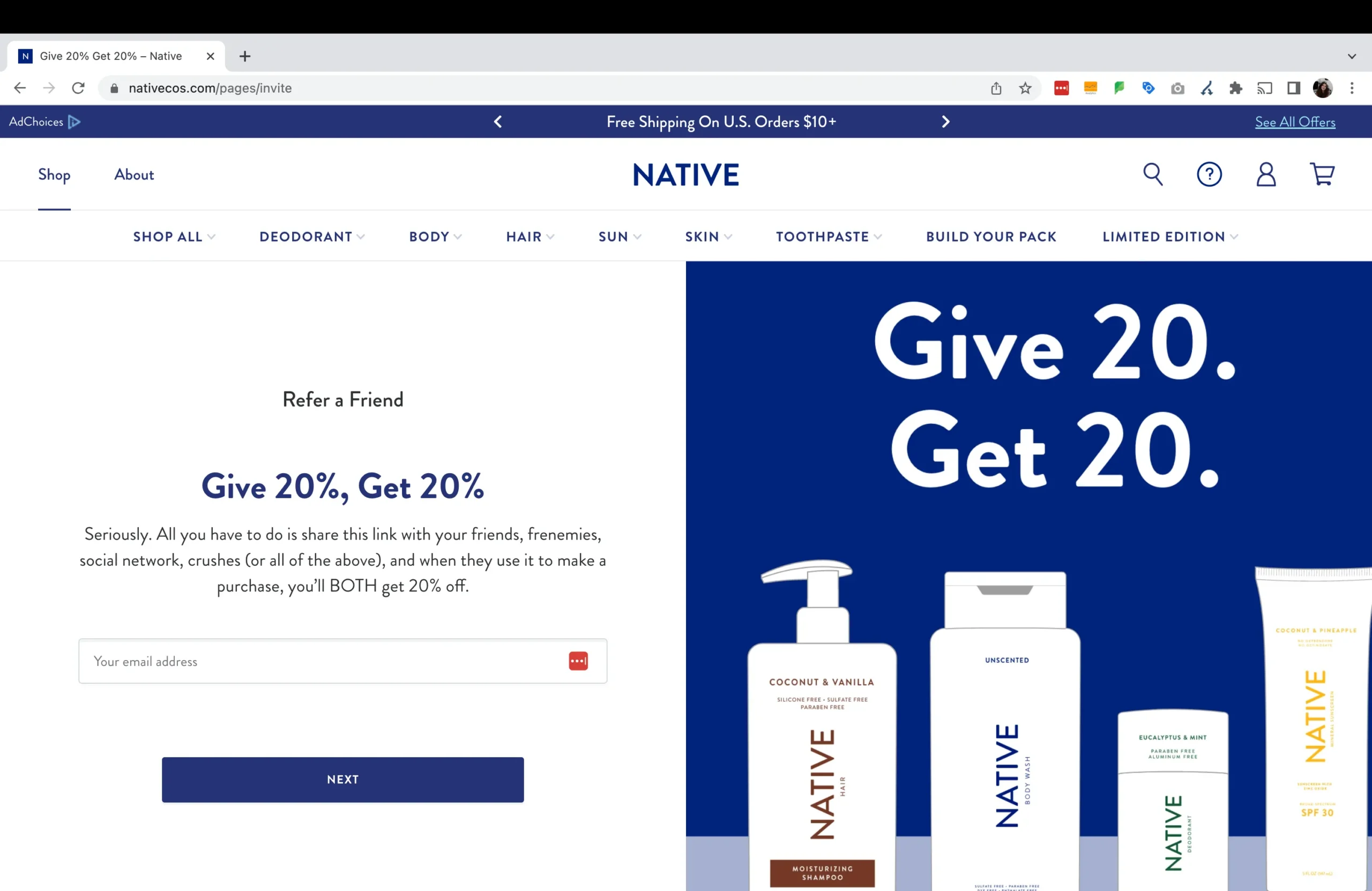 Native's referral program uses two-sided rewards to encourage re-engagement from both advocates and referred friends.[/caption] Double-sided rewards give both the advocate and their friend an incentive, so sharing feels generous and natural. This give-get structure is now standard practice. The state of referral marketing report found "94 percent of ecommerce and retail referral programs are double-sided." Example: a "give 20%, get 20%" offer rewards the friend's first order and the advocate's next one.
Set the reward to your price point, margin, and purchase frequency. Customers also carry clear expectations for what a referral is worth. A 2024 consumer referral research report found shoppers expect a minimum reward of "$21 or 11 percent discount." Example: use a flat-dollar reward for high-priced items and a percentage or free product for frequent, lower-cost buys.
[caption id="attachment_22750" align="aligncenter" width="838"] USMobile offers tiered rewards that increase with the number of friends you refer.[/caption] Tiered rewards give your most active advocates escalating bonuses and status as they refer more. A small group of advocates usually drives most referrals, so rewarding them harder pays off. Offer a particularly high-value reward at special milestones, such as after 5 successful referrals, to give advocates a goal to work towards. Extole's referral marketing statistics show that 20% of advocates drive 80% of referrals. Example: unlock a bigger reward and VIP status after an advocate's third successful referral.
Feed referral rewards into the same points balance that customers already earn. One action then compounds toward tiers, perks, and the next purchase. Extole's loyalty program ideas show how referral and loyalty can operate on a single platform. Example: a refer-a-friend invite earns points that move the advocate closer to a VIP tier.
[caption id="attachment_22714" align="aligncenter" width="826"]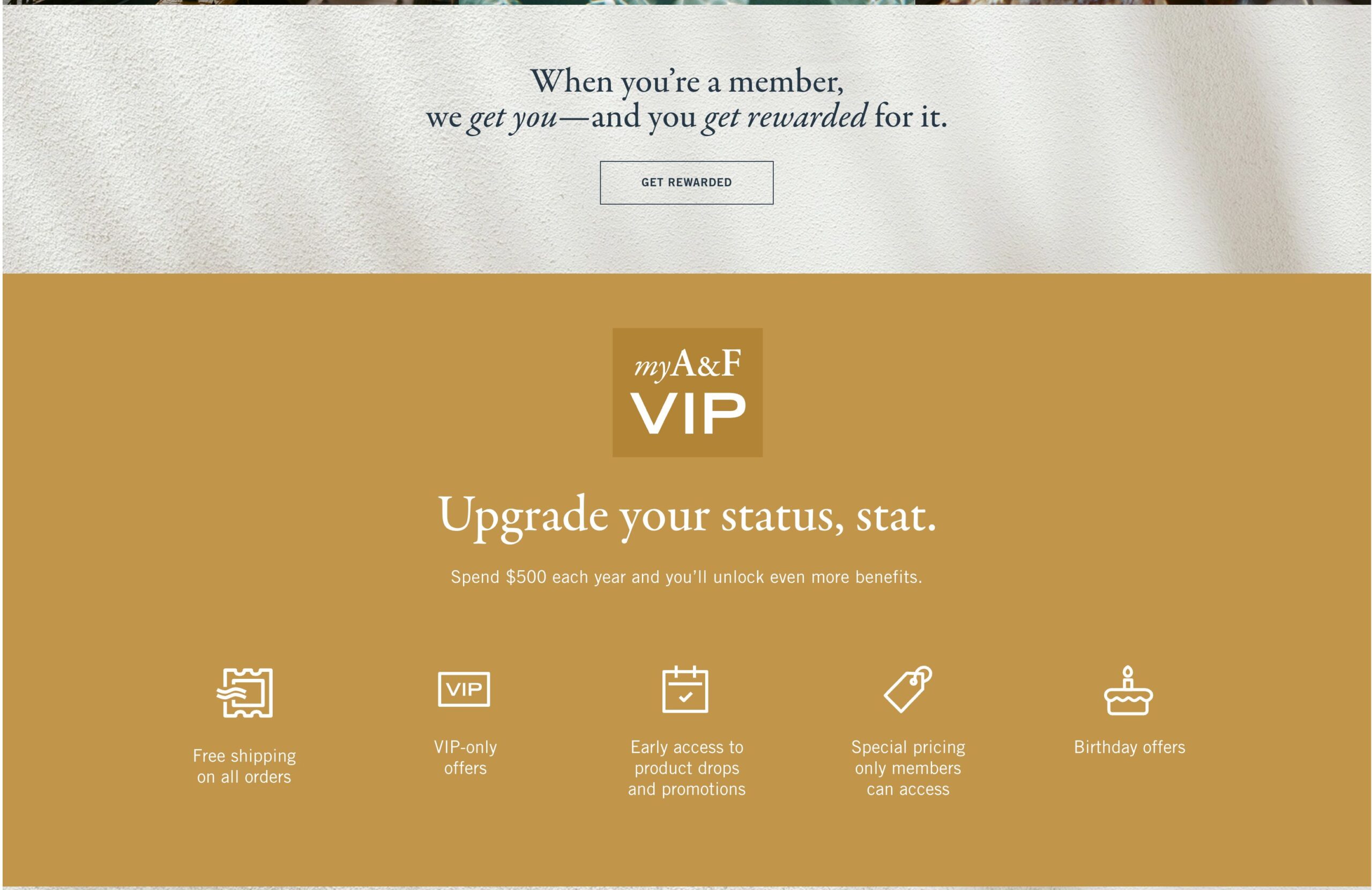 Abercrombie's VIP program is a great example of what non-monetary rewards can look like: free shipping, early access to products, and birthday gifts are non-traditional incentives that still pack a punch.[/caption] Non-cash rewards like early access, exclusive products, or premium service deepen affinity and bring customers back. These ideas span industries, from retail early access to telecom service perks or hospitality experiences. For inspiration, browse Extole's roundup of referral program examples across industries. Example: give advocates first access to a new product drop before it reaches the public.
Ask for the referral when customers feel best about your brand. Strong moments include post-purchase, delivery confirmation, and a five-star review. Event-based triggers can also invite advocates before a reward is about to expire. Example: send the invite right after a customer leaves a five-star review, when enthusiasm is highest.
[caption id="attachment_23394" align="aligncenter" width="403"]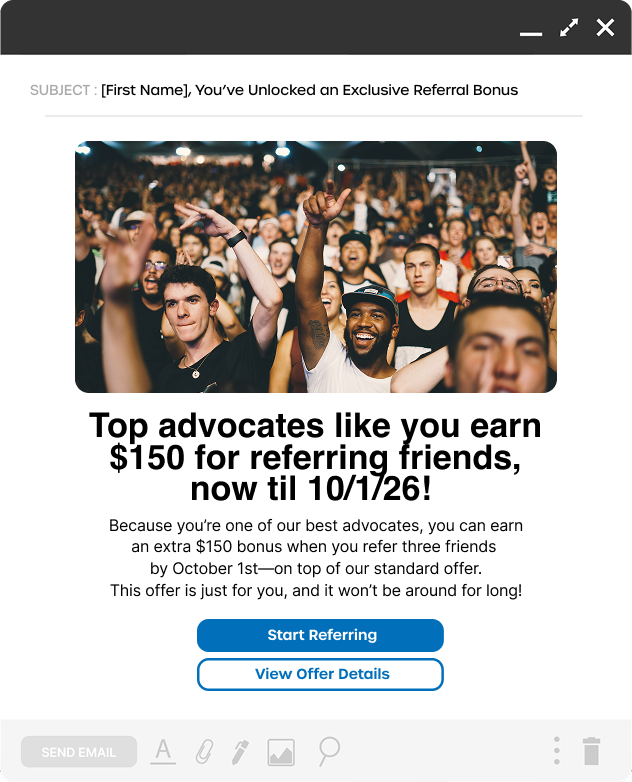 Segment audiences to share targeted offers that resonate with each group, such as high-value rewards for top advocates.[/caption] Use behavior and purchase history to tailor which reward and message each advocate sees. Relevant offers convert better and bring back higher-value buyers. Personalization is a proven lever, and Extole's guide to increasing customer lifetime value shows how tailored content lifts conversions. Example: offer loyal VIPs an exclusive perk while new buyers get a first-order discount.
Let advocates share a specific product, bundle, or routine instead of a generic homepage link. Contextual recommendations convert friends faster and keep advocates engaged with your catalog. Advocates who refer also tend to refer again. Referral contagion research found referred customers "make 31%–57% more referrals than nonreferred customers" (Gershon & Jiang, Journal of Marketing Research , 2025). Example: let a skincare fan share the exact routine they use, with each product linked.
| Prioritize by audience, incentive model, purchase cycle, and program maturity. Start here: pick a double-sided reward the advocate must return to redeem, then layer tiers and loyalty as you grow. Use this comparison to match a reward type to your goals: Reward Type | Best For | Why It Drives Repeat Purchases | Example |
|---|---|---|---|
| Store credit | High average order value | Applies to the next order, so the advocate returns to spend it | $20 credit at the advocate's next checkout |
| Loyalty points | High purchase frequency | Stacks across orders and compounds toward tiers | Points that move the advocate toward a VIP tier |
| Percentage discount | Frequent, lower-cost buys | Lowers the next order's price to prompt a fast repeat | A "give 20%, get 20%" offer on the next order |
| Tiered rewards | Super-referrers | Escalating bonuses reward each new referral and return visit | A bigger reward after a third successful referral |
| Creative, non-cash rewards | Brand affinity and differentiation | Exclusive access brings advocates back for more | Early access to a new product drop |
Extole is an enterprise offer management platform, not only referral software. It connects the ideas above in one configurable system for retail, financial services, telecom, and home services.
The best referral ideas reward advocates in ways that bring them back to buy again. Connect those rewards to loyalty, reach customers at their happiest moments, and measure repeat-purchase impact. Then scale what works. Ready to build, optimize, or scale your program? Book a demo with Extole.
Rewards redeemed on a future order, such as store credit or loyalty points, work best because they bring the advocate back to buy again.
A good bonus fits your margin and matches customer expectations, often near a $20 credit or a low double-digit percentage.
Try early access, exclusive products or bundles, premium service, or mission-based giving to stand out from plain discounts.
Use tiered rewards, bonuses, and status so that repeat referrals feel rewarding, and thank your top advocates personally.
Yes. Referred customers often stay longer and spend more, which lifts lifetime value over time.
Yes. Start with one simple double-sided offer, then add tiers and loyalty as your customer base grows.
Track repeat-purchase rate and lifetime value for referred versus non-referred customers, and watch how advocates behave after they refer.
Ask at peak-happiness moments, such as just after purchase, delivery, or a five-star review.
Double-sided rewards usually drive more participation because both people benefit, though the best choice depends on your margins and audience.

Most enterprise referral, loyalty, and offer platforms support CRM integration. The strongest options enable omnichannel program data, such as contacts, events, and rewards, to…

Reward program integration for mobile apps connects a rewards, referral, or loyalty program to your iOS, Android, or React Native app. Users can then earn, track, and redeem…

The best advocacy platform is not one product. It is the platform that matches the type of advocacy you run and the scale you need. For enterprise and mid-market B2C brands,…