Blog
Customer AcquisitionOffer ManagementTelecom
How Offer Management Platforms Drive Subscription Growth for Telecoms and ISPs
Courtenay Roche


Products
Enterprise platform
Platform features
Acquisition programs
Retention programs
Learn
Resources
Developers
Documentation
SDKs & GitHub
Blog
Courtenay Roche
Telecom companies and internet service providers operate in one of the world's most fiercely competitive markets. With customer acquisition costs rising, churn running high, and carrier promotions eating into margins, the brands that are pulling ahead are those that have figured out how to build deeper, more productive relationships with their customers by providing targeted offers for upgrades, referrals, and more. This guide is for telecom operators, ISPs, MVNOs, and fiber providers looking to invest in offer management platforms. We'll cover what makes telecom offer programs uniquely complex, which capabilities your platform must have, how Extole is purpose-built for the demands of this industry, and how the Go Extole mobile app is transforming the way field teams turn in-person moments into subscriber growth.
The telecom sector faces a unique growth paradox: nearly everyone already has a phone, a data plan, or a broadband connection. The market is saturated. In this environment, the single most persuasive acquisition channel is also the most overlooked: a recommendation from someone you trust. Consider what the data says:
For an industry where subscriber acquisition is costly and churn is a constant pressure, it is critical to develop a growth strategy that targets high-quality, low-cost subscribers.
Many telecom companies have run some version of a refer-a-friend program, but most are limited: a generic landing page, a flat $25 reward, a manual review process, and little to no visibility into what's working. These programs under-perform not because referral doesn't work in telecom—it absolutely does—but because they are running on platforms that aren't built to handle the complexity of the Telecom subscriber lifecycle. The gap between basic and enterprise-level software shows up in the types of programs you can run. This table lays out what a generic program looks like and the features of a program that has a real impact on subscriber growth, churn, and customer engagement:
| Basic Telecom Offer Programs | Enterprise Telecom Offer Programs |
|---|---|
| One-size-fits-all program | Targets multiple subscriber segments with unique messaging, rewards, and creative for each |
| Exclusively rewards referrals | Rewards a variety of actions (sign-ups, upgrades, plan changes, family additions, referrals, etc.) |
| Manual reward delivery, no conversation with billing and provisioning systems | Automated status-based reward delivery integrated with client billing system |
| Customer-to-customer referrals only | Support for employee-to-customer referrals, employee-to-leasing agent, and other field referral programs—in addition to traditional customer-to-customer referral programs |
| Minimal security infrastructure | Robust security and fraud prevention built in to program architecture |
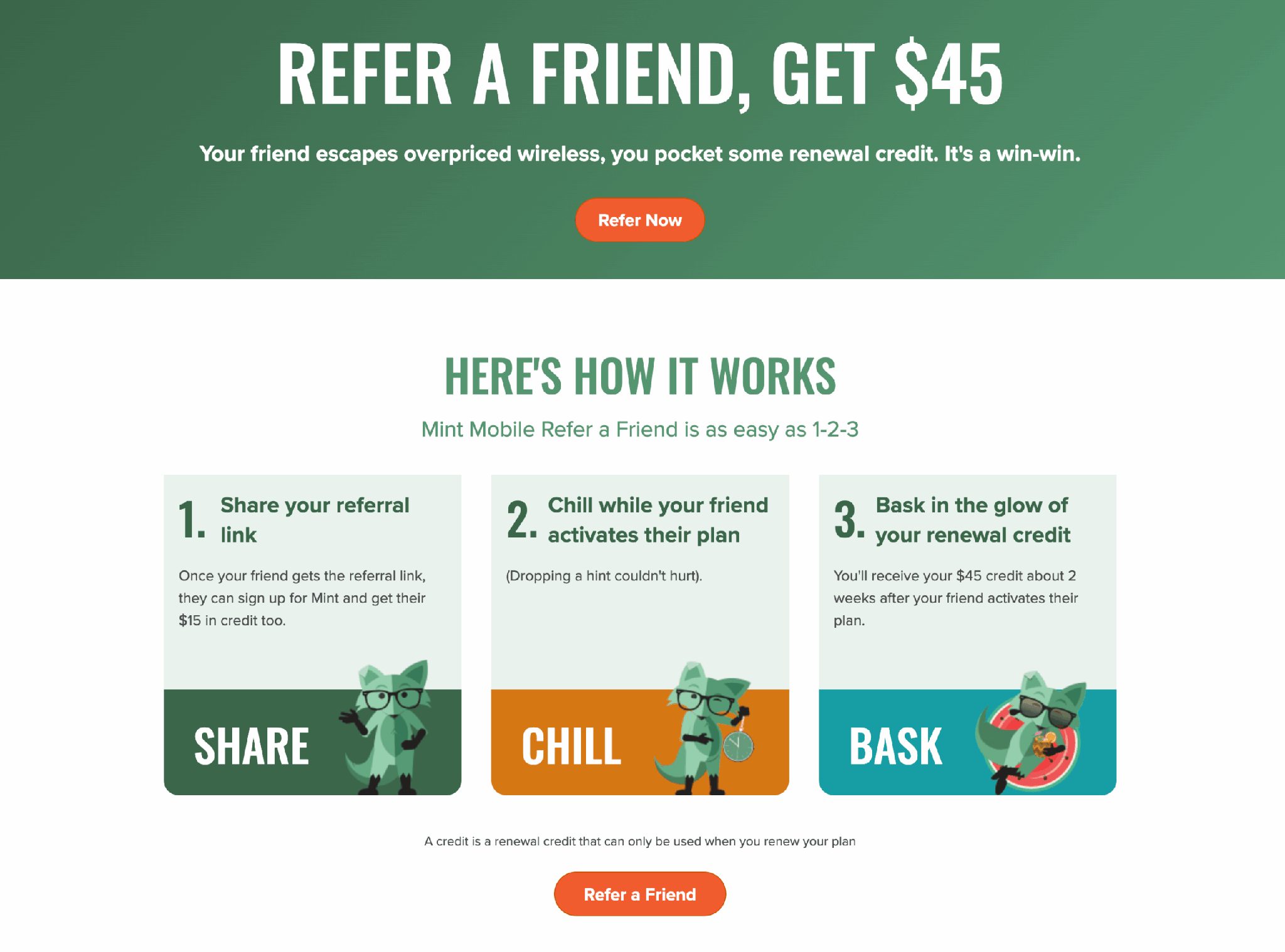
Telecom brands like Verizon, T-Mobile, Mint Mobile, and Cricket Wireless have all run sophisticated offer programs that demonstrate the power of this model done right. Mint Mobile's program, for example, offers subscribers a $45 bill credit upfront per successful referral—a simple, compelling incentive paired with brand-aligned creative and messaging that captures customers' attention.
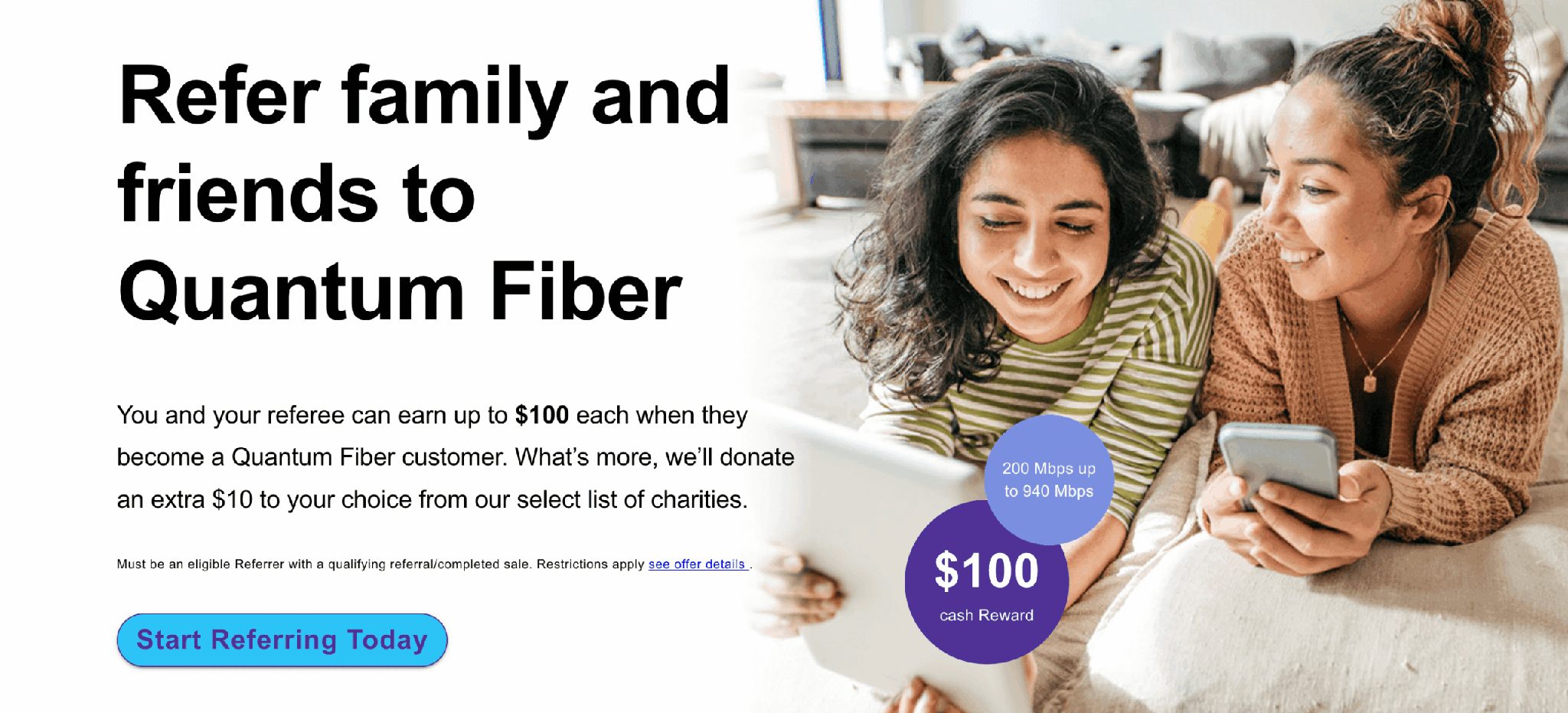
Quantum Fiber has structured its program to allow customers to earn a $100 credit for referrals, plus a bonus $10 charitable donation—combining a financial incentive with the opportunity to contribute to a good cause.
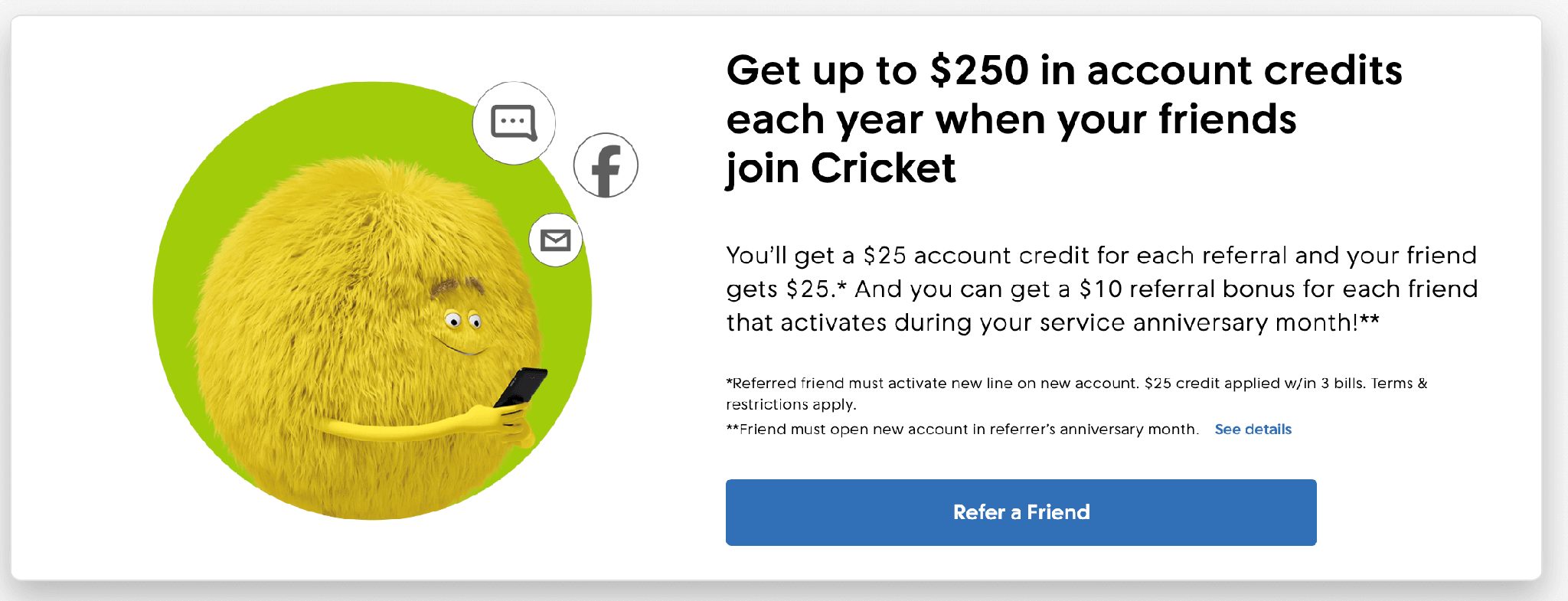
Cricket's program ties a bonus referral reward to a customer's service anniversary month, creating a sense of community and rewarding loyal subscribers.
The top telecoms and ISPs run offer programs curated for their unique subscriber community, driving acquisition and engagement through targeted offer programs. Following this model means finding the formula that resonates with your subscribers.
Offer programs for consumer goods are relatively straightforward: Customers get rewards for making their first purchase, referring friends, or signing up for an email list. Telecom referral programs, on the other hand, require a level of sophistication that enterprise-grade offer management platforms are purpose-built to handle. Here's why:
Unlike a retail purchase that completes in minutes, a telecom subscriber journey can span weeks. A reward should fire only when a customer completes all qualifying actions: their service is activated, the first bill is paid, they've maintained their plan for 90 days, they've made X successful referrals, etc. This requires event-driven reward logic that ties into your billing and provisioning systems, not just your CRM.
Bill credits are the most popular and effective reward in telecom referral programs—they're instantly valuable, easy to understand, and reinforce the customer relationship. To apply bill credits automatically at scale, you need direct integration with your billing engine (Amdocs, Zuora, WHMCS, or a custom BSS/OSS stack). For a serious telecom program, choose a platform that can apply bill credits automatically at scale — not only issue gift cards.
A large carrier or ISP typically serves multiple audiences: residential consumers, small business customers, wholesale partners, and agents or dealers. Each segment has different motivations and will respond best to highly personalized offer programs. Residential customers respond to peer-to-peer programs. Agents and dealers need multi-tier commission logic. Business customers may require different incentive structures and approval workflows. Your referral platform needs to support all of these flows simultaneously without requiring separate tools or codebases.
Telecom referral programs are high-value fraud targets. When a successful referral is worth $50 to $100 in credit, bad actors can exploit gaps in your program logic to earn rewards without completing qualifying actions. Your platform needs device fingerprinting, IP blacklisting, identity verification hooks, duplicate detection, and suspicious activity flagging to protect program integrity.
Telecom is not a purely digital industry: ISPs deploy field technicians to install equipment, carriers operate retail locations, and partner leasing agents pitch ISPs during apartment tours. These in-person moments are among the highest-quality customer engagement opportunities available—you need an on-the-go solution to capture them accurately and instantaneously.
The most effective telecom programs reward more than just sign-ups. Plan upgrades, family plan additions, device activations, service renewals, and even community advocacy actions can all be tied to incentives. An offer management platform that rewards multiple events across the lifecycle captures far more of your subscriber base's growth potential. 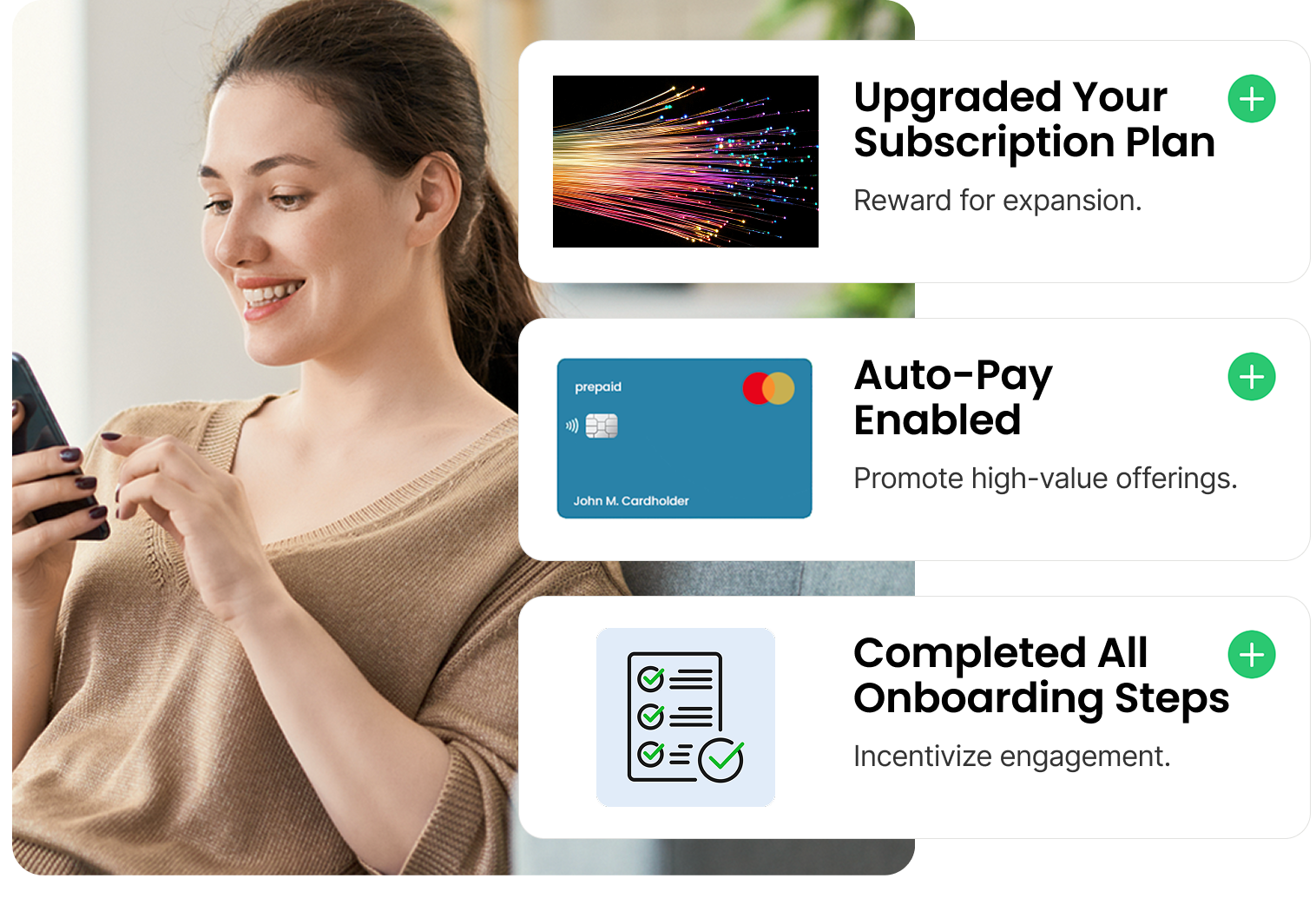
When evaluating offer management platforms for a telecom or ISP use case, these are the capabilities that separate enterprise-grade solutions from basic loyalty and refer-a-friend tools:
Extole is among the best enterprise offer management platforms for major telecom brands, including Cox, Lumen, Xfinity, IQ Fiber, and Optimum. It's designed from the ground up for complex, high-volume programs that operate across multiple subscriber segments, integrate deeply with billing and CRM systems, prevent fraud at scale, and reward a wide range of subscriber behaviors.
Extole's API-first architecture means it connects natively with the systems that matter most for telecom: Salesforce and HubSpot for CRM, billing platforms like Zuora and Amdocs via webhooks and file-based integrations, subscriber management systems, and your own BSS/OSS infrastructure.
Extole's Reward Bank is a powerful feature for telecom use cases. Rather than issuing a one-time gift card, it can stack rewards, such as $10 monthly bill credits, into a subscriber's reward account and apply them automatically when specified milestones are met (service activation, first payment, 60-day retention). This makes the reward feel ongoing and sticky, which is exactly what reduces churn. You can also configure reward tiers based on the plan a new subscriber selects, such as rewarding more for a premium plan sign-up than a basic one.
Extole's built-in fraud prevention is designed for the high-stakes environment of telecom promotions. It combines device fingerprinting, IP blacklisting, duplicate detection, and suspicious activity monitoring to protect your program from abuse. Fraud controls are configurable, so you can calibrate sensitivity based on your program's risk profile without blocking legitimate referrals.
Extole supports simultaneous programs across customer segments without requiring separate platforms. You can run a residential refer-a-friend program, a business customer advocacy program, and an agent referral program—each with distinct reward logic, messaging, and tracking—from a single platform. This matters enormously for carriers and ISPs whose customer base spans multiple commercial segments.
Extole's analytics suite ties referral program performance directly to business outcomes: new subscriber counts, churn rates, plan mix, and ARPU impact. A/B testing lets your team continuously optimize incentive amounts, messaging, email templates, and promotional placements to find the right formula for each audience segment.
Extole's programs can be embedded anywhere your subscribers interact with you: your customer portal, your mobile app (iOS and Android SDKs), your website, post-activation emails, and in-store experiences. Your referral program will be highly visible to customers, woven into the existing subscriber experience via natural touchpoints.
Go Extole is Extole's mobile app for field teams and employee ambassadors, built to power customer engagement on-the-go. Available on iOS and Android, it puts your company's referral program directly into the hands of every field employee, turning store associates, service technicians, door-to-door reps, and property managers into trusted referral touchpoints. 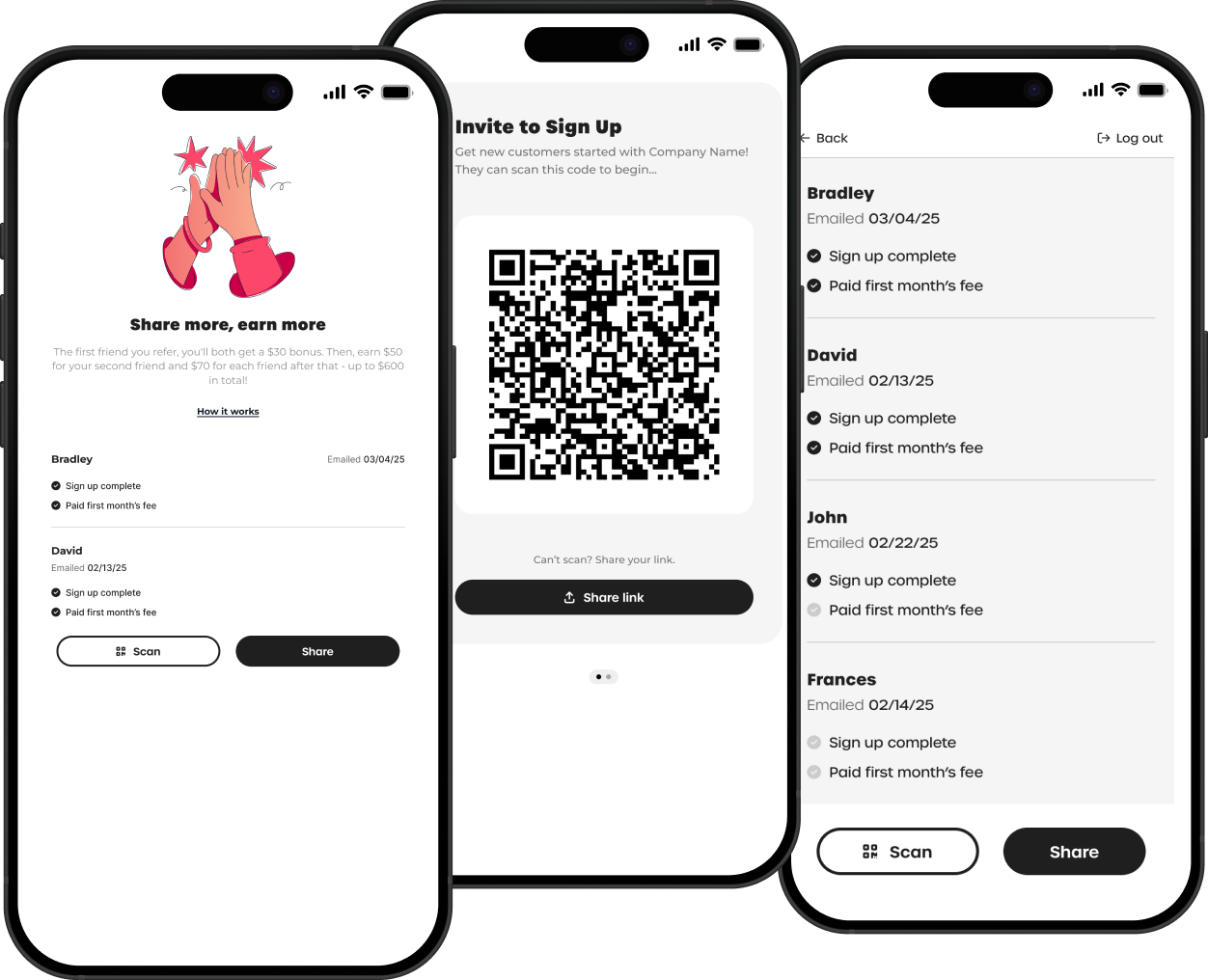
Consider the ISP technician who just finished installing a fiber connection in a customer's home. The customer is delighted. The technician has 20 minutes left in the appointment. There are neighbors within a hundred yards. This is a referral moment that a web-only program simply cannot capture. With Go Extole, that technician pulls out their phone, shows the customer a QR code, and the satisfied customer can immediately share the referral with their neighbor — or the technician can knock on the neighbor's door with an offer already in hand. The conversion attribution is accurate, the reward is automated, and the company has just acquired a new subscriber at a fraction of the cost of a paid channel. Go Extole is also valuable for:
No developer work is required to set up or modify employee ambassador programs in Go Extole. Your marketing team controls the offer, the messaging, and the reward logic, and program changes go live in the app immediately.
Extole supports multiple referral program architectures that are directly applicable to the telecom and ISP business model:
Your most satisfied subscribers refer their friends, family, and neighbors in exchange for bill credits, gift cards, or account upgrades. Double-sided incentives — where both the referrer and the new subscriber are rewarded — consistently outperform one-sided programs. Extole's Reward Bank allows you to structure these as recurring monthly credits rather than one-time bonuses, keeping both parties engaged with the program over time.
Through Extole's employee referral program, field employees earn rewards by referring new subscribers directly. They can also recruit existing customers as advocates, encouraging them to refer their own networks. This creates a two-layer referral effect from a single employee interaction.
For ISPs and carriers with dealer networks, Extole supports multi-tier referral logic, allowing agents to refer other agents and earn commissions at each level. This is especially valuable for rapidly scaling fiber providers and MVNOs with distributed sales channels.
Referral isn't only for new subscribers. Extole lets you reward existing subscribers for upgrading to a higher-tier plan, adding lines to a family plan, or activating new services. These ARPU-boosting programs are often overlooked but can deliver immediate revenue impact from your existing base.
Extole can trigger referral invitations and reward offers at key moments in the subscriber lifecycle: when a customer completes an installation, renews their contract, or hits a service anniversary. These touchpoints reinforce the relationship and naturally prompt advocacy.
The most successful telecom programs we see share a few characteristics: they have a compelling incentive (bill credits work best, along with tiered rewards), they trigger rewards based on meaningful milestones (not just clicks), they are embedded in the subscriber journey rather than existing as a separate landing page, and they extend to field teams with a mobile tool. If you're evaluating offer management platforms or thinking about upgrading your offer programs, here's a practical starting framework:
Extole's team works directly with telecom clients to configure programs, integrate with your tech stack, and optimize over time. Industry-specific referral program templates also allow for faster launch timelines than starting from scratch.
Subscriber acquisition in telecom is expensive. Churn is persistent. And carrier promotions only go so far. The brands that are building durable growth — the ones compounding their subscriber base quarter over quarter — are the ones that have invested in turning their customers and their field teams into acquisition engines. Telecom companies looking to prioritize customer engagement and growth should consider investing in an offer management platform with billing integration, fraud controls, field team tooling, multi-segment logic, and continuous optimization. Extole is built to run exactly that kind of program—and the Go Extole mobile app ensures that even your most in-person, offline growth moments are captured and attributed. To talk to our team about how Extole powers referral growth for telecom companies and ISPs, please visit this page.
Based on how telecom operators and ISPs are evaluating offer management platforms today, here are answers to the questions that come up most: What is a telecom offer or referral program? A telecom offer or referral program rewards subscribers, employees, partners, and property managers for taking valuable actions such as referrals, sign-ups, upgrades, installs, and plan changes. Rewards are usually delivered as bill credits or gift cards. The result is a durable, cost-effective way to grow your subscriber base across the entire customer lifecycle. Are telecom referral programs worth it? Yes. As the data earlier in this guide shows, referred customers tend to be more loyal and deliver higher lifetime value than customers acquired through other channels, and referral programs can lower acquisition cost compared to paid media. For an industry with high acquisition costs and persistent churn, that combination of loyalty, value, and efficiency makes referral one of the strongest growth levers available. How do ISP referral programs work? An existing subscriber, or a field employee using the Go Extole app, shares a personalized referral link or QR code. The referred prospect signs up and completes qualifying milestones such as activation, first bill paid, and a retention window. The reward then fires automatically through billing and CRM integration, so payouts stay accurate and effortless. When should an ISP or carrier launch a referral program? Launch once you can trigger rewards on meaningful milestones and integrate with your billing and CRM systems. Many offer management platforms provide native CRM integration, including those compiled in this list. From there, the ideal moments to invite advocacy are post-installation, contract renewal, and service anniversaries, when subscribers are most satisfied and most likely to recommend you to others.

Referral marketing is one of the highest-ROI acquisition channels for e-commerce brands, and Shopify retailers are especially well-positioned to take advantage of it. Your…

Most incentive management software wasn't built for financial services. The platforms that dominate e-commerce and DTC software guides assume quick transactions, instant reward…

There are billions of social media users on planet Earth, which means social marketing is a powerful tool for inciting awareness and excitement for your brand. But tread…