


Why Referrals are Ideal for User Growth in Fintech
Many of the world’s leading fintech brands can attribute their early success to high-visibility (even viral) referral programs that drove fast, low-cost user growth. Paypal famously offered a $20 referral bonus in its startup days, a move that is still studied by businesses today looking to emulate their impressive scaling. Since Paypal, referrals have become a staple in fintech marketing, as these 5 examples of referral programs prove. Here’s why referrals are especially effective for financial services:
- Customer acquisition from referrals is low-cost and scalable: Traditional paid channels like Google Ads have become prohibitively expensive, even for established brands. The customer acquisition cost (CAC) associated with referrals is almost always lower and more predictable than that of paid ads–you set the referral reward, and you’ll only pay out once a new customer makes an account.
- Referrals appeal to younger customers: Millennials and Gen Z are highly responsive to referral incentives, especially when they are easy to earn and redeem. They are also more likely to look to trusted sources for recommendations: 89% of Gen Z and 91% of Millennials rely on their friends and family for financial advice.
- Trust is key when it comes to referrals and finance: Financial services require a high degree of trust between consumer and institution. A financial recommendation from a trusted friend carries far more weight than an ad–in fact, 92% of customers say they trust referrals from people they know.
- Referral programs drive engagement amongst new and existing members: Referral rewards strengthen loyalty by giving your existing customers more reason to stay engaged with the platform. Referrals also produce high-value customers who generate 16% more profit on average than other customers, and have 37% higher retention.
5 Examples of Referral Programs that Drove Fintech Growth
These five innovative payments solutions, banks, and investment platforms have one thing in common: they all leveraged the power of referrals to drive user acquisition and retention. Here’s what each of their programs look like, and why they are so successful.
1. Chime’s High-Value Reward Draws User Attention
Mobile-only banking service Chime drew attention (and users) to their platform when they announced a $100 referral reward for both advocates and their referred friends. Per program rules, users can receive a referral bonus only after their friend makes a new account and sets up a direct deposit of at least $200 within 45 days. With the opportunity to earn up to $500, this referral bonus is one of the highest currently offered by any fintech brand.
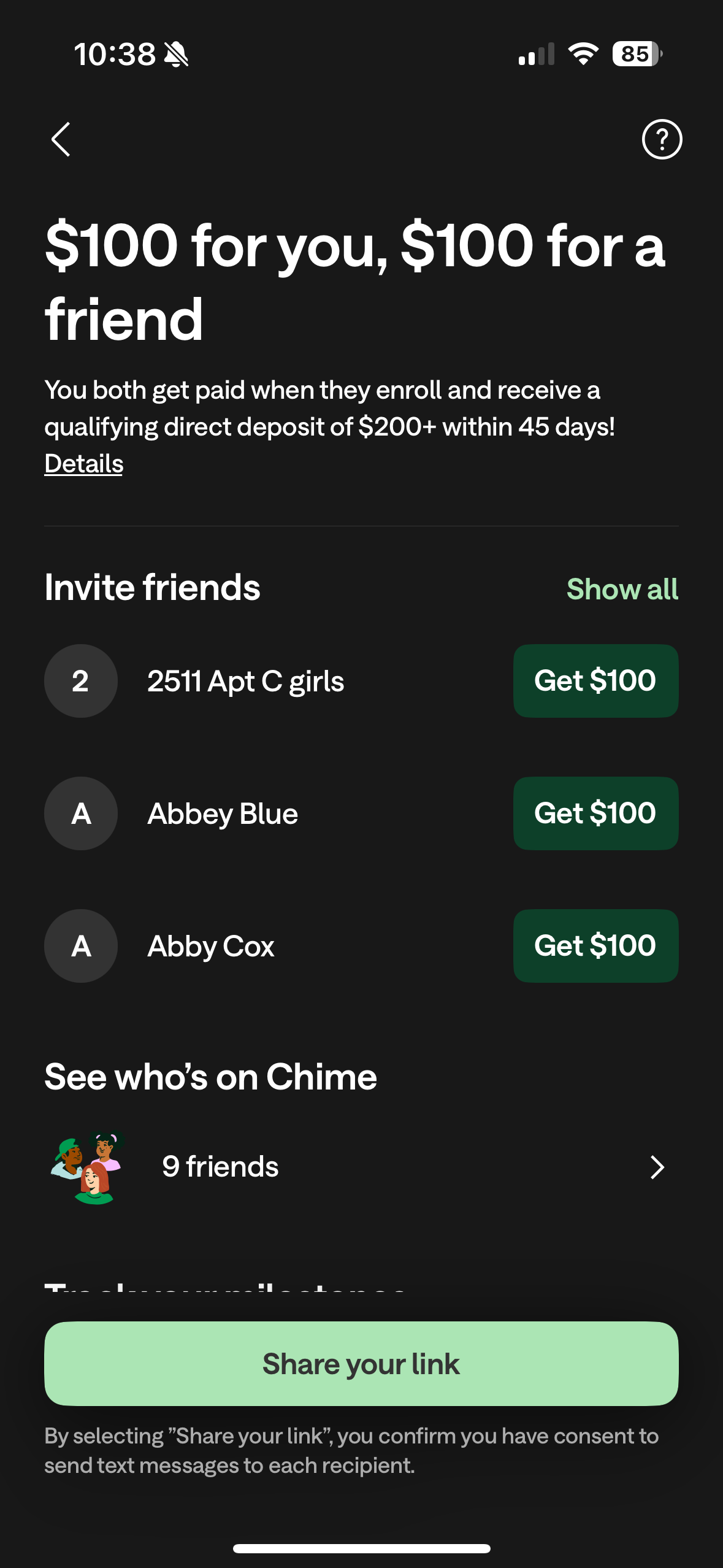
Why Chime’s Referral Program works:
- Compelling Reward. Cash rewards, especially high-value ones like Chime’s, are very motivating for the types of finance-savvy consumers that fintech companies tend to attract. It particularly helps to incentivize users when there is a high barrier to entry involving multiple account setup steps.
- Prevents account abandonment. Chime’s reward qualifications are more stringent than others on this list, but it has the effect of weeding out users who are only interested in collecting a reward and will abandon their account soon after. Setting up a direct deposit keeps consumers deeply engaged in Chime’s product from the get-go, making them less likely to churn.
2. Paypal’s Famous Referral Program Accelerates Adoption
One of the earliest fintech giants to prove the power of referrals, PayPal famously offered $5–$20 sign-up bonuses to both parties in its program. This strategy not only fueled PayPal’s viral growth in the early 2000s but also set the standard for how fintech companies could scale through peer-to-peer referrals.
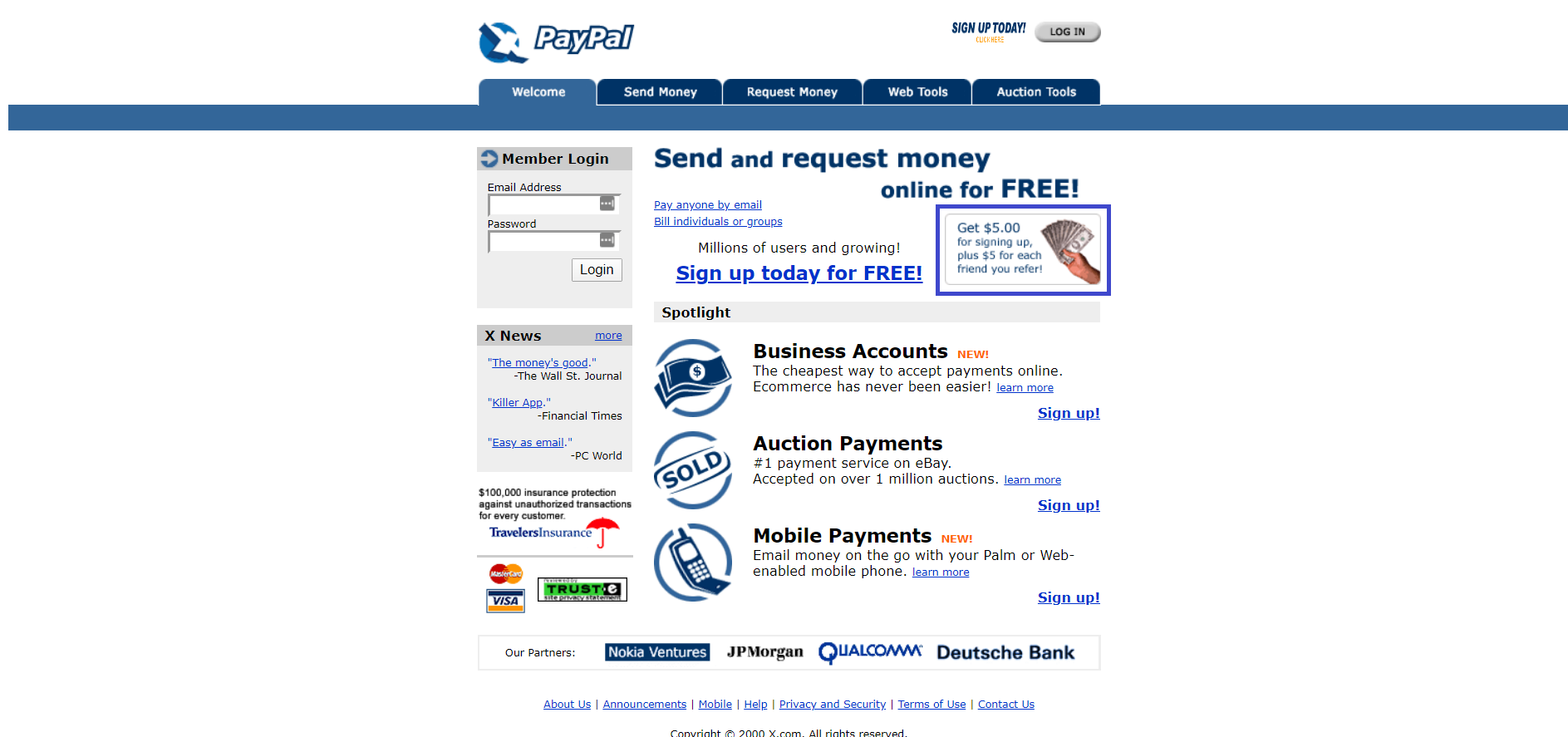
Why Paypal’s Referral Program Works:
- Low-cost growth. PayPal’s original referral program was launched in the company’s early days, when budgets were tight and advertising was expensive and unsustainable. By shifting to an organic growth model via referrals, they hit a veritable gold mine, growing 7-10% per day for a fraction of what paid ads would cost.
- Truly simple. In contrast with Chime’s program, PayPal achieved their growth goals with a far simpler referral model: $5-20 to anyone who opened a PayPal account, and $5-20 to both parties when users refer a friend. With so few steps required to earn, referral conversions were high, and growth was rapid.
3. Robinhood Gamifies Referrals to Increase Engagement
Robinhood tapped into its millennial audience by gamifying referrals. Instead of a flat cash reward, Robinhood offers free stocks to both the advocate and the referred friend. This approach feels relevant to the product, creates excitement, and encourages users to check back and engage with their portfolio.
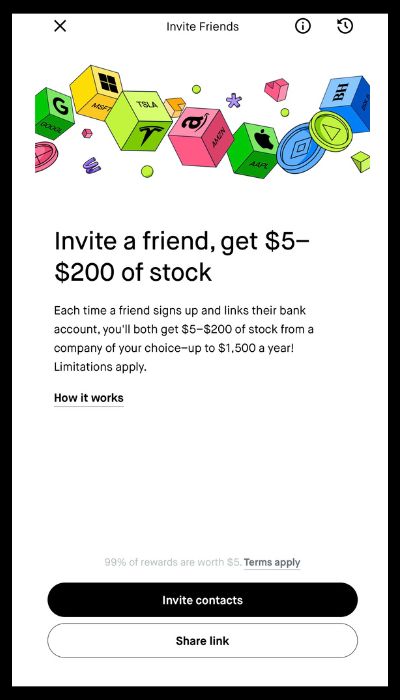
Why Robinhood’s Referral Program Works:
Capitalizes on Excitement. User excitement is a fantastic motivating tool. Robinhood’s program combines the possibility of “winning” a highly valuable stock with the novelty of mystery to create a delightful experience for users. Though the reward only pays out once, the positive feeling is long-lasting, leading to a more loyal, engaged user base.
4. Coinbase Personalizes Rewards to its Users
As one of the leading crypto exchanges, Coinbase incentivizes referrals with cryptocurrency rewards. By giving both users a piece of Bitcoin worth $200 for signing up and completing a deposit and an eligible cryptocurrency trade, Coinbase aligns its rewards with the interests of its crypto-savvy audience. This strategy drives signups and encourages immediate product engagement.
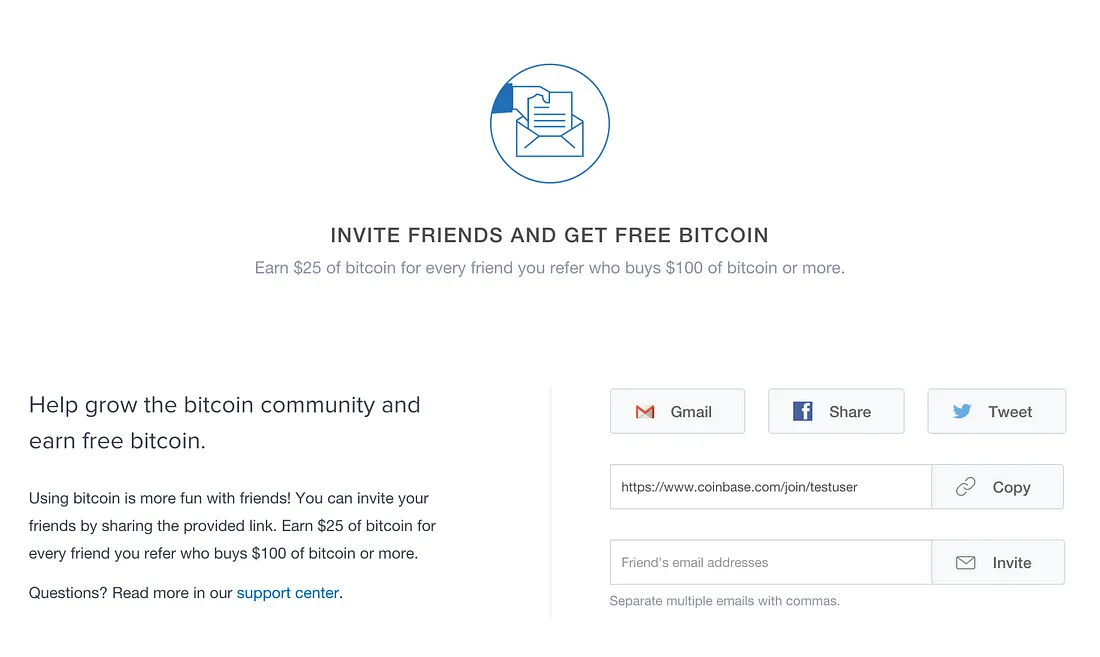
Why Coinbase’s Referral Program Works:
- Unique Reward. Choosing the right reward is crucial for any referral program, and Coinbase is a great example of using an incentive that truly resonates with your audience. By offering the reward as crypto that users can trade in the app, they turn a one-time bonus into an exciting possibility.
- Prevents account abandonment. Similar to Chime, Coinbase also has more stringent qualifications for its referral program. Coinbase requires new users to engage with the app by depositing money and completing a crypto trade, both of which incentivize users to remain engaged with the app so they can use the money in their account. Crypto trading also taps into the benefits of gamification, another factor likely to drive user engagement.
5. SoFi’s Tiered Rewards Give Users Flexibility
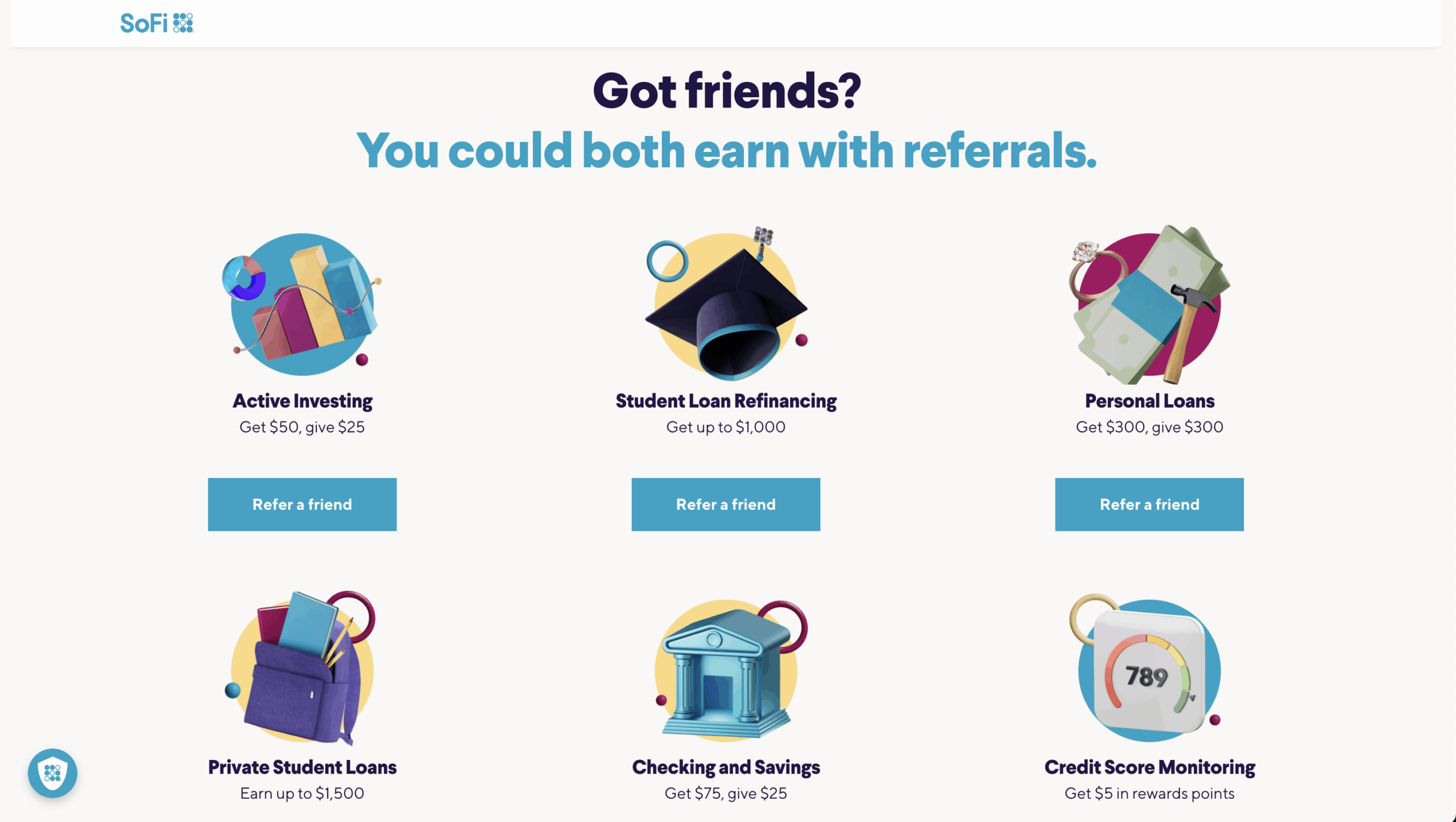
SoFi, a leading personal finance platform, offers cash bonuses to both advocates and their referred friends once the new user opens an account and meets certain criteria, such as making a qualifying deposit. The referral reward amount varies depending on the specific product being referred; some products, like private student loan refinancing, let customers earn up to $1500 from a successful referral.
Why SoFi’s Referral Program Works:
- Referral Flexibility. What makes SoFi’s referral program effective is its breadth across products — from student loan refinancing to credit score monitoring to investing and banking. This flexibility ensures that rewards appeal to a wide range of customer needs, whether they are ready to make a big commitment or just testing out the product.
- Tiered Rewards. The wide range of rewards available at different levels of engagement also has the effect of driving continuous action from customers as they strive for higher rewards. Encouraging customers to return for additional products increases customer retention and lifetime value.
What Fintech Marketers Need to Know About Building a Referral Program
Referral programs have proven to be one of the most effective growth strategies in fintech — from PayPal’s early viral success to modern players like Chime, Robinhood, SoFi, and Coinbase. By rewarding users for spreading the word, these companies have reduced acquisition costs, built trust, and strengthened customer loyalty.
The lesson for fintech marketers is clear: a well-designed referral program can accelerate adoption while deepening relationships with your existing customers. Make rewards compelling, align incentives with your audience, and motivate continuous user engagement to maximize impact.
Whether you’re an established fintech brand or a fast-growing startup, referral programs can deliver sustainable, scalable growth. The key is to learn from proven examples and adapt best practices to your own unique value proposition.
Book a demo to see how Extole can help you acquire new fintech customers through referrals.