Blog
Customer EngagementReferral Program Ideas
8 Referral Ideas for Telecom That Boost Plan Upgrades
Courtenay Roche


Products
Enterprise platform
Platform features
Acquisition programs
Retention programs
Learn
Resources
Developers
Documentation
SDKs & GitHub
Blog
Courtenay Roche
Telecom and ISP marketers already know referrals work. The harder question is finding referral ideas that boost plan upgrades, not just new sign-ups. This guide skips the theory. Below are eight practical tactics that push subscribers toward higher-tier plans, plus a simple framework to choose the right ones.
Referral ideas boost plan upgrades when the reward is tied to higher-tier value. That means tying the reward to a taste of premium, a recurring bill credit, or a bonus for upgrading. The best programs reward both the referrer and the friend. Telecom is a strong fit for this approach. Acquisition costs are high, services feel similar across carriers, and most value comes from keeping customers longer and moving them up. Consider the long game. Simon-Kucher's 2025 Global Telecommunications Study found that 95% of telecom value, or customer lifetime value, comes from customers with three or more years of tenure. Referrals carry unusual weight in this category. As of Nielsen trust in referrals data from 2021, 88% of people said they trust recommendations from friends over all other promotion channels. So the goal is bigger than acquisition. When you treat upgrades and expansion as referral objectives, each advocate can grow revenue, not just add a line.
Value in telecom concentrates in long-tenure, higher-tier subscribers. Getting a customer to a faster plan or an extra line raises what they spend each month and how long they stay. That spend is measured by ARPU, or average revenue per user. ARPU tracks the average monthly revenue a carrier earns from each subscriber. Operators use a telecom ARPU upsell strategy: they upsell customers to higher-speed internet plans, unlimited data packages, or premium TV channels. This increases the average spend per subscriber. Referrals compound that effect because referred subscribers tend to stay and spend more. In a study of retail bank customers, peer-reviewed referral research in the Journal of Marketing measured the long-term payoff. A referred customer is about 16% more valuable than a comparable non-referred customer over six years. There is also room to promote these programs harder. Simon-Kucher's Global Telecommunications Study 2025 found that almost 80% of telco providers offer a loyalty program, yet only half of customers enroll. That gap is a clear opening to put upgrade-focused referrals in front of subscribers more often.
| These referral ideas for telecom span reward design, timing, channel, segment, and measurement. Each includes a telecom example so you can see how to apply it. Use the table to compare the most common reward types before you dig into the tactics. Reward Type | Best For | Upgrade Impact |
|---|---|---|
| Free higher-tier trial | Showing premium value | High; previews the upgrade |
| Recurring bill credit | Retention and stickiness | High; rewards tenure |
| One-time account credit | Simple, fast sharing | Medium; drives sign-ups |
| Tiered milestone reward | Power advocates | Medium; grows referral volume |
Give the referrer or the friend temporary access to a premium tier. A free month of faster speeds, premium channels, or an unlimited add-on lets people feel the upgrade before they pay for it. For example, an ISP could give a successful referrer a free month of the next speed tier. After a month of faster downloads, staying at the higher tier feels natural. Extole can match the reward to each subscriber's current plan using personalized referral incentive ideas.
Instead of one gift card, stack monthly bill credits in a Reward Bank. A Reward Bank holds earned rewards and releases them on a schedule you set. Credits can apply automatically at milestones like activation, first payment, and 60-day retention. You can also pay more when the new subscriber picks a premium plan. A carrier might give $10 a month for six months, with a higher credit for premium sign-ups. This model is central to offer management for telecom, and it rewards staying, not just signing up.
Two-sided rewards give both the referrer and the new subscriber an incentive. The friend's reward lowers switching friction, and the advocate's reward drives more sharing. For example, both people could earn an account credit, with a larger amount when the friend chooses a higher-tier plan. This pattern is common for good reason. One industry two-sided reward benchmark shows that 86% of referral programs reward both the giver and the receiver.
Increase reward value as a subscriber refers more people. A first referral earns the base reward, while a fifth referral unlocks a premium perk or a plan upgrade. US Mobile uses this idea, with escalating per-referral value as advocates bring in more friends. Escalating rewards keep your best advocates engaged over time. For guidance on structuring these rewards, see choosing an effective reward.
Referrals do not have to target only new customers. You can reward current subscribers who expand their own accounts, which grows ARPU directly from your existing base. Here is what counts as an expansion action:
[caption id="attachment_22425" align="alignright" width="332"]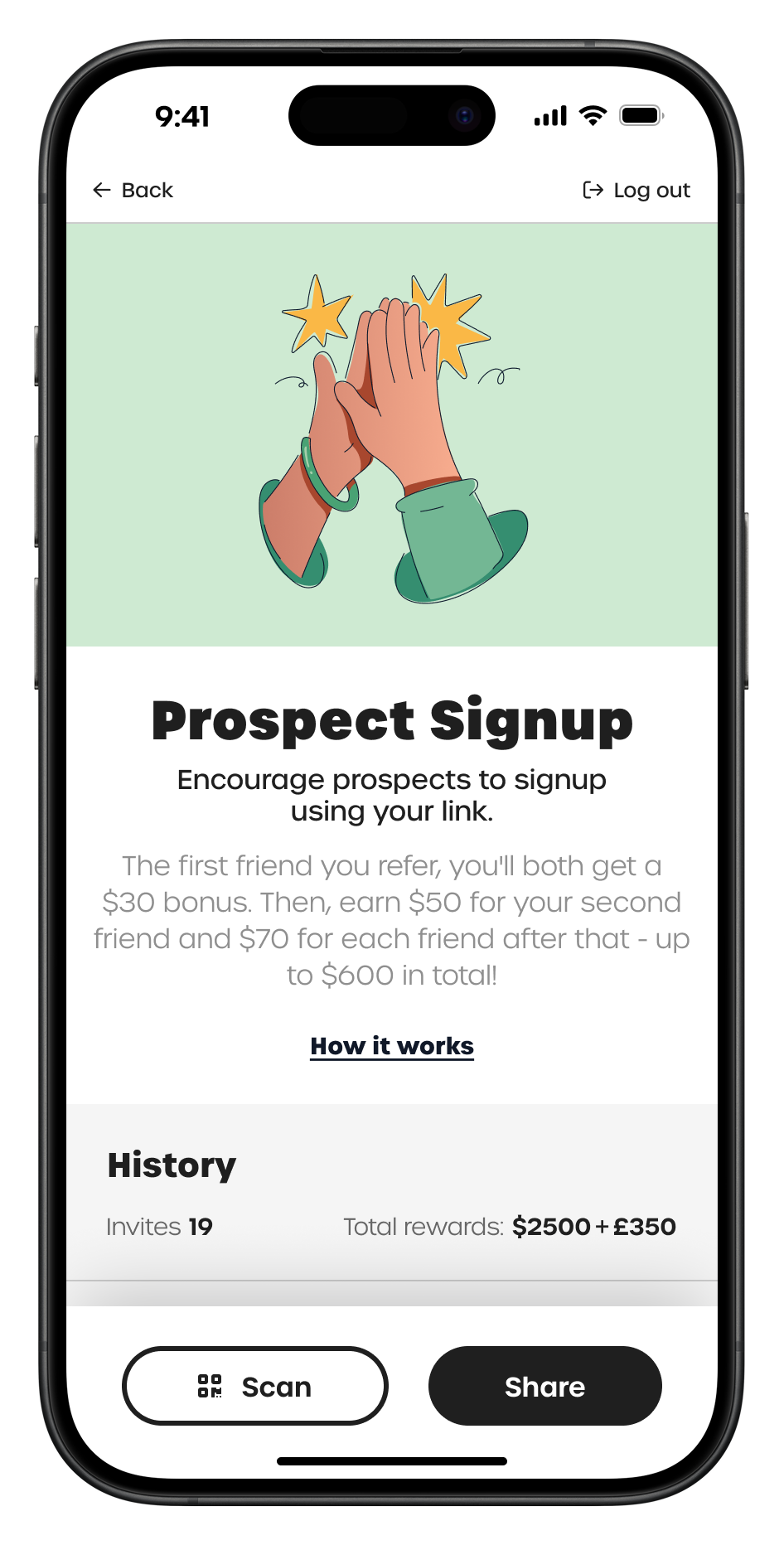 The Go Extole mobile app empowers field teams to capture referrals on the go with personal QR codes that promote easy, traceable sharing.[/caption] For example, a subscriber could earn a bonus credit for referring a friend and moving to a family plan in the same month. Verizon runs stackable referrals for up to 10 friends, which rewards active advocates in the current base.
Many telecom referral moments happen offline. Installers, technicians, door-to-door reps, and property managers all meet subscribers at high-satisfaction moments. Give those teams the Go Extole mobile app so they can share a personalized link and QR code with instant attribution. A fiber technician could share a QR code with a happy customer and their neighbors right after install. This captures a referral a web-only program would miss.
Your staff and partners can be a strong referral channel. Reward employees, agents, dealers, and property managers when they drive upgrades and new subscribers. Multi-tier logic supports dealer and agent networks with different payout rules. A property manager could earn escalating rewards as more residents upgrade their plans. You can run these with employee ambassador programs alongside your customer referrals.
Timing decides whether a referral ask lands. Send invites at lifecycle moments when satisfaction and upgrade intent peak. Good moments include right after install, at the first paid bill, or on a service anniversary. Cricket pairs a $250 reward with a service-anniversary bonus, which turns a loyalty moment into a referral moment. Quantum Fiber offers $100 plus a $10 charity donation to add feel-good timing. For more patterns, browse these creative telecom referral examples.
You do not need to run all eight ideas at once. Prioritize based on your audience segment, your incentive model, your upgrade cycle, and how mature your program is. Use this start-here framework to build your first upgrade-focused program:
Start with one clear goal and one reward type. You can layer in tiers, field capture, and ambassador programs as the program proves out.
Extole is an enterprise offer management platform, which means it treats the offer as the core object. Telecom brands can run refer-a-friend, upgrade, employee, and multi-tier programs from one configurable system. It powers a full set of telecom subscriber growth programs. Extole's own telecom examples show what works in practice. Mint Mobile offers a $45 upfront credit per successful referral, a reward you can replicate and personalize on the platform. Here is how the platform supports the ideas above:
The result is one control layer for every advocacy program, so the right subscriber gets the right incentive at the right moment.
The strongest referral ideas for telecom share a few habits. They tie rewards to higher-tier value, reward both sides, include upgrades and expansions as goals, and time asks to high-intent moments. Do those things well, and referrals become a durable engine for ARPU and retention, not a one-time acquisition push. Book a demo to build or optimize your telecom referral program.
What referral ideas boost plan upgrades? The most effective referral ideas for telecom tie the reward to higher-tier value. Examples include a free premium trial, a recurring bill credit, or a bonus for upgrading or adding a line. Are two-sided or one-sided referral rewards better for telecom? Two-sided rewards usually perform better because the friend's incentive lowers switching friction while the advocate's reward drives more sharing. Should telecom referral rewards be cash or a plan upgrade? Product-native rewards like tier trials and bill credits tend to drive upgrades better than cash, since they let subscribers experience the premium plan directly. How many referrals should a milestone reward require? Set the first reward at one referral to build momentum, then escalate value at higher counts like three or five to keep power advocates engaged. Can referral programs reward existing customers for upgrading? Yes, and it is often overlooked. You can reward current subscribers who upgrade a plan, add a line, or activate a new service to grow ARPU. How do you prevent referral fraud in telecom programs? Verify eligibility and enforce program rules before any reward is released, using automated checks that confirm each referral is genuine. How do you measure whether referrals drive plan upgrades? Track upgrade rate, add-a-line activity, and ARPU lift among referred subscribers, rather than counting total referrals alone. When is the best time to ask telecom customers for a referral? Ask at high-satisfaction moments such as right after install, at the first paid bill, or on a service anniversary, when upgrade intent is highest.

AI is reshaping how brands acquire customers—not by replacing human judgment, but by making every stage of the funnel faster, more precise, and more personalized. According to…

Credit union member engagement goes beyond transactions—it's the emotional connection that determines whether members view your institution as their primary financial partner…

Customer incentive software helps brands create, manage, and deliver rewards that motivate specific customer behaviors—from referrals and repeat purchases to sign-ups and…