Blog
Referral Program Ideas
Best Bank Referral Incentives: 15 Examples and How to Structure Yours
Courtenay Roche


Products
Enterprise platform
Platform features
Acquisition programs
Retention programs
Learn
Resources
Developers
Documentation
SDKs & GitHub
Blog
Courtenay Roche
Bank referral programs consistently outperform paid acquisition channels for financial institutions—Ally Bank reports their referral program runs 3-4x more efficiently than other marketing avenues, with acquisition costs under $100 per customer. When trust matters as much as it does in banking, a friend's recommendation carries weight that no advertisement can replicate. This guide covers 15 banks with competitive referral bonuses, breaks down the different incentive structures that drive participation, and walks through how to build a referral program that actually converts.
Bank referral programs use a dual-sided incentive model where both the existing customer and the new customer receive rewards. Payouts typically range from $50 to $100 per account, with most banks capping annual earnings around $500. The referred friend usually qualifies by opening an account and completing specific actions, such as setting up direct deposit or making a minimum number of debit card transactions within 45 to 60 days. Here's how the mechanics work: an existing customer shares a unique referral code or link with someone they know. When that person opens a qualifying account and meets the requirements, both parties receive their bonus. Tracking happens automatically via the referral link, so the bank knows exactly who referred whom.
People trust recommendations from friends when choosing where to keep their money. That trust translates into lower acquisition costs for banks and higher-quality accounts. Referred customers cost significantly less to acquire than customers from paid advertising, and they tend to maintain larger balances over time. The math works in the bank's favor. The average banking customer costs $150 at the low end to $780 at the high end, but a referral program can deliver new customers for a fraction of that cost. Plus, that reward is only paid out after the customer has converted and passed all qualifying checks. When a new checking account generates hundreds of dollars in annual value, a $50 or $100 referral bonus represents strong ROI.
The following banks offer competitive referral programs that serve as high-impact sources of new customers. Each has a slightly different incentive structure, reward value, and qualifying actions. Use these examples as a source of inspiration for your own bank referral program:
Axos offers up to $100 for both the referrer and the referred friend when the new customer opens a Rewards Checking account. As an online-only bank, Axos keeps overhead low and passes savings along through generous bonuses. Rewards are typically deposited within a few business days of qualification.
SoFi's referral program spans checking, savings, investing, and loans. Both parties receive cash bonuses, and the app makes sharing straightforward. The fintech has built a reputation for generous dual-sided rewards.
Chase periodically offers referral promotions for checking accounts, typically requiring direct deposit setup within 90 days. Offers vary by region and account type, so availability depends on your location.
Chime rewards both parties with cash deposited directly into their spending accounts. The mobile-first bank handles the entire referral process within the app.
Discover offers referral bonuses for both savings and checking accounts, with rewards typically ranging from $50 to $100. The no-fee account structure pairs well with referral incentives.
Ally's online savings referral program offers competitive rates alongside referral bonuses. Referral links are accessible directly from the mobile app and online banking dashboard.
Capital One's referral promotions vary by account type. The bank occasionally runs limited-time campaigns with enhanced bonuses during promotional periods.
American Express offers a high-yield savings referral program that leverages existing card member relationships. The integration with Amex's broader ecosystem simplifies participation.
Current targets younger demographics with quick reward fulfillment. The app-based sharing makes inviting friends straightforward.
Varo's referral program features low barriers to entry, with some offers requiring no minimum deposit. The online bank focuses on accessibility across income levels.
Aspiration ties referral rewards to its sustainable banking mission. The bank plants trees for certain account activities, adding a values-based dimension to the incentive.
KeyBank's regional refer-a-friend program offers checking account bonuses that vary by market. The bank combines branch presence with digital referral capabilities.
PNC periodically runs referral programs requiring direct deposit to qualify. Bonuses compete with national institutions while offering localized service.
UNIFY demonstrates how credit union member referrals work. Member-owned institutions often offer competitive bonuses while maintaining lower fees.
| Provident Bank shows how community banks implement referral incentives. Smaller institutions often personalize the referral experience through branch staff. Bank | Bonus Type | Dual-Sided | Account Type | Key Requirement |
|---|---|---|---|---|
| Axos Bank | Cash | Yes | Checking | Account opening |
| SoFi | Cash | Yes | Multiple | Varies by product |
| Chase | Cash | Yes | Checking | Direct deposit |
| Chime | Cash | Yes | Checking | Account funding |
| Discover | Cash | Yes | Checking/Savings | Account opening |
| Ally Bank | Cash | Yes | Savings | Account funding |
| Capital One | Cash | Yes | Multiple | Varies |
| American Express | Cash | Yes | Savings | Account opening |
| Current | Cash | Yes | Checking | Account funding |
| Varo Bank | Cash | Yes | Checking | Account opening |
Banks structure referral rewards in several ways, each appealing to different customer segments.
Direct cash deposits remain the most popular option. Customers receive a specific dollar amount, typically $50 to $100, deposited into their account after the referred friend qualifies. The simplicity makes cash bonuses effective.
Statement credits apply against account fees or balances. This structure works well for credit card and loan product referrals, where the credit offsets interest or annual fees.
Some banks convert referral rewards into points redeemable for merchandise, travel, or statement credits. This approach appeals to customers already enrolled in loyalty programs.
Tiered structures increase rewards based on the number of successful referrals. A customer might earn $50 for their first referral, $75 for their second, and $100 for subsequent ones. The escalating model encourages ongoing advocacy.
The most effective programs reward both the referrer and the referred friend. Research shows that dual-sided incentives increase participation because the referrer feels comfortable sharing. They're offering their friend a benefit, not just asking for a favor.
Building an effective referral program involves several strategic decisions that directly impact participation and conversion rates.
Clear eligibility criteria prevent confusion. Typical requirements include account age minimums for referrers (account open for 30+ days) and "new-to-bank household" status for referred friends. Defining parameters upfront sets appropriate expectations.
Benchmark bonus amounts against competitors while considering customer lifetime value. If a new checking account customer generates $300 in annual value, a $100 referral bonus represents strong ROI.
The split between referrer and friend rewards affects sharing behavior. Equal splits ($50/$50) feel fair. Friend-weighted splits ($25/$75) can increase sharing because referrers feel they're offering something valuable rather than benefiting at their friend's expense.
Manual reward processing creates delays that frustrate customers. Automated systems track referrals in real-time, verify qualification criteria, and trigger reward fulfillment without human intervention. Enterprise platforms like Extole handle this infrastructure, integrating directly with digital banking systems.
Referral fraud includes self-referrals, fake accounts, and collusion. Effective prevention includes identity verification, velocity limits that flag unusual patterns, and quality rules ensuring referred accounts demonstrate genuine engagement. Enterprise platforms include built-in fraud controls that protect program integrity.
Visibility drives participation. Even well-designed programs underperform without effective promotion.
Place sharing options where customers already engage. A referral prompt on the mobile banking dashboard captures attention during routine banking activities. Integrating referrals directly into digital banking experiences increases participation compared to standalone referral pages.
Trigger referral prompts at moments when customers feel positive about their bank. After a successful mobile deposit, following a helpful customer service interaction, or on account anniversaries. Contextual timing increases response rates.
Allow customers to share unique referral codes via social media, text, and email with one click. Personalized codes (like "JOHN50") feel more authentic than generic links.
Referral opportunities exist across the customer journey:
Selecting the right platform involves evaluating capabilities against your institution's specific requirements.
Tip: Request a technical discovery call before committing. Understanding integration complexity upfront prevents surprises during implementation.
Bank referral programs work best when treated as strategic infrastructure rather than occasional campaigns. The combination of trusted peer recommendations, automated reward fulfillment, and measurable attribution creates a sustainable acquisition channel that improves as your customer base grows. Ready to see how enterprise referral infrastructure works for banks? Book a demo with Extole to explore what's possible.
The $3000 rule refers to IRS reporting requirements for certain cash transactions. Referral bonuses are typically reported as taxable income regardless of amount. The $3000 threshold applies to different transaction types.
Yes, bank referral bonuses are generally considered taxable income by the IRS. Banks typically issue a 1099-MISC or 1099-INT for bonuses above the reporting threshold, usually $600.
Some banks offer referral bonuses with no deposit required. However, most checking account bonuses require a minimum opening deposit or qualifying direct deposit within a specified timeframe.
Most banks deposit referral rewards within a few business days to a few weeks after the referred friend meets all qualification requirements. Direct deposit requirements typically extend the timeline to 45-60 days.

Referral and loyalty platforms were built for users. The next generation of software will also need to work for developers, automation systems, and AI agents.
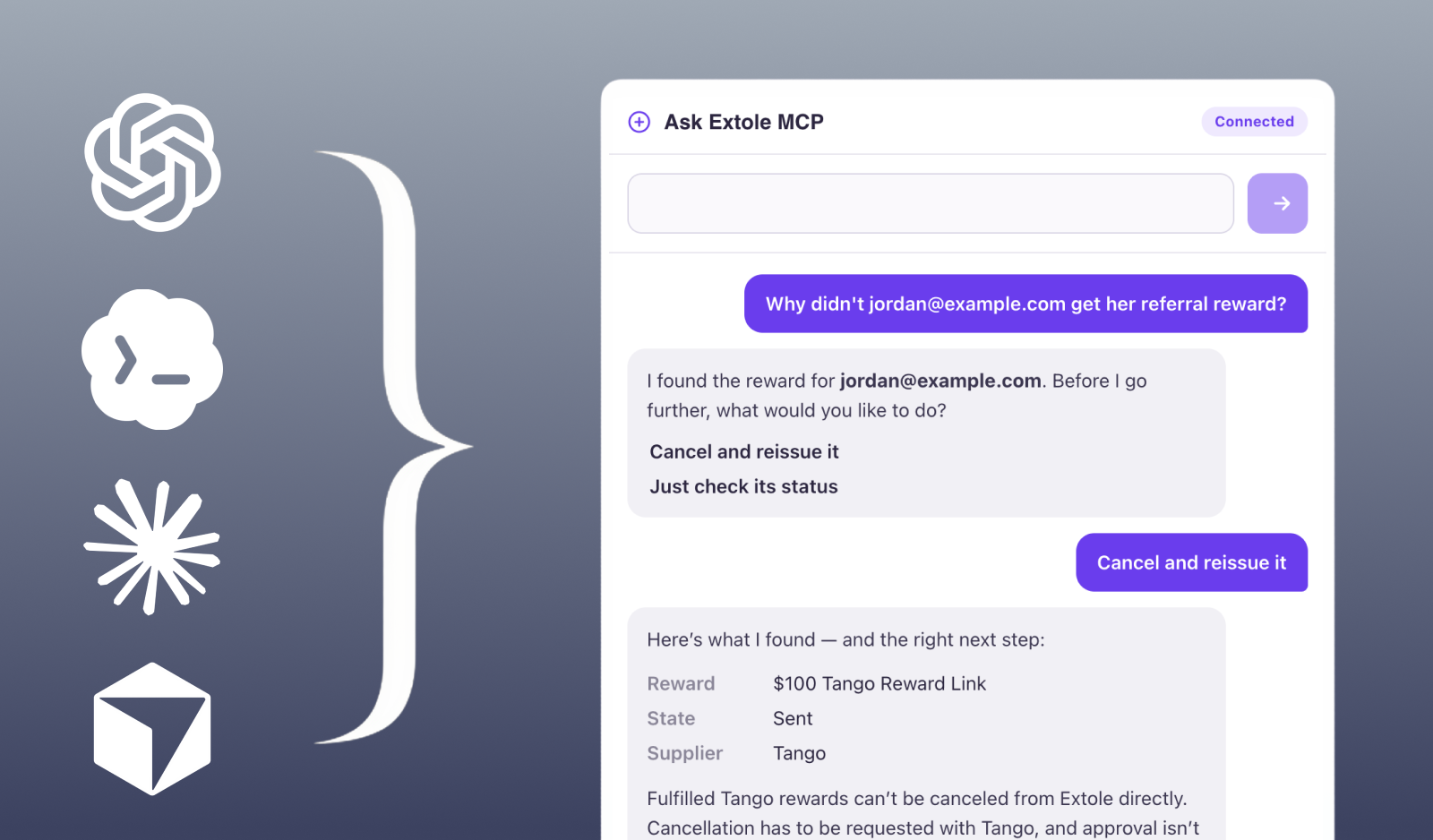
AI-enabled teams are under increasing pressure to launch more campaigns, orchestrate more complex customer journeys, and act on more data than ever before. Armed with powerful…

Are you getting the most out of your credit union’s or bank's referral program? Focusing on the right referral program tracking metrics can be the difference between a program…