Blog
Referral Marketing ConceptsReferral Program Ideas
10 Referral Program Incentives and How to Manage Them for Scalable Growth
Courtenay Roche


Products
Enterprise platform
Platform features
Acquisition programs
Retention programs
Learn
Resources
Developers
Documentation
SDKs & GitHub
Blog
Courtenay Roche
Selecting the right referral program incentives can turn customer advocacy into a measurable acquisition channel for enterprise brands—but the reward itself is only one part of a scalable program. Enterprise teams also need clear eligibility, reliable authorization, secure delivery, fraud controls, and meaningful measurement. This guide covers 10 practical incentive approaches and a six-step framework for managing them. The right approach depends on your audience, economics, qualifying action, customer experience, and test results. Use these ideas as a launchpad, then test and scale the referral program incentives that deliver the most value.
Referral program incentives are rewards offered to an advocate, a referred friend, or both for completing stated referral actions. They may include cash, credits, discounts, points, gift cards, products, services, or special experiences. A complete incentive has four connected parts:
This structure makes an incentive more than a coupon or payout. It becomes a governed customer promise with defined rules, a clear journey, and auditable fulfillment.
A referral incentive has the power to make or break a referral program. An effective reward compels customers to share your brand and helps you build meaningful relationships with advocates and new customers. An ineffective one can reduce conversions or attract low-quality participants who are unlikely to stay on once they earn their reward. At its core, effective referral incentive management means aligning your customers' motivations with financial and operational controls. Your reward design will influence whether advocates share, whether friends convert, and whether the resulting customers fit the brand’s goals. The business case for referrals extends beyond customer acquisition. Referral programs have also been shown to increase average customer lifetime value, per Journal of Marketing researchers Philipp Schmitt, Bernd Skiera, and Christophe Van den Bulte, who studied customers at a German bank. Their finding on the value of referred customers was: “The average value of a referred customer is at least 16% higher than that of a non-referred customer with similar demographics and time of acquisition.” While their result does not guarantee outcomes for enterprise referral programs, it does show why teams should measure customer quality, retention, and value alongside acquisition. Just as important as the offer itself is the quality of your incentive management. A relevant offer can lose trust if reward eligibility is unclear, delivery fails, or support teams are hard to reach. The same program can create unnecessary costs when teams cannot reconcile returns, cancellations, duplicate accounts, or unqualified conversions. Clear rules and connected data help teams protect referral program economics and deliver on their promises accurately. [caption id="attachment_23326" align="aligncenter" width="679"] Referral program incentives are at the core of what makes a program effective. They are usually the first thing a customer sees when they land on a referral offer—like this one from First Day.[/caption]
| The table below helps teams shortlist referral bonus ideas for testing. It does not rank the options because no reward type, amount, timing model, or recipient structure is universally best. Context matters. A Journal of the Academy of Marketing Science referral reward design study explains: “With one field experiment and four online experiments, this research investigates the effectiveness of rewarded referrals for recruiting new customers for more innovative (versus less innovative) offerings.” Approach | Possible Business Context | Advocate or Friend Role | Economics to Model | Qualifying-Event Options | Operational Considerations | Test Question |
|---|---|---|---|---|---|---|
| Give-and-get | Retail, telecom, subscriptions | Both with distinct values | Total reward cost and conversion by role | Purchase, activation, or paid subscription | Separate messages, rules, and reporting | Does each side need the same value? |
| Cash or account credit | Financial services, telecom | Advocate, friend, or both | Contribution value, funding, and reconciliation | Funded account, first payment, or good standing | Tax, payment, account, and delivery requirements | Which format fits the customer relationship? |
| Store credit or discount | Retail, ecommerce, travel, home services | Advocate, friend, or both | Margin, basket size, and promotion overlap | Eligible purchase or completed service | Minimum spend, exclusions, expiration, and stacking | What value range supports qualified conversion? |
| Gift card choice | Cross-industry | Advocate, friend, or both | Funding, fees, and redemption | Verified conversion or completed milestone | Catalog, geography, delivery, and support | Does controlled choice improve the experience? |
| Points or bankable rewards | Loyalty, telecom, subscriptions | Usually advocate, but configurable | Point liability and redemption cost | Accepted referral, purchase, or activation | Balance visibility, thresholds, and expiration | Which earning and redemption rules sustain use? |
| Product, service, or experience perk | Retail, travel, subscriptions, home services | Advocate, friend, or both | Unit cost and perceived relevance | Purchase, renewal, or service completion | Inventory, capacity, access, and substitutions | Which perk aligns with the customer’s next action? |
| Tiered or milestone reward | High-advocacy customer groups | Usually advocate | Cost exposure by tier and expected qualification | Number of qualified referrals | Caps, resets, progress, and tier changes | Do higher thresholds attract qualified activity? |
| Seasonal reward burst | Retail, travel, telecom, home services | Advocate, friend, or both | Incremental value during a fixed window | Conversion within campaign dates | Baseline, start and end times, and budget controls | Is the activity incremental to the normal program? |
| Partner, charitable, or choice reward | Values-led or ecosystem programs | Advocate, friend, or both | Partner cost, donation process, and administration | Verified conversion or customer selection | Terms, ownership, tax review, and fulfillment | Does the option fit the audience and brand? |
| Segment- and role-specific incentive | Multi-product or multi-market enterprises | Varies by segment and role | Cost and value by audience | Segment-specific conversion event | Data quality, governance, and campaign overlap | Which variation improves value for a defined segment? |
These referral program incentives offer distinct ways to motivate advocacy and conversion. Each approach needs a defined audience, qualifying event, delivery method, and measurement plan. Use the list to build a focused test roadmap rather than launching every option at once. For more formats and industry examples, explore these personalized referral incentive ideas.
[caption id="attachment_23267" align="aligncenter" width="509"]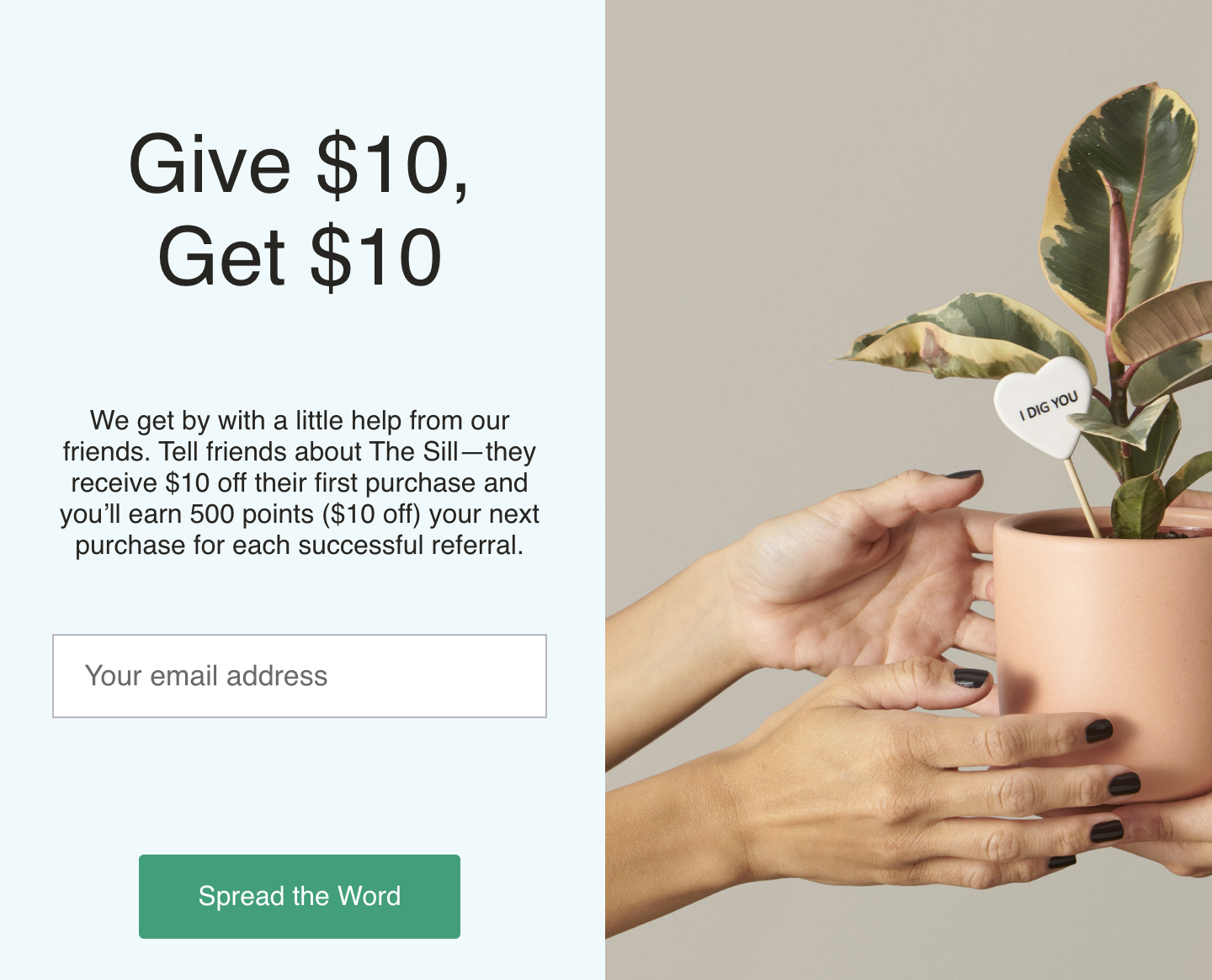 A balanced "Give X, Get X" reward structure is one of the most effective referral program incentives.[/caption] A give-and-get reward structure offers value to both the advocate and the referred friend. In the example above from The Sill, the advocate and friend rewards are equal, but the two incentives can also differ because each person is being asked to perform a different behavior. A telecom brand might reward the advocate after a friend activates service, while the friend could receive a separate account credit after meeting an initial payment requirement. The important part is ensuring that both parties feel they are getting an appropriate reward for the value they provided.
[caption id="attachment_22730" align="aligncenter" width="2250"]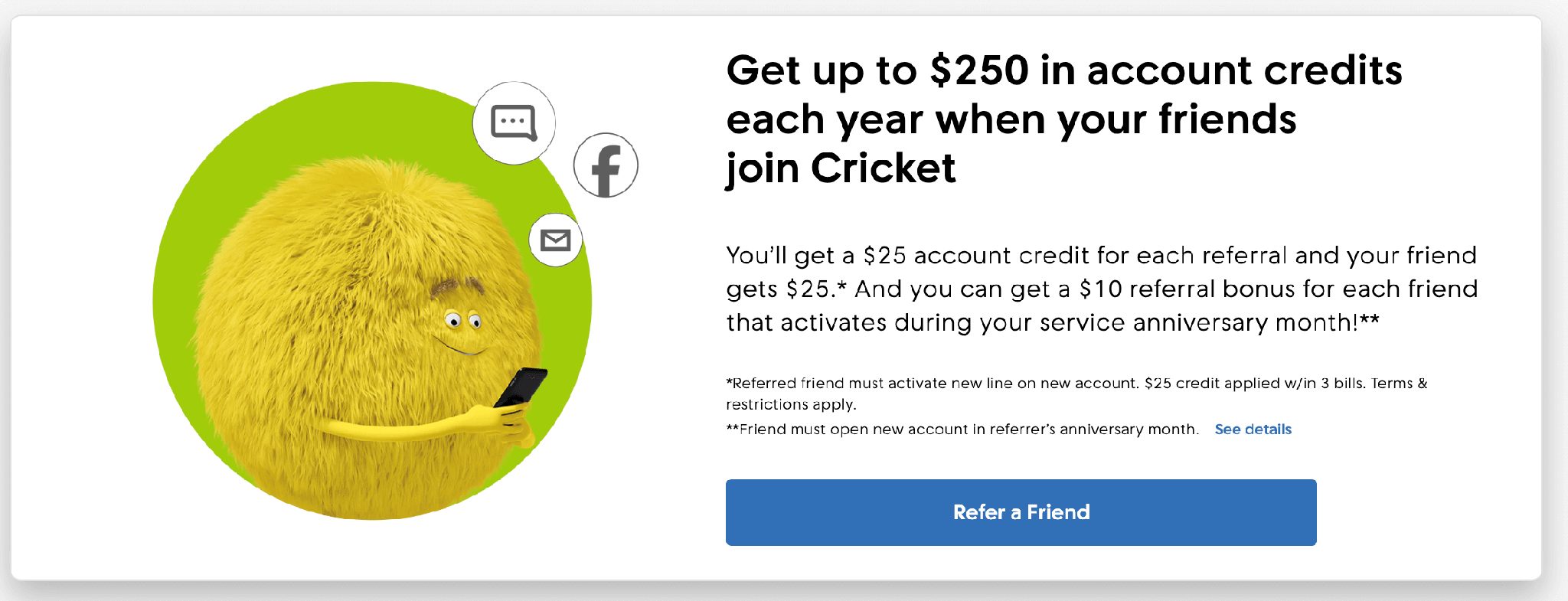 Offering account credit to advocates keeps the value within your system and strengthens customers' ties to your business.[/caption] Cash rewards signal immediate value to program participants, while account credit keeps the reward within an existing customer relationship. Both formats are applicable across a range of program types, though cash and credit have distinct funding, delivery, reconciliation, and support requirements. A financial institution might authorize an advocate’s cash referral bonus after a new account completes a defined activity. A telecom provider might issue an account credit if the referred customer remains active for a stated period. Match the amount to qualification effort, contribution economics, and expected customer value. Define how failed payments, reversals, closed accounts, and delivery problems affect authorization.
Store credit gives customers a fixed amount to spend, while a discount reduces the price of an eligible purchase by a fixed amount or percentage. Both can support ecommerce, retail, travel, and home-service referral programs. An ecommerce brand could give a friend a first-purchase discount after referral validation. The advocate might receive store credit after the order clears the return window. Compare the referral offer with welcome offers and other promotions before setting its value. Specify minimum spend, eligible products, expiration, and whether customers can combine offers. When testing retail referral program incentives, Extole’s retail referral reward strategy guidance recommends a 20%-equivalent structure as a starting hypothesis, balanced between advocate and friend. This is Extole guidance for testing, not a universal market benchmark.
Gift cards can provide flexible value when a brand cannot issue native credit or wants to test recipient choice. A controlled catalog can include brand-owned and approved third-party options. A home-services company could offer advocates a gift card after a referred customer completes and pays for an eligible service. A financial-services brand could release a choice after verified account activity. Plan for catalog availability, regional coverage, secure digital delivery, expiration rules, and customer support. Test choice as a customer-experience hypothesis without assuming gift cards outperform cash.
[caption id="attachment_22875" align="aligncenter" width="437"]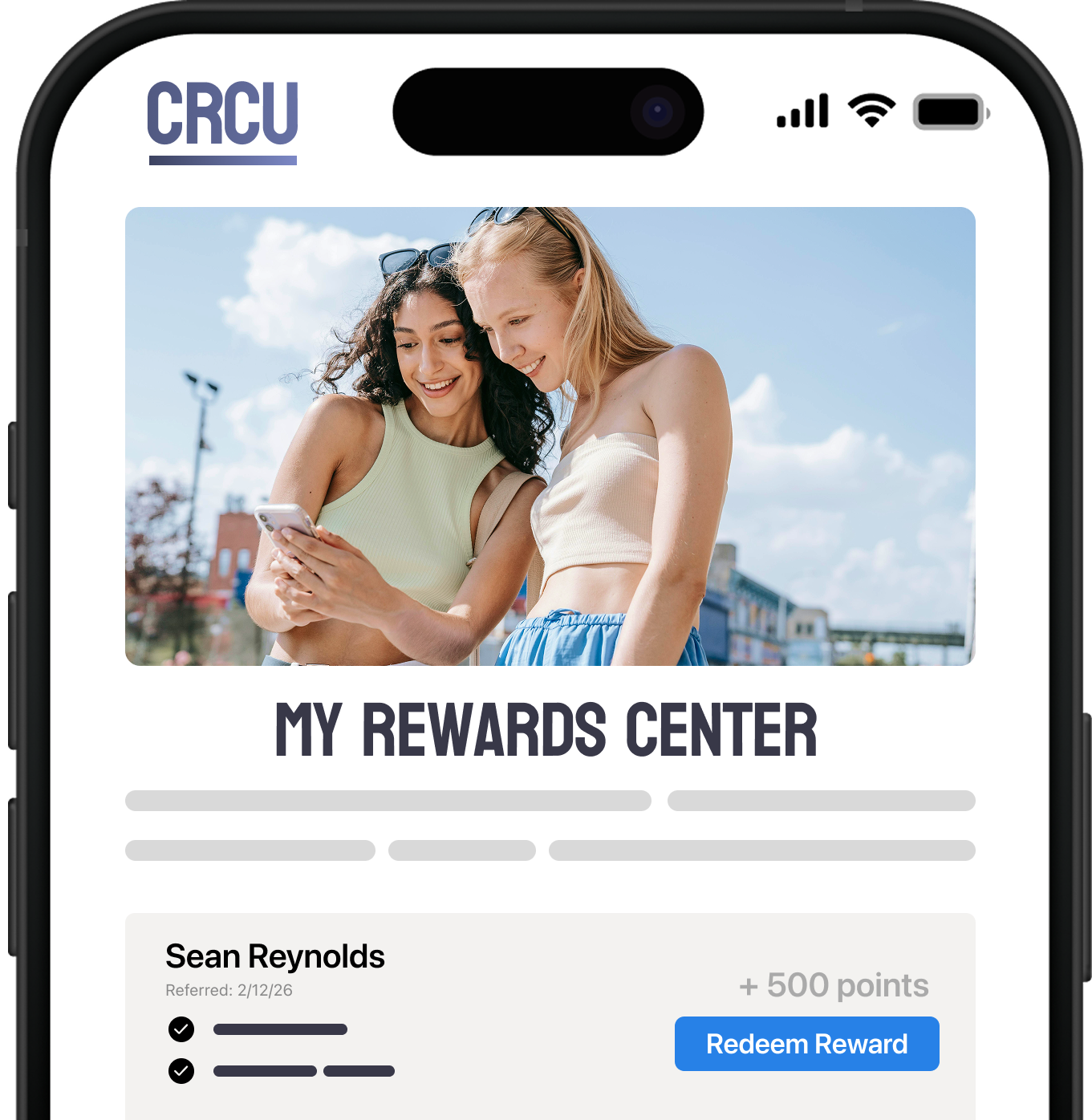 A reward bank lets members earn and redeem bankable "points" for a more flexible reward experience.[/caption] Points and stored rewards allow customers to accumulate value across eligible actions. A threshold can turn several smaller earnings into a later redemption choice. A subscription brand might award points for each qualified referral and allow redemption once a set balance is reached. A telecom brand could combine referral earnings with other loyalty activities into a single visible account. Well-managed bankable referral rewards connect earning rules, balance visibility, thresholds, expiration, redemption, and fulfillment. Teams should also model reward liability and monitor unusual accumulation or redemption patterns.
Non-cash perks can include free products, service add-ons, upgrades, early access, shipping benefits, or premium experiences. Their relevance and unit economics matter more than novelty alone. A travel brand might offer an eligible upgrade after a qualified booking. A subscription business could provide a premium feature or an extra month after the friend becomes a paying customer. Confirm inventory, capacity, substitution rules, and support ownership before launch. Test whether the perk connects naturally to the customer’s next useful action.
Tiered rewards increase or change value after an advocate reaches defined referral milestones. This structure can recognize sustained participation while keeping qualification rules explicit. For example, a program could offer $20 per qualified referral upon entry and $35 per referral after five successful referrals. This is a hypothetical illustration of tier mechanics, not evidence of the right amounts or expected performance. Show progress clearly and define caps, reset periods, tier changes, and eligibility—model total cost exposure before promoting the next milestone.
A seasonal reward burst changes value, adds a multiplier, or introduces a temporary perk during a fixed business window. It can align with a travel booking period, retail season, telecom launch, or home-service demand cycle. Start with a stable baseline and clear campaign dates. Set budget limits, document overlapping promotions, and measure results after the normal program resumes. A seasonal increase should not be labeled incremental without a valid comparison. Use a holdout or controlled test when the program scale and customer experience allow it.
[caption id="attachment_22740" align="aligncenter" width="725"]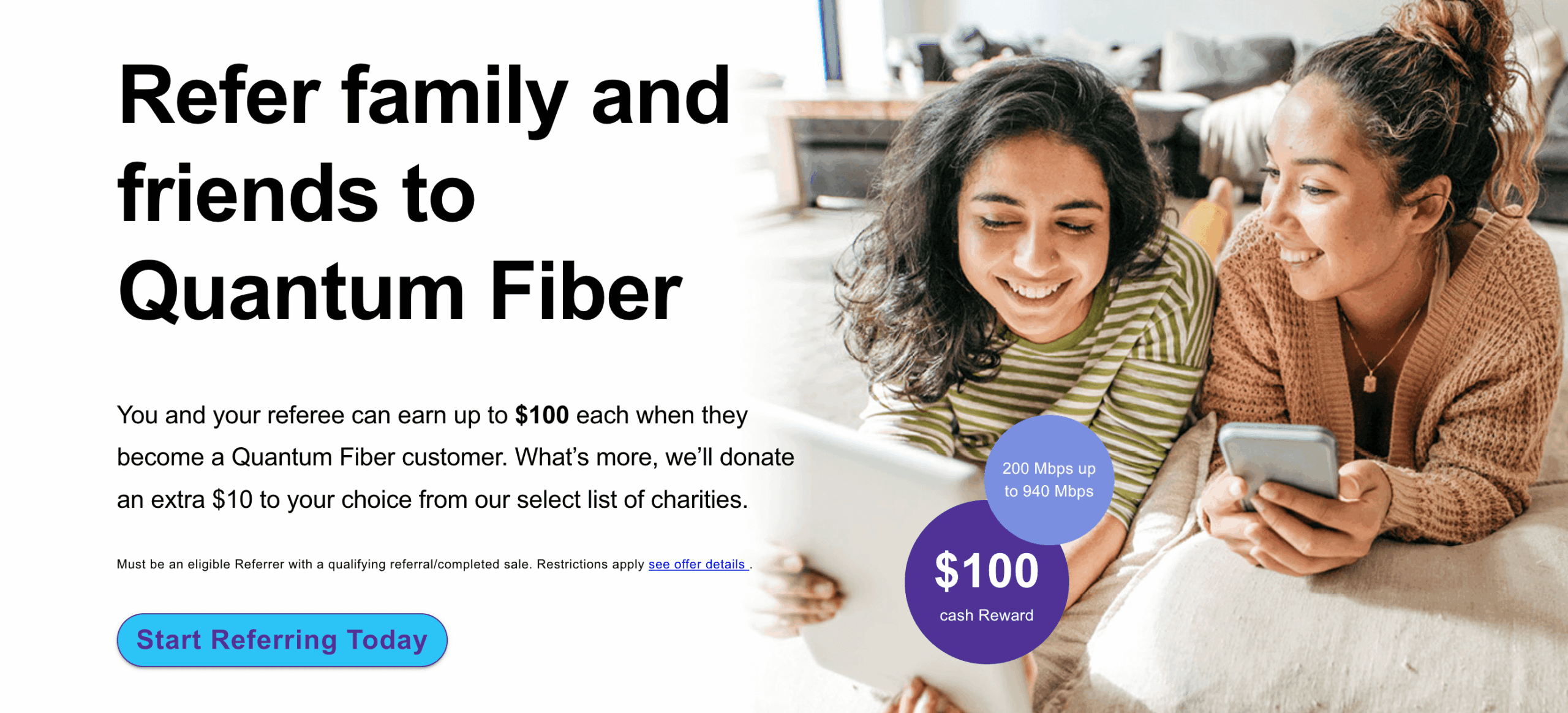 Quantum Fiber offered a unique and compelling incentive to customers—the opportunity to donate to a charity of their choice.[/caption] Partner benefits, charitable donations, and controlled reward menus broaden the program beyond direct discounts or payouts. They can support customer preferences while strengthening a relevant brand relationship. A travel brand could offer a partner experience after an eligible booking. A subscription service could let an advocate choose between increasing their account value and donating to an approved organization. Define partner terms, customer communications, fulfillment ownership, and exception handling. Tax, legal, and compliance teams should review the design where appropriate.
Segment-specific incentives vary the offer by customer status, behavior, product, value, lifecycle stage, geography, or channel. Role-specific rules keep advocate eligibility separate from friend eligibility. An ecommerce brand could test one offer for active loyalty members and another for newly engaged customers. A bank could vary qualifications by product while keeping reward authorization tied to verified account events. Use targeted offer segmentation only when each variation has a clear hypothesis and reporting plan. Track reward cost and customer value by segment to keep personalization governed and measurable.
Enterprise incentive management works best as a repeatable operating sequence. Each step should produce documented rules, owners, metrics, and approvals. The goal is to manage the full offer lifecycle, not make a one-time reward choice. Connected workflows can automate referral reward fulfillment while preserving control over the parts of the process that need human review.
Begin with the customer action and business outcome that the program should influence. Choose one primary metric, such as incremental qualified conversions or net incremental value. Build a bounded reward range using contribution margin or expected customer value. Include qualification rates, reward costs, support costs, cancellation exposure, and fraud risk.
Choose an advocate-only, friend-only, or two-sided structure based on the behavior each role must complete. Avoid copying another program’s structure without testing its fit. The advocate reward aims to motivate sharing and qualified introductions, while the friend reward motivates conversion by providing an additional incentive.
Eligibility describes who can participate and who counts as a new customer. The qualifying event is the verified action that creates a valid reward obligation. That event might be a signup, purchase, activation, payment, funded account, completed service, or period in good standing. Some programs may also wait through a return or cancellation window before authorization. Write the rules in a language that customers and support teams can understand. Separate event tracking, reward authorization, and delivery timing so each status is clear.
Create segments from customer status, behavior, product, value, lifecycle stage, geography, or channel. Use only data that is suitable for the program and available at the decision point. Give every variation one hypothesis, a defined audience, and a reporting plan. This keeps personalized referral incentives tied to measurable business reasoning. Enterprise teams also need campaign governance. Set naming standards, approval owners, conflict rules, budgets, and reporting views across markets and customer groups.
Map the process from authorization through delivery, failed delivery, cancellation, returns reconciliation, and support. Assign ownership for every exception before launch. Layer referral fraud prevention controls according to program value and risk. Useful measures can include clear terms, verified events, velocity monitoring, reward holds, and manual review. Identity, payment, or device checks should be lawful and proportionate. No control removes every risk, so teams should combine prevention, monitoring, investigation, and reconciliation.
Predefine the test design, primary metric, quality metrics, and guardrails. Change one major variable at a time when possible, such as reward type, value, timing, recipient role, or segment. Use reliable attribution and referral tracking metrics across the entire journey. Connect sharing activity to qualification, activation, customer value, reward cost, and program integrity.
Scale a variation only when it meets your quality and economics thresholds. Keep monitoring after launch because audiences, promotions, products, and risk patterns can change.
Extole provides enterprise offer management infrastructure for scalable incentive programs. Its enterprise refer-a-friend platform helps brands configure rewards and manage personalized referral experiences across channels. Teams can apply audience targeting and advanced rules to shape offers for different customer segments. Testing capabilities help marketers compare program variations, while analytics and reporting provide visibility into program performance. Fraud protection helps brands safeguard referral programs as they scale. Global reward capabilities support programs across markets with configurable reward options. APIs and webhooks give technical teams flexible ways to support web and mobile experiences. Brands can also use API-driven conversions and rewards to extend referral programs across customer touchpoints. Together, these capabilities give marketing, product, and technical teams a shared infrastructure for configuring, testing, measuring, and scaling referral incentives. Book a demo to explore how Extole can support your referral incentive strategy.
Effective referral program incentives combine a relevant offer with sustainable economics, clear qualification, reliable delivery, and disciplined measurement. Treat every incentive as a customer promise, then build the rules and controls needed to keep it. Start with one strong hypothesis and improve it with evidence. That approach creates a scalable referral program that can earn customer trust while supporting durable growth.
These answers address common decisions about referral rewards, program operations, and compliance. Apply them to your audience, economics, customer journey, and legal requirements.
No single format is best for every program; choose and test options based on audience, economics, qualifying action, redemption experience, and program goal.
Set a bounded test range that fits the expected contribution margin or customer value, qualification effort, reward cost, and incremental conversion. Avoid treating an industry example as a universal benchmark.
Each structure targets a different behavior, so define separate hypotheses and metrics for advocate sharing and friend conversion. Test the recipient structure that fits your program goal and economics.
Authorize rewards after the program’s stated qualifying event, such as payment, activation, account standing, or a completed return window. State delivery timing clearly without assuming immediate or delayed fulfillment is always better.
Available evidence does not establish a universal winner. Compare cash and gift cards based on audience preferences, economics, delivery, regional availability, redemption, and support requirements.
Use layered controls such as clear terms, verified events, proportionate identity or device checks, velocity monitoring, reward holds, reconciliation, and manual review. Match controls to program value and risk without promising complete prevention.
The FTC incentive disclosure guidance says, “Even an incentive with no financial value might affect the weight or credibility of an endorsement and would need to be disclosed.” Application depends on the facts and channel; this compliance note is not legal advice, and program-specific legal review is appropriate.
A referral reward is tied to a referral action or qualifying customer event. The Consumer Reviews and Testimonials Rule took effect on October 21, 2024, and the FTC rules for incentivized reviews state, “The rule does not prohibit giving incentives for reviews, as long as there isn’t an express or implied requirement that the reviews have to express a particular sentiment.”

Learning how to find high-quality brand ambassadors is one of the most durable growth moves a B2C brand can make. Ambassadors are real customers who use your product and…

Acquisition keeps getting more expensive, so the second and third purchase matter more than ever. Referral programs can do more than bring in new customers. The right referral…

Most enterprise referral, loyalty, and offer platforms support CRM integration. The strongest options enable omnichannel program data, such as contacts, events, and rewards, to…