Blog
Referral Marketing Concepts
What Makes a Great Ecommerce Referral Program in 2026
Courtenay Roche


Products
Enterprise platform
Platform features
Acquisition programs
Retention programs
Learn
Resources
Developers
Documentation
SDKs & GitHub
Blog
Courtenay Roche
Your best customers already talk about your brand. A referral program gives them a reason to do it more often—and rewards them when those conversations turn into sales. This guide covers how ecommerce referral programs work, what separates high-performing programs from forgettable ones, and how to build a program that scales alongside your business.
An ecommerce referral program turns existing customers into brand advocates by rewarding them when they bring in new buyers. A typical setup gives a two-sided incentive—such as a $15 discount or percentage-off coupon for both the referrer and the new friend—tracked automatically via specialized software. Three roles define every referral program:
This structure creates a straightforward value exchange. The advocate feels appreciated for spreading the word, and the friend gets a discount that makes trying something new a little easier.
The referral loop follows a consistent sequence, though the specifics vary by brand.
Timing matters here. The best moment to prompt sharing is right after product delivery, when satisfaction is highest and the experience is still fresh.
People trust recommendations from friends more than they trust advertising. According to Nielsen, 92% of consumers trust referrals from people they know, which makes word-of-mouth one of the most credible forms of marketing available. Beyond trust, referral programs offer practical business benefits:
For ecommerce brands facing rising ad costs—up ~40% between 2023 and 2026—referrals represent a more sustainable path to growth.
What separates a high-performing program from one that sits unused? Several traits consistently appear in the most successful implementations.
Referral pages, emails, and sharing widgets work best when they feel like a natural extension of the brand. A jarring or generic experience can undermine trust. The most effective programs invest in cohesive design that matches the rest of the customer journey.
Rewarding only the advocate—or offering rewards that feel insignificant—limits participation. Two-sided incentives motivate advocates to share while giving friends a compelling reason to convert. Common reward types include percentage discounts, flat-dollar credits, free products, and third-party gift cards.
Not all customers share at the same rate. Segmenting advocates by purchase history, loyalty status, or engagement level allows brands to tailor messaging and rewards. A VIP customer might respond to exclusive perks, while a first-time buyer might appreciate a straightforward discount.
Programs hidden in the footer rarely generate meaningful results. The brands that get the most from referrals promote across email campaigns, SMS, social media, website banners, mobile app prompts, and post-purchase confirmation pages.
Modern programs track every referral event as it happens—clicks, conversions, and reward fulfillment. Attribution connects each referred purchase back to the original advocate, providing the visibility teams need to optimize performance.
Without safeguards, programs can be exploited through fake accounts, self-referrals, or coupon abuse. Enterprise platforms include eligibility rules, identity verification, and automated fraud detection to protect program integrity.
Brands can choose from several program structures depending on their goals.
The classic model where customers share a link and both parties earn a reward upon conversion. This straightforward approach works well for most ecommerce brands.
Longer-term ambassador programs engage high-value customers or micro-influencers who actively promote the brand over time. Tiered rewards often incentivize continued participation.
Incentives for new customers can be paired with referrals to drive first purchases. A friend receives a welcome discount, and the advocate earns a reward when that friend converts.
Creative variations let customers "hint" to friends about products they want or enter sweepstakes for sharing. These formats can generate buzz around specific products or seasonal campaigns.
Some programs reward customers for completing actions beyond referrals—leaving a review, completing a survey, or signing up for SMS. These programs expand engagement opportunities while building toward referral behavior.
Several well-known brands demonstrate what effective referral programs look like in practice.
The sustainable footwear brand features a clean referral landing page with simple messaging and on-brand design. Both parties receive store credit, keeping the reward relevant to repeat purchases.
The mattress company offers third-party gift cards like Amazon as referral rewards. This approach appeals to a broader audience since not everyone wants another mattress right away.
Their visually appealing referral page features a clear reward structure and easy sharing options across multiple channels. The experience feels consistent with the brand's approachable identity.
This outdoor apparel brand keeps things straightforward with user-friendly language and minimal friction. Sometimes simplicity is the most effective approach.
A few practices consistently appear in high-performing programs.
Choose reward values that motivate sharing without eroding margins. Consider what your audience actually wants—store credit works well for brands with repeat purchase potential, while gift cards might suit one-time purchase categories.
Place referral CTAs in high-visibility locations: account dashboards, order confirmation pages, email footers, and mobile app navigation. If customers can't find the program, they can't participate.
Tailor messaging based on customer segment. Loyal customers might respond to exclusive language and premium rewards, while newer customers might appreciate more education about how the program works.
Use email campaigns, SMS, social media, website banners, and in-app prompts to drive awareness. The brands seeing the strongest results promote through every touchpoint available.
Run A/B tests on reward amounts, messaging, landing page design, and CTAs. Small improvements compound over time into significant performance gains.
Understanding common challenges helps brands build stronger programs from the start.
Programs buried deep in site navigation generate minimal participation. Visibility directly correlates with engagement.
Rewards that don't resonate with your audience reduce motivation to share. Aligning incentives with customer preferences makes a meaningful difference.
Without fraud prevention, programs can be exploited. Enterprise platforms include automated detection and eligibility controls to maintain program integrity.
Referral programs perform best as always-on initiatives that receive continuous optimization, not campaigns launched and forgotten.
| Tracking the right metrics helps teams evaluate performance and identify opportunities. Metric | What It Measures |
|---|---|
| Referral conversion rate | Percentage of referred visitors who complete a purchase |
| Customer acquisition cost | Cost to acquire a customer through referrals vs. other channels |
| Advocate participation rate | Percentage of customers who actively share referrals |
| Lifetime value of referred customers | Long-term revenue from customers acquired through referrals |
This metric indicates how compelling the offer and experience are for referred visitors. A low rate might signal friction in the checkout process or misaligned messaging.
Comparing referral CAC to paid channel CAC demonstrates program efficiency. With average ecommerce CAC rising to $318, many brands find referrals deliver customers at a fraction of that cost.
The percentage of eligible customers who actively share referrals reveals program health. Low participation often points to visibility or reward issues worth investigating.
Tracking whether referred customers have higher retention and repeat purchase rates validates the quality of referral-driven acquisition.
Selecting the right platform depends on your brand's specific requirements and growth trajectory. A few evaluation criteria consistently matter:
Enterprise brands often benefit from platforms with deep integration capabilities, advanced segmentation, and configurable program logic that can evolve alongside the business.
Great referral programs function as strategic growth engines, not one-off campaigns. They connect seamlessly with existing marketing infrastructure, adapt to changing business needs, and deliver measurable results over time. The brands seeing the strongest returns treat referrals as a core acquisition channel worthy of the same attention given to paid media or email marketing. With the right platform, teams can launch quickly, test continuously, and scale confidently. Request a demo to see how Extole helps ecommerce brands build referral programs that grow with their business.
A referral program rewards existing customers for recommending friends, while an affiliate program compensates third-party partners—bloggers, influencers, and publishers—for driving sales through tracked links. The key distinction is the relationship: referrals leverage personal connections, while affiliates operate as marketing partners.
The ideal reward depends on product margins and customer lifetime value. Most ecommerce brands offer discounts between 10-20%, store credit of $10-25, or free products that feel meaningful without significantly impacting profitability.
Enterprise referral platforms use fraud prevention features like eligibility rules, identity verification, and real-time event tracking to detect and block fake referrals, self-referrals, and coupon abuse automatically.
Yes, new stores can launch referral programs to turn early customers into advocates. Results typically improve as the customer base grows, but starting early establishes the program as part of the customer experience from the beginning.
With a modern referral platform, brands can launch a basic program in days. More customized programs with deep integrations may take longer to configure and test, though enterprise platforms often provide templates that accelerate the process.

Credit unions face a familiar tension: compete with institutions that outspend you ten-to-one on advertising, or find smarter ways to grow. The good news is that credit unions…
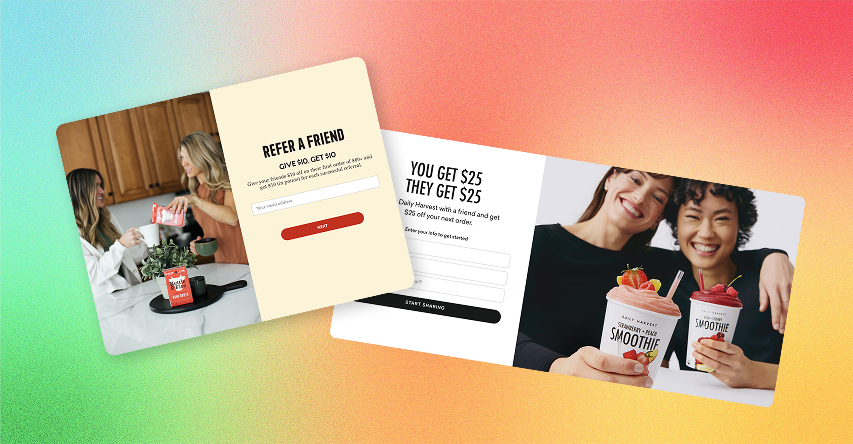
Your best customers already talk about your brand. A referral program gives them a reason to do it more often—and rewards them when those conversations turn into sales.

Offer management software is a platform that centralizes how businesses create, deliver, personalize, and track customer incentives—from referral rewards and welcome offers to…