

Repeat customers drive profitability. According to research from Bain & Company, increasing customer retention by just 5% can boost profits by 25% to 95%—yet most ecommerce brands still spend the majority of their budget chasing new buyers.
An ecommerce loyalty platform helps shift that balance by giving customers a structured reason to come back. This guide ranks the top platforms for 2026, breaks down the program types that work best for online brands, and covers the features that separate enterprise-ready solutions from basic apps.
What is an ecommerce loyalty platform
An ecommerce loyalty platform is software that rewards customers for purchases and engagement, turning one-time buyers into repeat shoppers. Unlike basic discount codes, loyalty platforms track customer behavior, assign points or rewards, and let shoppers redeem perks over time. The goal is straightforward: give customers a reason to come back.
Most platforms handle three core functions:
- Reward tracking: Automatically credits points when customers buy something or complete an action like writing a review
- Redemption management: Lets customers claim discounts, free products, or exclusive perks
- Program customization: Configures earning rules, membership tiers, and reward types to fit each brand’s goals
Why ecommerce brands invest in loyalty platforms
Keeping existing customers costs less than finding new ones. Loyal customers also tend to spend 67% more per order and shop more frequently. A structured loyalty program creates predictable revenue—72% of consumers say loyalty programs give them an ongoing reason to choose a brand over competitors.
Beyond retention, loyalty platforms help brands collect first-party data about customer preferences and behavior. This data fuels personalization across email, ads, and on-site experiences. In crowded markets, a well-designed rewards program also sets brands apart from competitors offering similar products.
Top ecommerce loyalty platforms ranked
The right platform depends on your business size, technical resources, and how complex your program will be. Some platforms offer quick setup with templates, while others provide configurable infrastructure for custom programs.
Extole
Extole is an enterprise offer management platform that brings loyalty, referral, promotions, and incentive programs together under one roof. Instead of running separate tools for each program type, brands build custom programs using shared customer data and unified reward fulfillment.
The platform’s API-first design makes it accessible to developers, and marketers can configure programs without engineering help. Extole works well for enterprise and mid-market B2C brands that want flexibility beyond pre-built templates.
Yotpo
Yotpo combines loyalty with reviews, SMS, and email marketing in one retention suite. The platform integrates deeply with Shopify and supports omnichannel programs. DTC brands often choose Yotpo when they want a single vendor for multiple retention tools.
Smile.io
Smile.io is the go-to loyalty app for Shopify merchants. Setup takes minutes, with ready-made options for points programs, VIP tiers, and referrals. Small to mid-sized Shopify stores that want fast deployment typically start here.
LoyaltyLion
LoyaltyLion focuses on engagement analytics and program benchmarking. The platform offers dedicated loyalty pages and tools to measure program performance. Brands that prioritize data-driven optimization often evaluate LoyaltyLion.
Annex Cloud
Annex Cloud serves large enterprises with complex organizational structures. The platform supports coalition loyalty across multiple brands or partners, making it a fit for retailers managing several storefronts.
Talon.One
Talon.One works as a promotion and loyalty engine with rule-based campaign management. Brands with sophisticated promotional logic—conditional discounts, stacking rules, or complex eligibility—often choose Talon.One for its flexibility.
Antavo
Antavo positions itself as an enterprise loyalty cloud with AI-powered personalization. The platform emphasizes experiential and lifestyle rewards beyond traditional discounts. Brands looking to build emotional connections through experiences often consider Antavo.
Open Loyalty
Open Loyalty takes a headless, API-first approach built for developers. Technical teams with specific requirements and resources to build custom frontends often evaluate Open Loyalty for its flexibility.
Voucherify
Voucherify provides a promotions and loyalty API with strength in coupon management. Tech-forward brands that want programmable incentive infrastructure tend to consider Voucherify.
Friendbuy
Friendbuy combines referral and loyalty with strong attribution and A/B testing. Growth teams focused on measurable advocacy programs often find Friendbuy valuable.
| Platform | Best For | Key Strength | Enterprise Ready |
|---|---|---|---|
| Extole | Enterprise B2C | Configurable offer infrastructure | Yes |
| Yotpo | DTC brands | All-in-one retention suite | Yes |
| Smile.io | Shopify merchants | Fast Shopify deployment | Limited |
| LoyaltyLion | Data-driven teams | Retention analytics | Yes |
| Annex Cloud | Multi-brand enterprise | Coalition loyalty | Yes |
| Talon.One | Promotion-heavy brands | Rule-based campaigns | Yes |
| Antavo | Experiential programs | AI personalization | Yes |
| Open Loyalty | Developer teams | Headless architecture | Yes |
| Voucherify | Technical teams | Programmable APIs | Yes |
| Friendbuy | Growth teams | Referral attribution | Yes |
Types of ecommerce loyalty programs
Different program structures work better for different business models. The right choice depends on your margins, customer behavior, and what motivates your audience.
Points-based loyalty programs
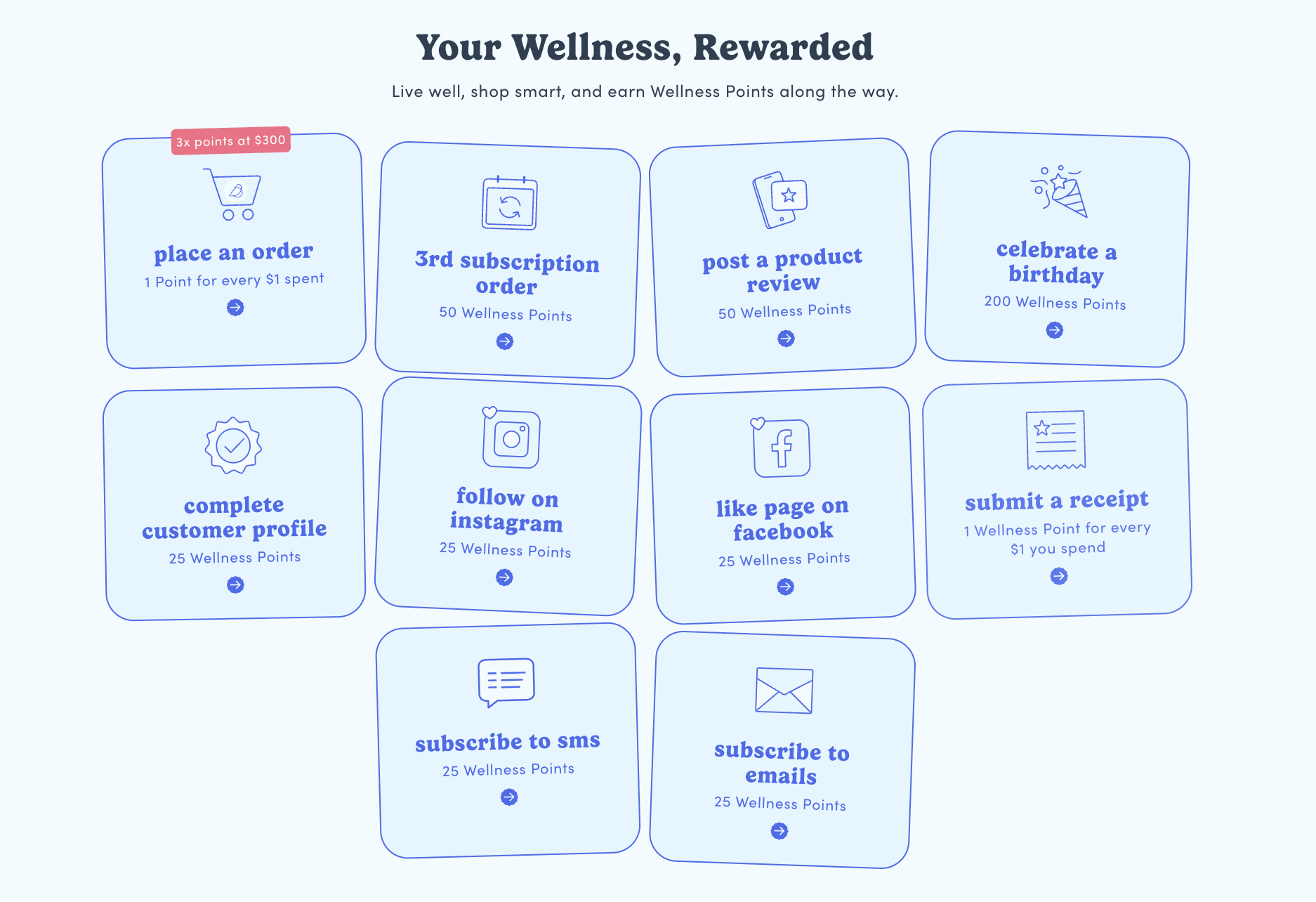
In points-based loyalty programs, loyalty members earn points per dollar spent or per action completed, then redeem points for rewards. In the example above from LiveWell, customers are encouraged to make purchases, become subscribers, and engage with the brand on social media in exchange for “Wellness points.” Points-based programs are the most common loyalty structure because it’s easy to understand. Brands can adjust earning and redemption rates to control program costs.
Tiered loyalty programs
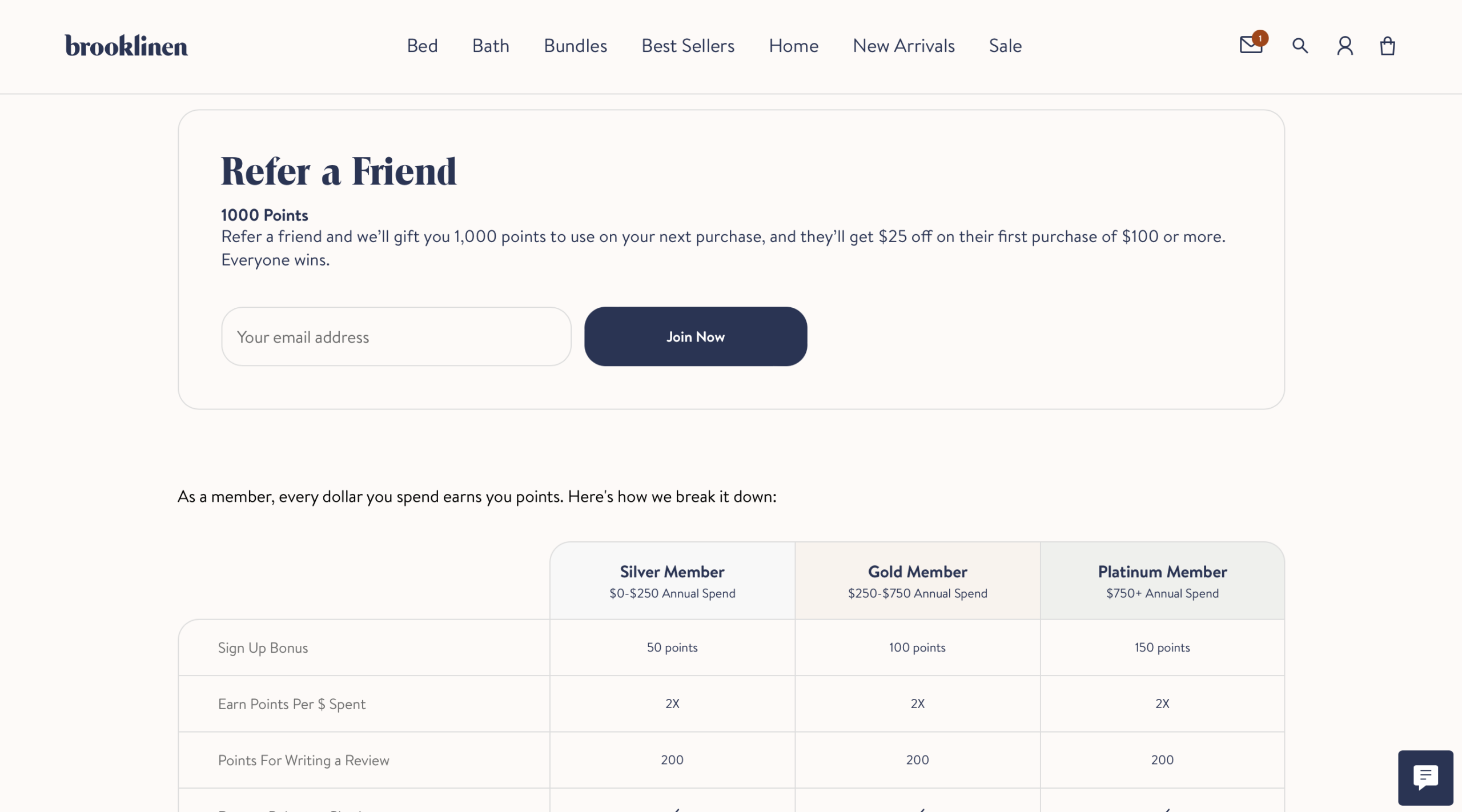
VIP structures unlock better benefits at higher spending thresholds. Think Silver, Gold, and Platinum levels, like this example from the trendy D2C bedding company Brooklinen. Loyalty tiers create aspiration and reward top customers with exclusive perks, early access, or enhanced earning rates.
Cashback and store credit programs
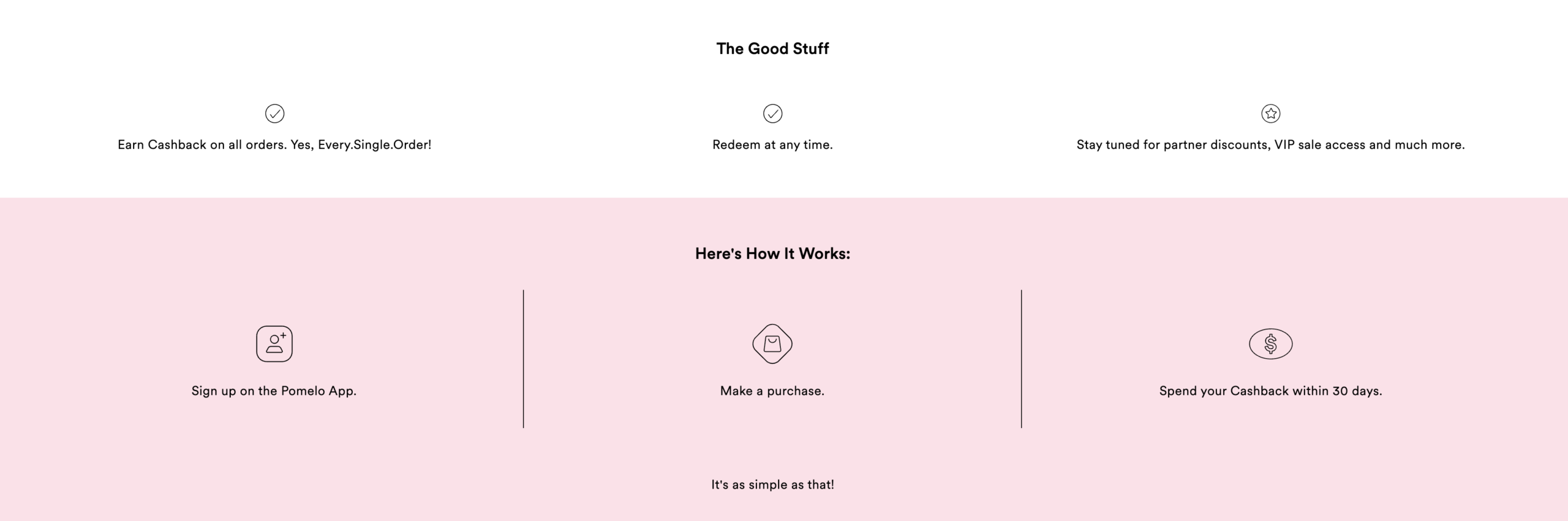
With a cashback loyalty program, a percentage of each purchase returns as credit toward future orders. Pomelo fashion app offers customers cashback on every order as a way to make customers feel rewarded for every dollar they spend. The value proposition is simple and direct, which often drives strong repurchase behavior.
Referral and advocacy programs
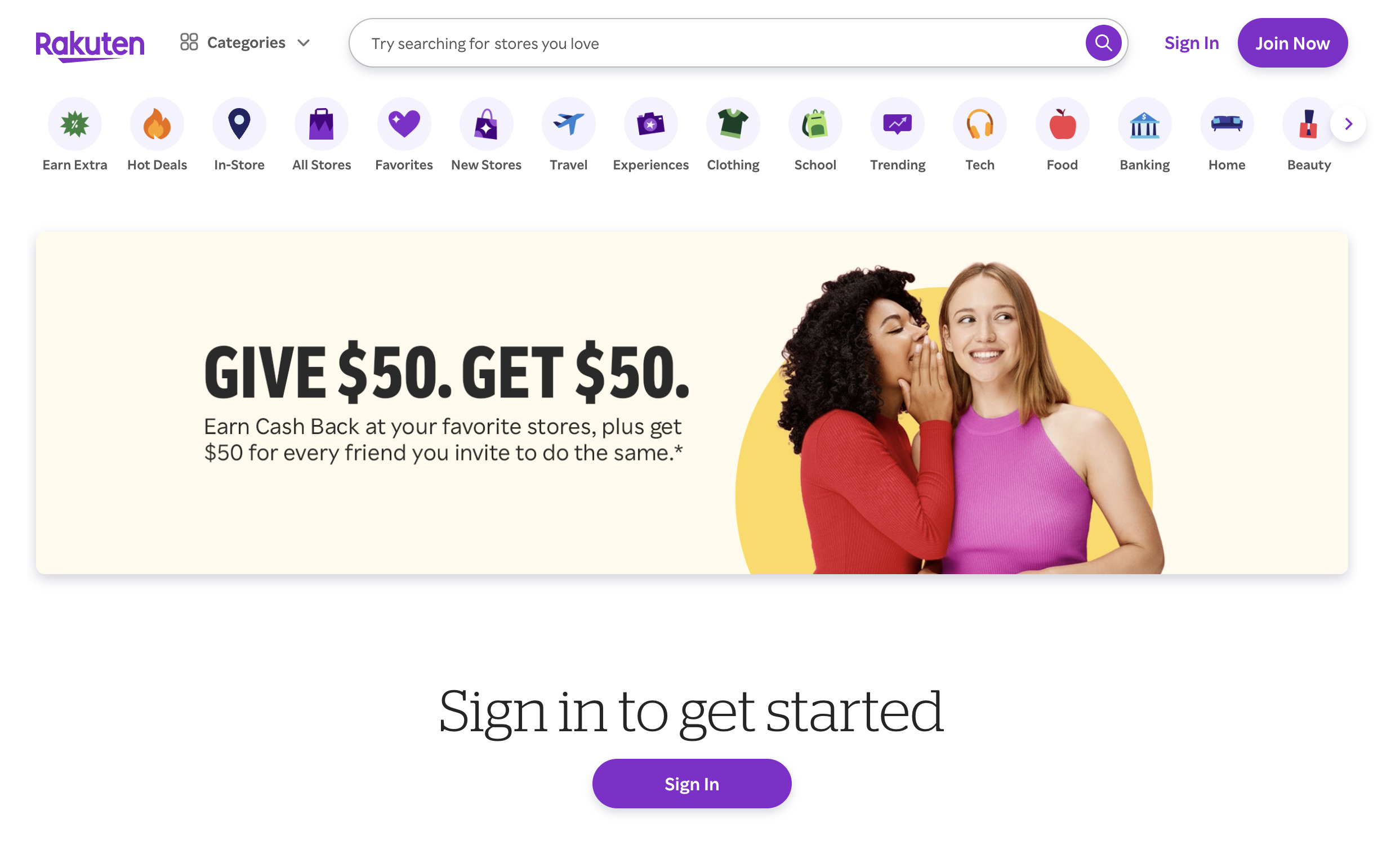
Loyal customers earn rewards for referring friends who convert. Referral programs connect retention with acquisition—your best customers become an effective marketing channel. Platforms like Extole unify loyalty and referral under one infrastructure, so brands can track how loyalty members perform as advocates.
Gamified and experiential loyalty programs
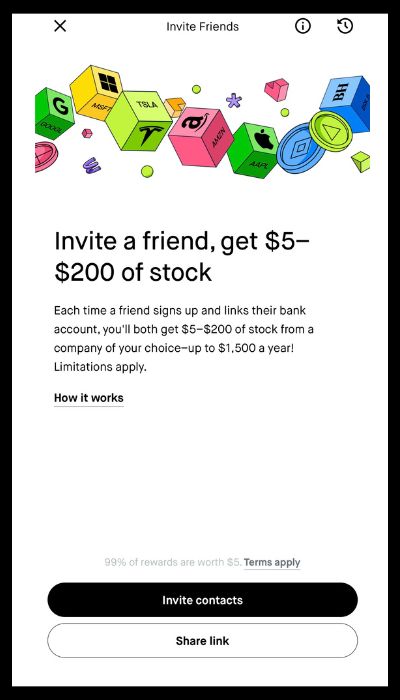
Challenges, badges, or other engaging experiences serve as rewards alongside traditional discounts. Robinhood famously leveraged gamification by offering customers a random stock when they created an account—the excitement of the mystery stock value drove signups more than a fixed offer would have. Gamified programs drive engagement beyond transactions and build emotional connection with the brand.
Features to evaluate in an ecommerce loyalty platform
Not all platforms offer the same depth. Enterprise brands typically evaluate several core capabilities when selecting a platform.
Personalized rewards and offers
Generic rewards underperform targeted incentives—McKinsey reports 76% of consumers get frustrated without personalized interactions. Look for platforms that tailor rewards based on customer behavior, preferences, and lifecycle stage. Key capabilities include dynamic reward recommendations, segment-specific offers, and real-time personalization across channels.
Configurable earning and redemption rules
Flexible rules let you match program mechanics to business goals. Examples include bonus points for specific products, limited-time multipliers, or conditional redemption based on cart value.
Audience segmentation and behavioral targeting
Targeting based on purchase frequency, customer lifetime value, or engagement level enables differentiated campaigns. Segmentation is essential for treating high-value customers differently than occasional shoppers.
APIs, SDKs, and developer access
Enterprise brands often want programmatic access to embed loyalty into apps, websites, and backend systems. Look for REST APIs, mobile SDKs, and webhook support.
Fraud prevention and reward governance
When rewards have real financial value, built-in controls become critical. Velocity checks, eligibility verification, and audit trails help prevent abuse and protect program economics.
Analytics and program reporting
Dashboards showing redemption rates, program ROI, and member engagement help teams optimize over time.
Integrations with commerce, CRM, and CDP systems
Essential integrations include ecommerce platforms like Shopify and Salesforce Commerce, CRMs, CDPs, email and SMS tools, and payment systems.
How to choose the right ecommerce loyalty platform
Rather than comparing feature checklists, focus on matching platform capabilities to your specific requirements.
- Define program goals: Prioritize retention, acquisition, engagement, or a combination
- Assess technical requirements: Consider API access and existing tech stack
- Evaluate configurability: Confirm the platform supports your specific program rules
- Check integration depth: Determine whether native connectors exist or custom development is required
- Consider scalability: Ensure the platform grows with transaction volume
- Review security and compliance: Look for SOC 2 certification, GDPR compliance, and fraud controls
How loyalty connects with referral and promotional programs
Modern platforms increasingly unify loyalty, referral, and promotions under one offer management layer. This approach eliminates fragmentation from running separate tools for each program type.
When programs share infrastructure, brands gain several advantages:
- Shared customer profiles: Loyalty status informs referral incentives, and referral activity influences tier progression
- Unified reward infrastructure: One system handles points, discounts, and referral bonuses
- Cross-program insights: Teams can see how loyalty members perform as advocates
- Consistent experience: Customers interact with one cohesive program rather than disconnected tools
The future of ecommerce loyalty platforms
Several trends are reshaping loyalty technology. AI-powered personalization enables real-time offer decisioning based on customer behavior. Meanwhile, developer-accessible platforms make it easier for technical teams to build custom experiences.
Key trends include AI-assisted program configuration, hyper-personalization based on real-time behavior, composable API-first architecture, and omnichannel unification across web, mobile, and in-store.
Build a configurable loyalty program with Extole
Extole treats every incentive—loyalty, referral, and promotion—as part of one configurable infrastructure. Rather than forcing programs into rigid templates, the platform gives enterprise brands building blocks to create programs that match specific business goals.
Developer-ready APIs, AI accessibility, and enterprise-grade security make Extole a fit for brands that want flexibility without rebuilding offer infrastructure from scratch.
Frequently asked questions about ecommerce loyalty platforms
How much does an ecommerce loyalty platform typically cost?
Pricing varies based on features, transaction volume, and support level. Basic apps may offer free tiers, while enterprise platforms involve custom contracts. Most mid-market platforms charge monthly fees plus usage-based pricing tied to members or transactions.
What is the difference between a loyalty app and a loyalty platform?
A loyalty app is typically a standalone tool with preset templates and limited customization. A loyalty platform offers configurable infrastructure with APIs, integrations, and flexible program logic for complex or custom programs.
Can an ecommerce loyalty platform integrate with a headless commerce stack?
API-first loyalty platforms are designed for headless architecture. Brands can embed loyalty functionality into custom frontends, mobile apps, and backend systems through REST APIs and webhooks.
How long does it take to launch a loyalty program on a new platform?
Launch timelines range from days for template-based apps to several weeks for enterprise programs. Timing depends on custom integrations, complex rules, and branded experience requirements.
How do ecommerce loyalty platforms prevent reward fraud and abuse?
Enterprise platforms include fraud prevention controls such as velocity limits, eligibility verification, device fingerprinting, and audit trails. Controls help ensure rewards are earned legitimately and fulfilled accurately.