
The global telecom market is growing rapidly, with 5G subscriptions projected to reach 7.51 billion by 2028, according to PwC. However, increased competition means that the average revenue per unit (RPU) is actually declining.
Growth-oriented telecoms need to get creative to maintain profitability – that means finding ways to cut costs while still prioritizing subscriber acquisition. Many telecom companies have unlocked efficient growth through referral and engagement programs, and the most creative among them are seeing impressive results. We chose nine telecom referral program examples to demonstrate exactly how industry leaders are driving acquisition and engagement.
The Benefits of Referral Marketing for Telecom Companies
- Reduce Acquisition Costs: Traditional acquisition channels like paid media are prohibitively expensive with diminishing returns. Referrals, which rely on the advocacy of your existing customers, offer fixed, low-cost growth and consistently high-value customers.
- Retain Existing Subscribers: With so many options available, subscribers aren’t loyal to the same company like they used to be. Referral rewards strengthen loyalty and keep your customers around longer.
- Boost Field Sales Efforts: Incentivize on-the-ground employees and property managers with a cash reward for each successful referral.
- Drive Cross-Selling: Encourage existing customers to engage with more products by offering them rewards for upgrading or adding new lines.
9 Standout Telecom Referral Program Examples to Learn From
How can you make your referral program stand out? Take inspiration from these nine mobile carriers and ISPs whose eye-catching referral programs have set the bar for growth-oriented telecoms.
1. Zentro’s Telecom Referral Program Targets Property Managers
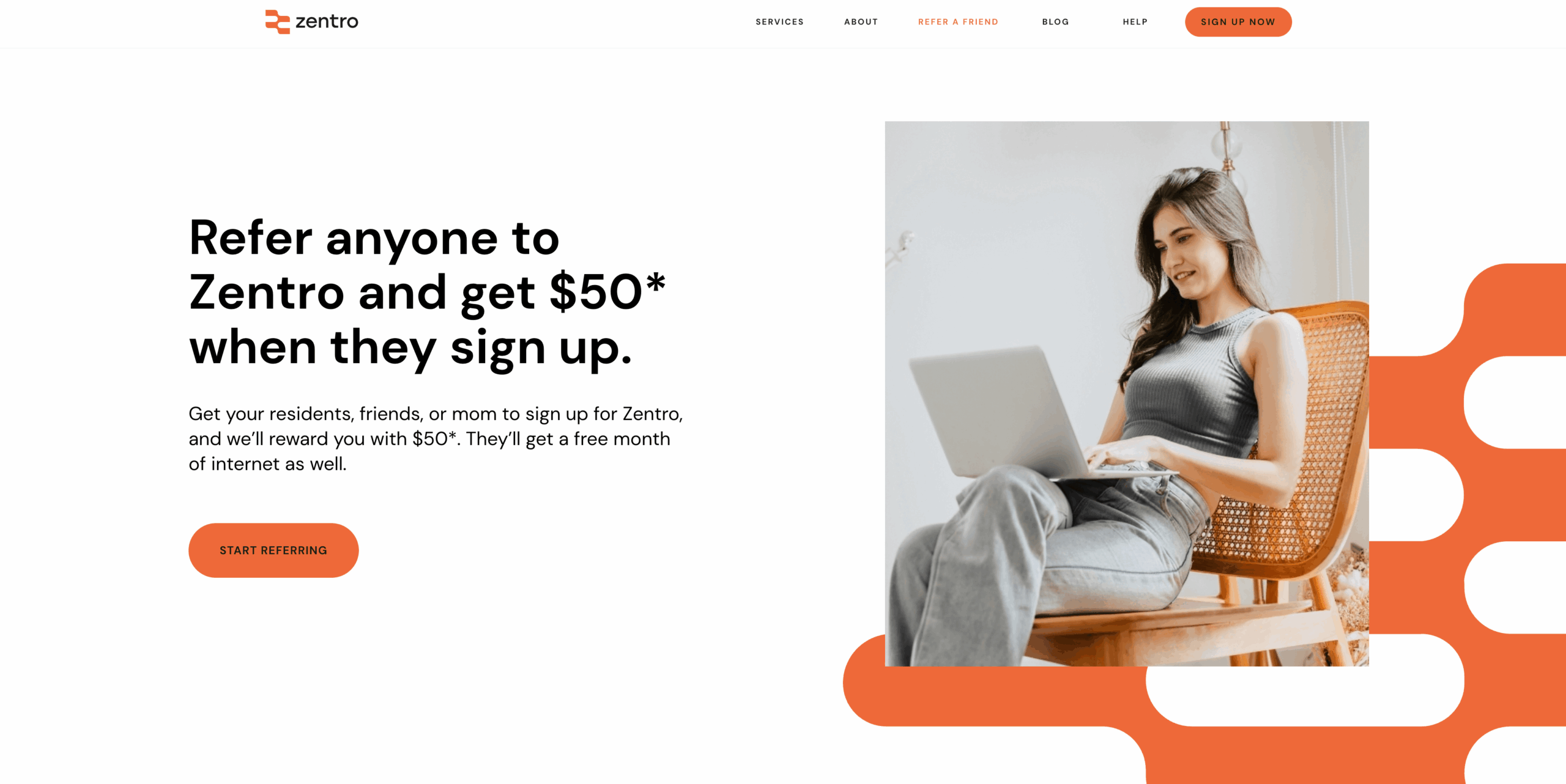
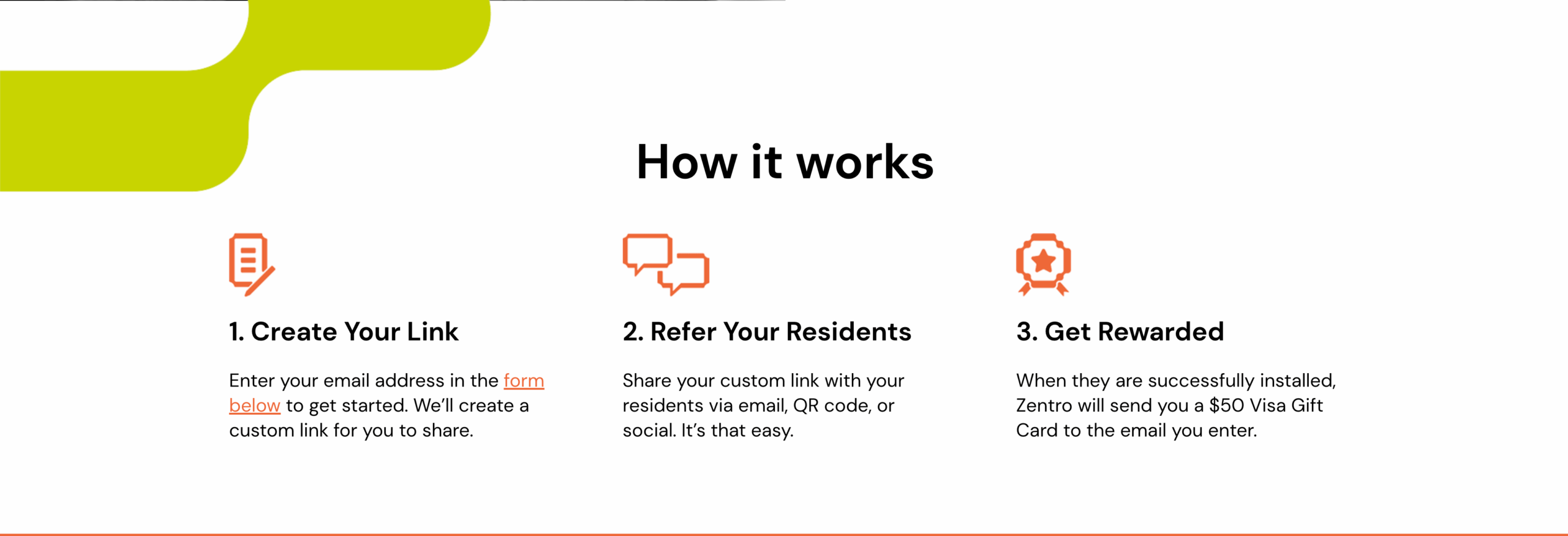
Internet service provider Zentro highlights the benefits of their referral program for property managers, encouraging them to share their referral code with residents to rake in big rewards. With a prominent placement on their homepage, a welcome pop-up, and an email flow, Zentro’s program is easy to find. While individuals can still participate in the referral program, targeting property managers means more opportunities for higher-volume referrals.
2. Mint Mobile’s Telecom Referral Program Offers Big Up-Front Rewards
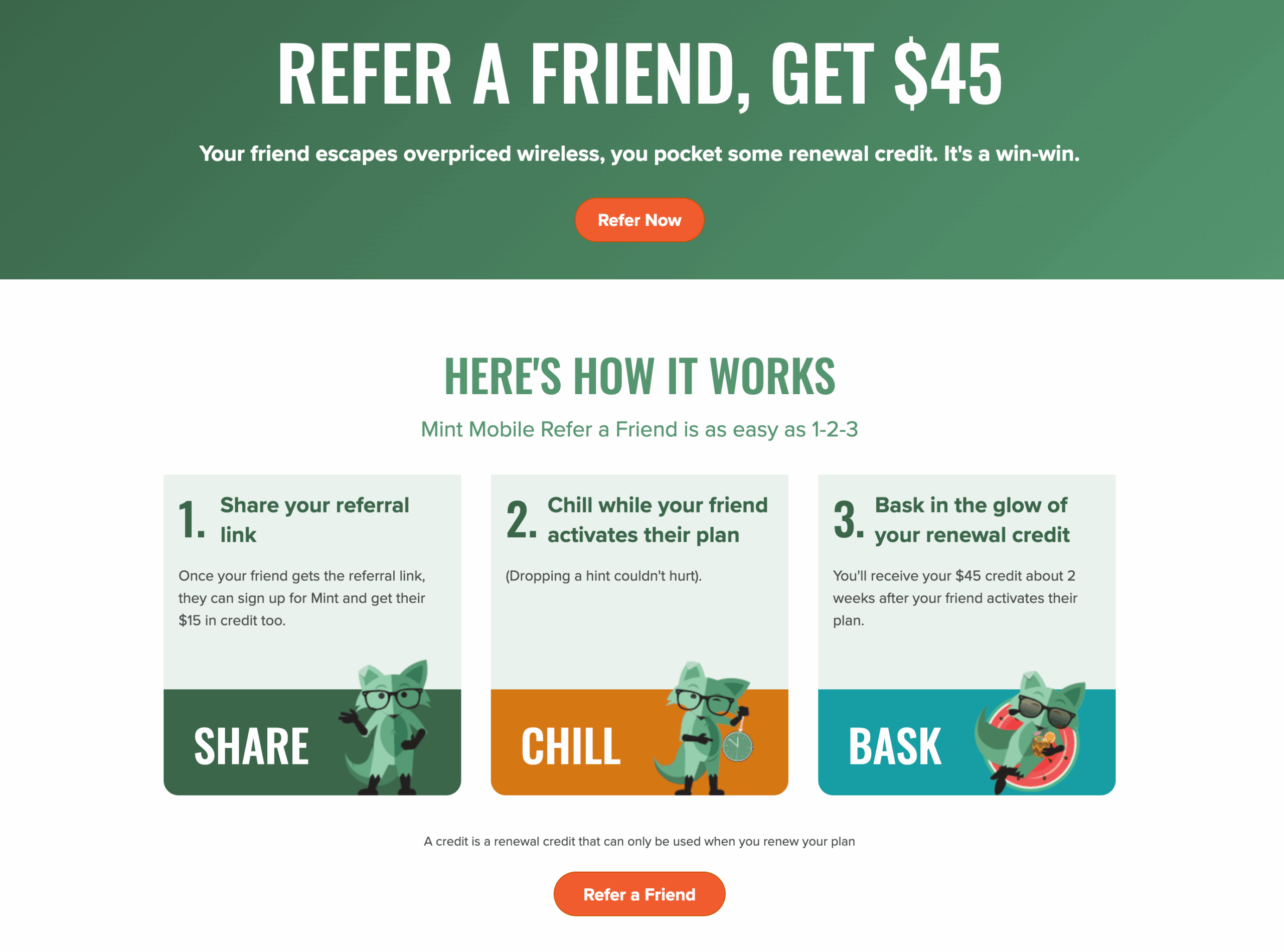
This popular celebrity-owned mobile provider achieved rapid growth partly thanks to their inexpensive plans and generous referral program that offers subscribers $45 credit upfront for each successful referral. Not only does this encourage customer acquisition, using renewal credit as a reward also promotes retention–customers will be more incentivized to stick with their plan as they start accumulating credit. A mobile referral dashboard makes it easy to track your progress.
3. Verizon’s Telecom Referral Program Touts Stackable Rewards
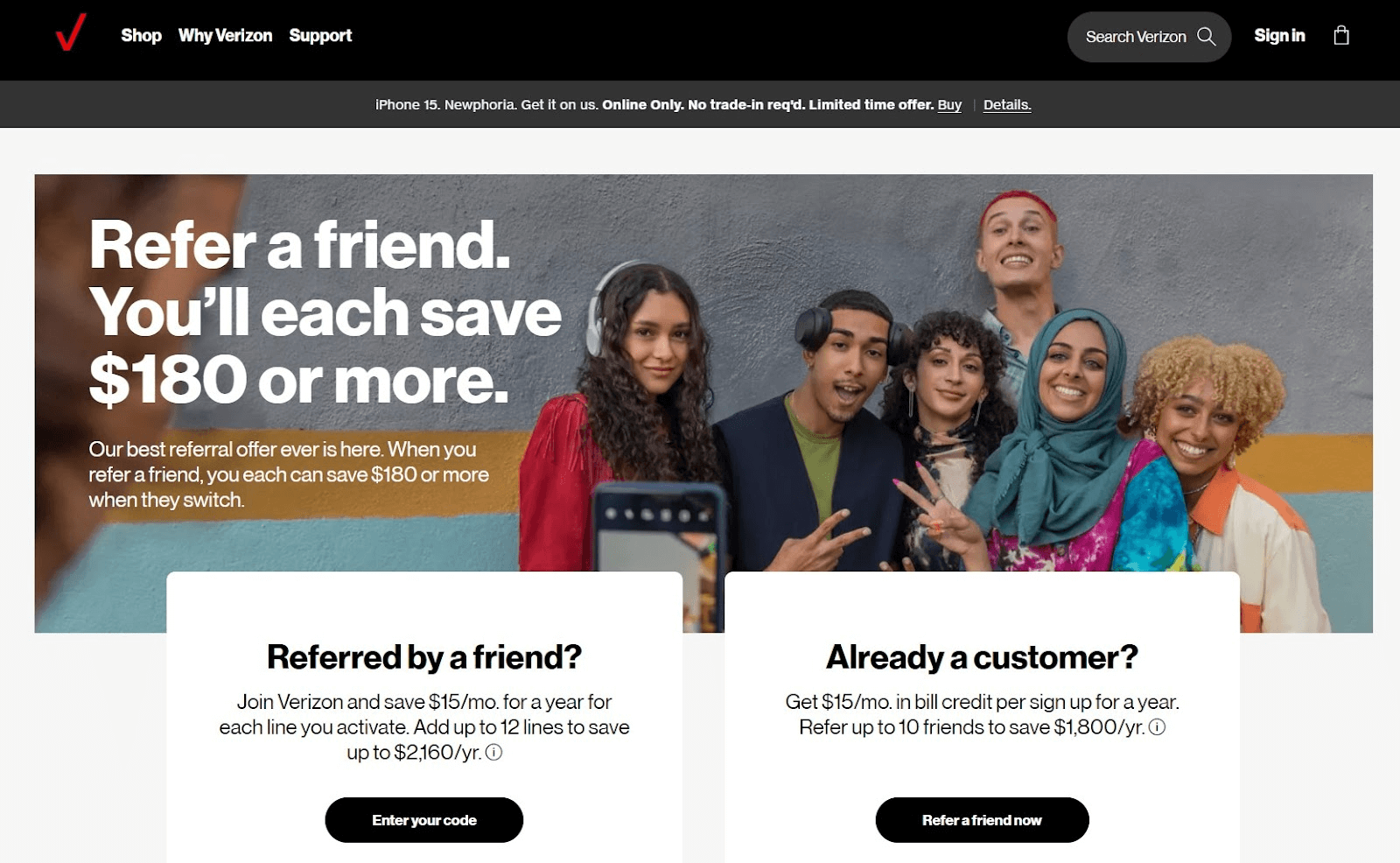
Verizon’s referral program encouraged repeat referrals by giving customers the opportunity to earn credit for up to ten successful referrals. The promise of a minimum $180 reward is highly compelling, driving more participants to convert.
4. Trendy Branding Elevates Boost Mobile’s Referral Program
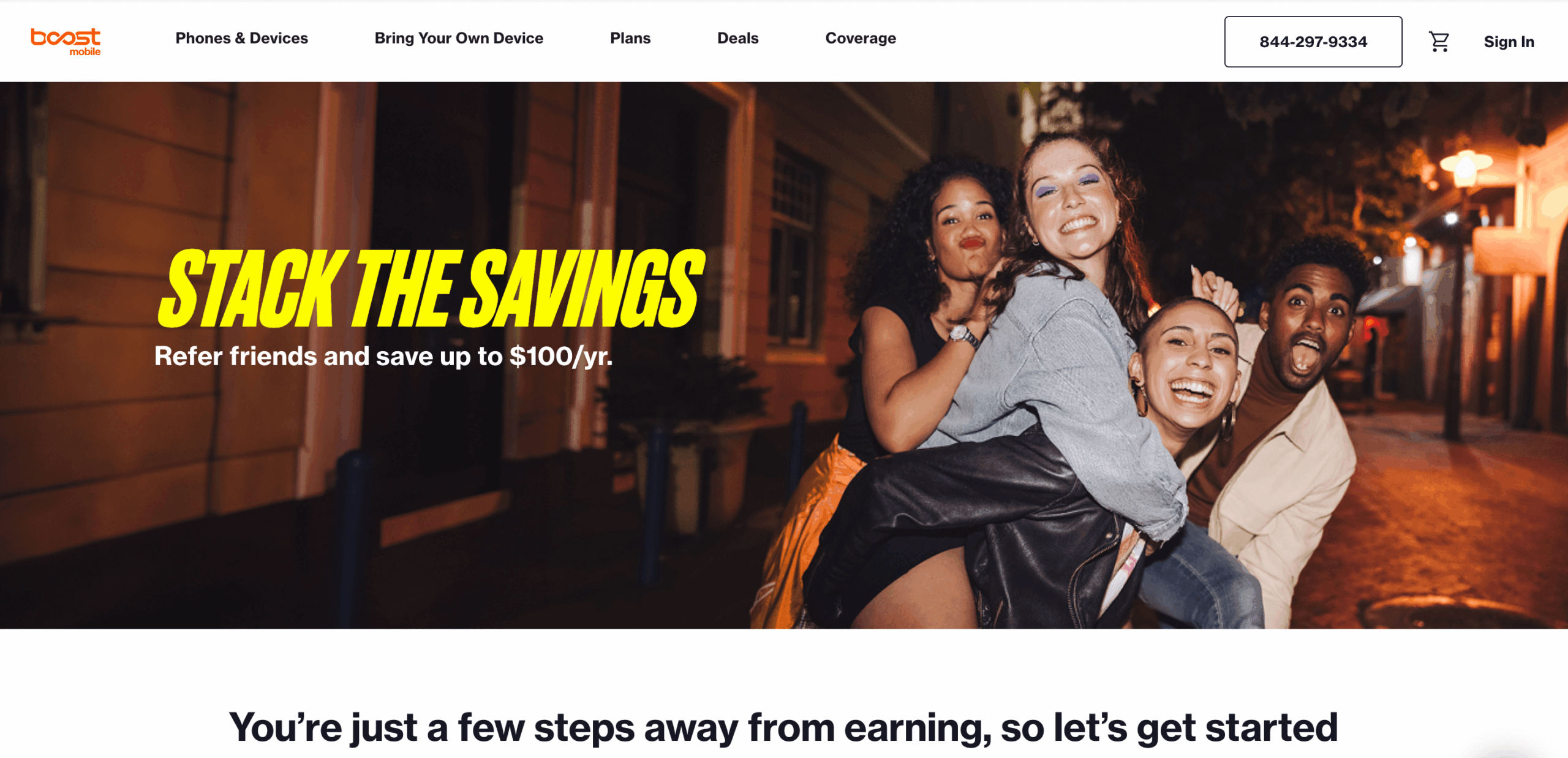
Eye-catching imagery, bold fonts, and punchy messaging make this telecom referral program stand out. Boost Mobile proves that bold, on-brand visuals can make a real difference in program visibility, especially for telecoms looking to target a younger audience.
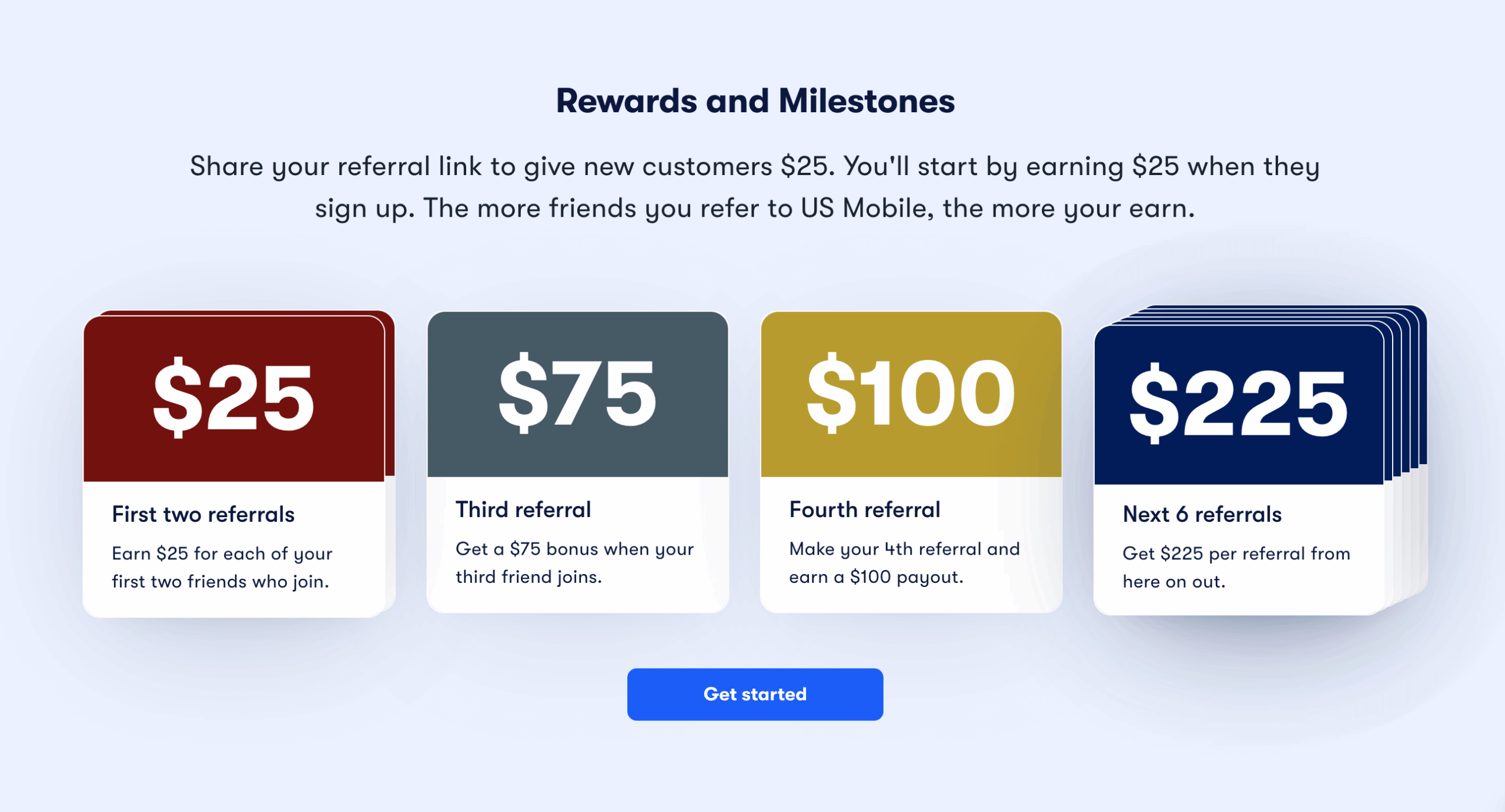
5. US Mobile’s Referral Program Promotes Quick Action With a Limited-Time Offer
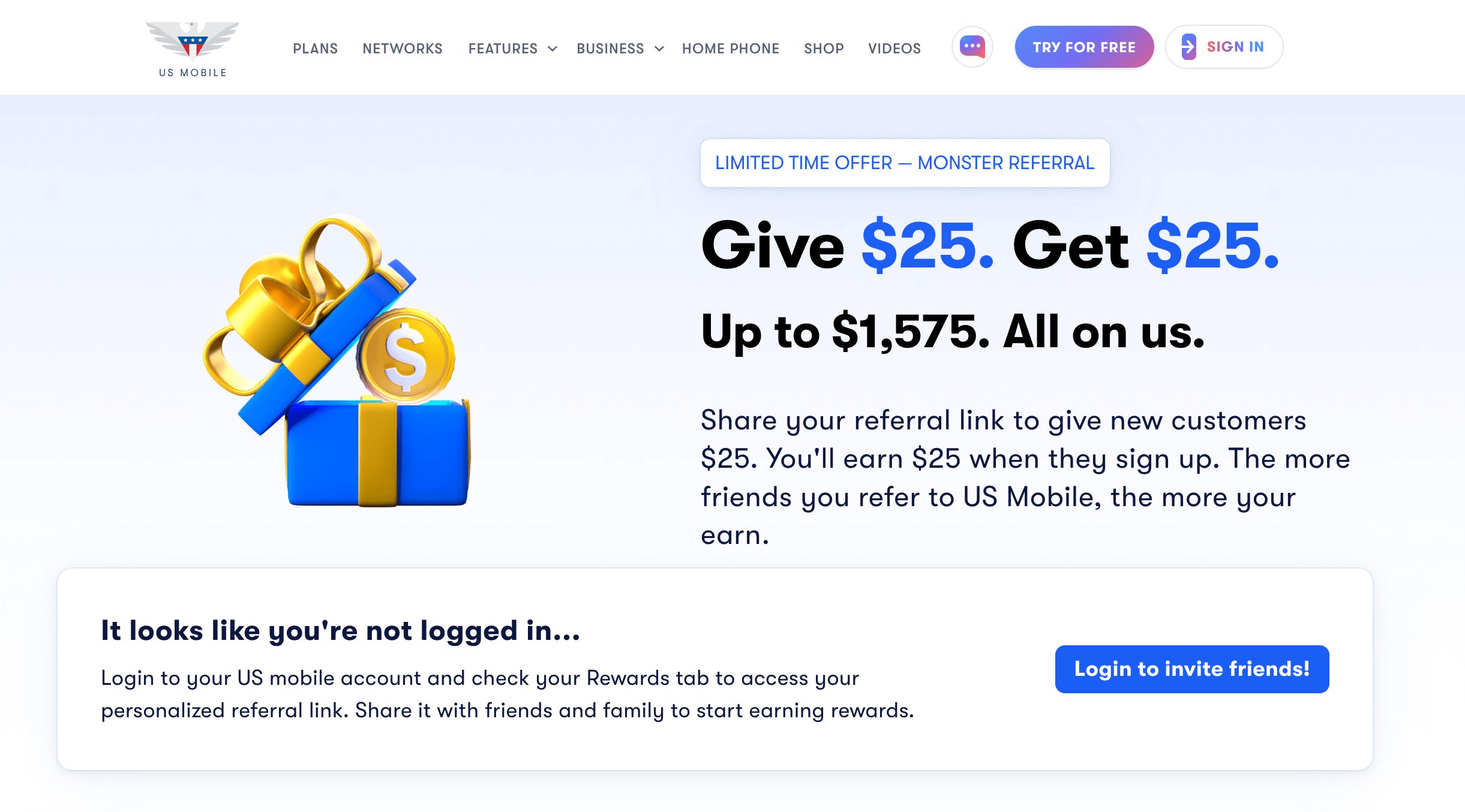
US Mobile’s telecom referral program is all about the reward. By placing emphasis on how much customers can earn AND the limited-time nature of the deal, the prepaid carrier makes customers want to act fast. Tiered rewards add to the value: the more referrals you make, the more money you earn for each one. That’s a deal worth sharing!
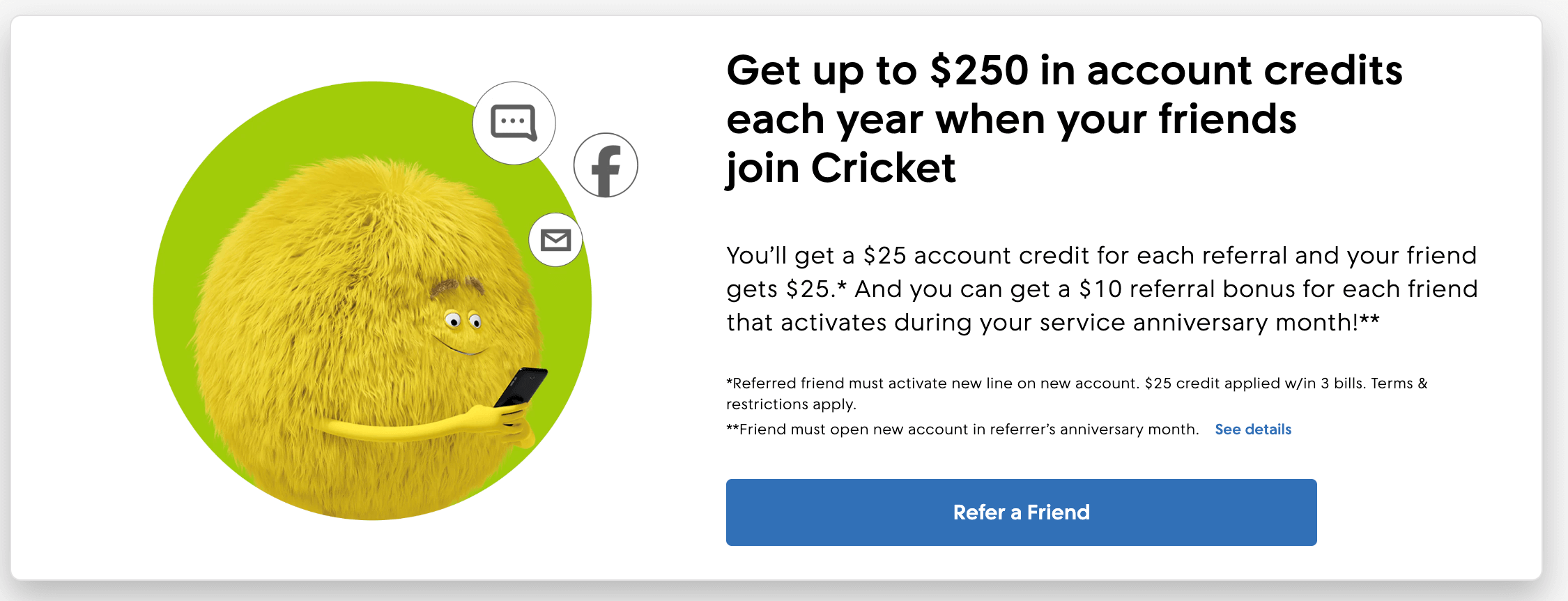
6. Cricket’s Telecom Referral Program Gets Creative With Rewards
Cricket’s referral program boasts a compelling $250 reward–with the unique opportunity to earn more when you refer a friend during your “service anniversary month.” Celebrating customers’ service anniversaries fosters a strong sense of loyalty that helps drive retention and repeat referrals.
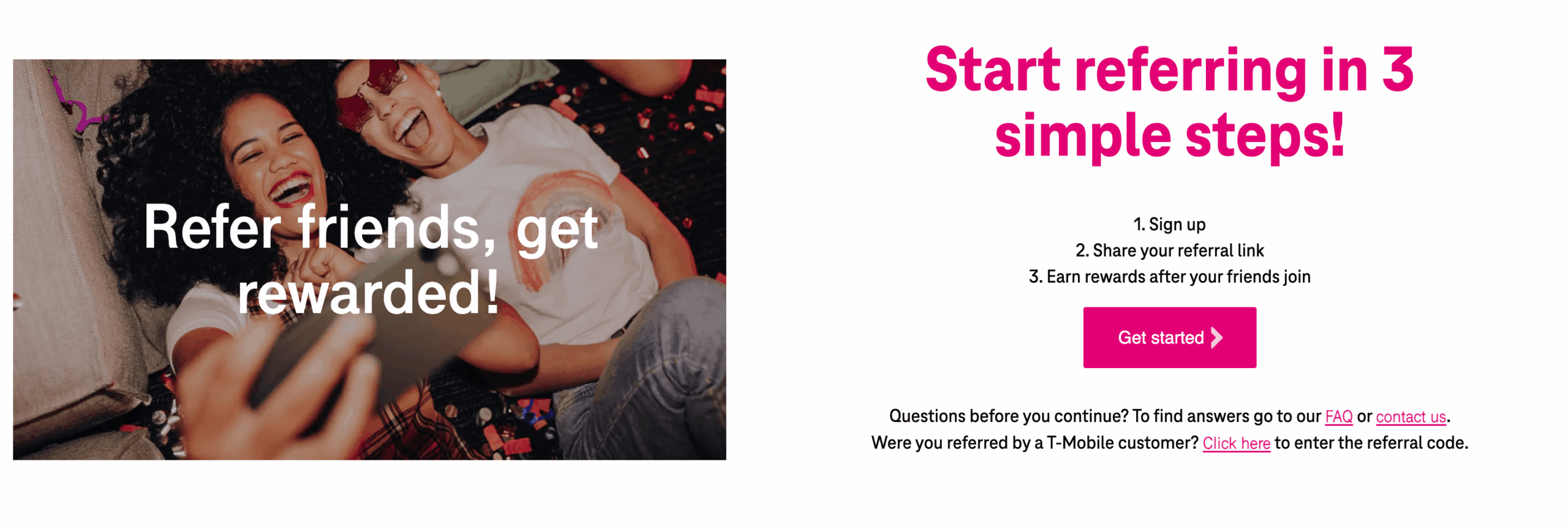
7. T-Mobile’s Telecom Referral Program Makes Earning Look Easy
T-Mobile promotes participation in their referral program by making it look like a no-brainer. Some customers abandon their sign-up at the first sign of friction in the referral process; avoiding unnecessary obstacles makes it more likely that they’ll participate and follow through.
8. Quantum Fiber’s Referral Program Gives Back (In More Ways Than One)
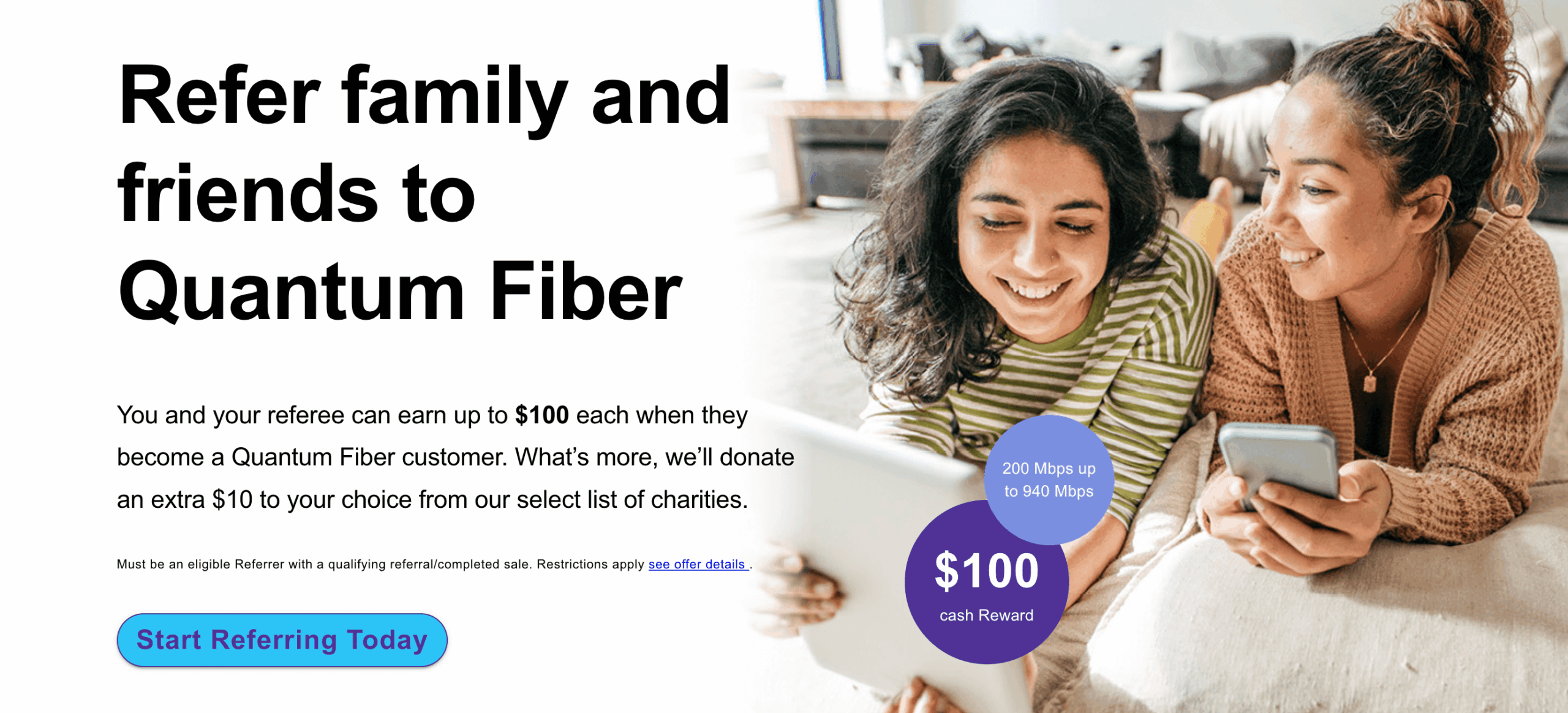
Quantum Fiber distinguishes its referral program by tacking on a charitable donation to its referral reward. Not only do advocates and referred friends get an impressive $100 reward, they also get the joy of knowing that $10 has been donated to a charity of their choice. It’s a creative way to improve goodwill towards your brand while giving back!
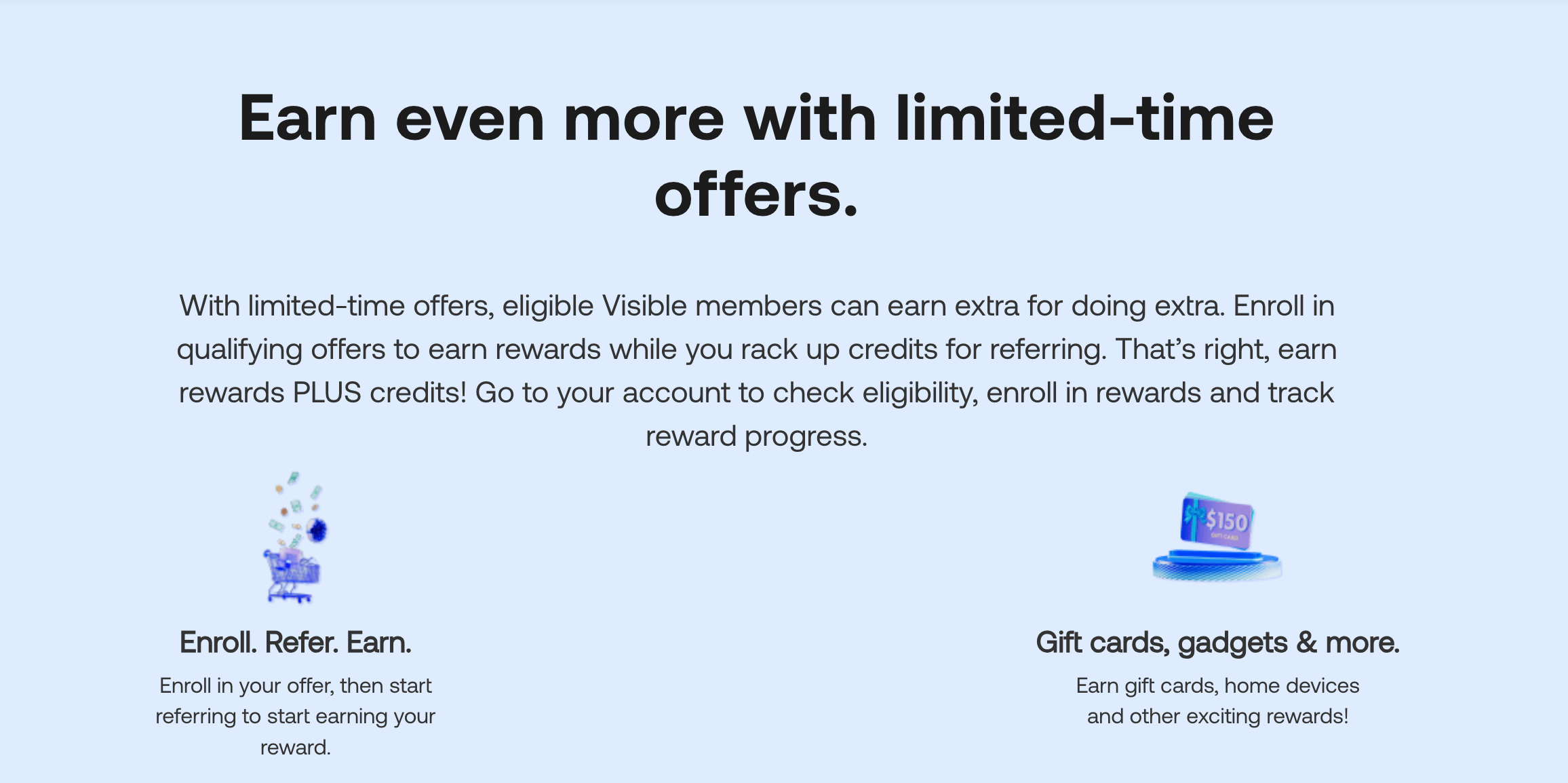
9. Visible’s Referral Program Touts Bonus, Limited-Time Rewards
Mobile carrier Visible by Verizon offers an extra perk to their loyal advocates–members can earn exciting rewards like gift cards and tech gadgets on top of their referral credits. Switching up the rewards you offer can make a program more enticing, especially for customers who are less interested in traditional account credits.

Tips for Launching Your Own Referral Program
If you want to stand out, copy-pasting another telecom brand’s referral program won’t help–but there are some lessons you can apply from these 9 successful programs when building your own:
- Tailor your programs to key audience segments: While most of these programs are open to all subscribers, some have imagery and messaging that is clearly targeted at a specific audience, such as Boost Mobile with their bold, trendy graphics aimed at younger subscribers.
- Find the perfect reward: This diverse list shows that there is no one-size-fits-all approach to the best telecom rewards, so the best way to discover yours is with A/B testing and iterating until you land on the right formula.
- Take referrals offline: Incorporating referrals into your login flow, email series, and website are crucial for capturing online traffic, but you’ll find just as many opportunities for conversion out in the field. A mobile referral app like Go Extole empowers employees and property managers to capture new customers wherever they are.
- Leverage your referral data: When you use referral software with robust tracking and reporting capabilities, you get valuable data every time someone participates in your program. Extole’s dashboard tools help you uncover key customer insights like who your best advocates are, where they’re coming from, and the quality of your referred customers.
Launch Your Referral Program Today with Extole’s Enterprise Referral Software
Ready to launch or scale your telecom referral program? Extole gives your business the tools to build custom referral and engagement programs with automated reward fulfillment, fraud prevention, and sophisticated reporting capabilities. The platform integrates seamlessly with your existing CRM via an open AI and mobile SDKs that make setup simple without sacrificing quality.
Book a demo today to see how we can take your program to the next level.
Telecom Referral Program: FAQs
What is a telecom referral program?
A telecom referral program rewards existing subscribers for referring new customers to a mobile, internet, or fiber provider. Incentives typically include account credits, cash rewards, or bonus perks for both the referrer and the referred friend.
Why are telecom referral programs effective?
They leverage word-of-mouth and trust to lower acquisition costs, improve retention, and drive organic growth more efficiently than paid ads or other traditional channels.
What are the main benefits of a telecom referral program?
- Lower acquisition costs: Referrals deliver high-intent prospects at a fixed, predictable cost.
- Higher retention: Rewarding advocates strengthens loyalty and reduces churn.
- Stronger engagement & field sales: Incentivize employees and partners to refer.
- Cross-sell potential: Encourage line additions and plan upgrades.
What makes a telecom referral program successful?
Clear promotion and easy participation (no friction), compelling rewards, audience-aligned messaging, and reliable tech—automated tracking, fraud prevention, and CRM integration—to fulfill rewards accurately.
What types of telecom referral programs work best?
- Tiered referrals: Bigger rewards as referrals increase.
- Sweepstakes or bonus promos: Time-bound excitement.
- Business & field referrals: Empower property managers, agents, or employees.
- Charitable referrals: Combine customer rewards with donations.
How do telecom brands make their referral programs stand out?
By pairing unique incentives with on-brand creative and clear CTAs—for example, trendy visuals for younger audiences, stackable or limited-time rewards, or donation add-ons to build goodwill.
How should telecom companies measure referral program success?
- Referral volume, conversions, and approval rates
- Lifetime value and churn of referred customers
- Top advocates, sources, and channels
- Reward liability and ROI
Dashboards and reporting in enterprise referral software make this tracking easy.
How can a telecom launch a referral program?
- Identify target segments (subscribers, property managers, partners).
- Define rewards for both referrers and referees.
- Promote across site, app, email, and in-field touchpoints.
- Use enterprise software to automate fulfillment, prevent fraud, and integrate with your CRM.
What are examples of successful telecom referral programs?
Programs from Zentro, Mint Mobile, Verizon, Boost Mobile, US Mobile, Cricket, T-Mobile, Quantum Fiber, and Visible showcase tactics like stackable or tiered rewards, limited-time bonuses, donation tie-ins, and youth-focused creative.
How does referral software like Extole help telecom referral programs?
It powers scalable programs with customizable rewards, automated fulfillment, fraud controls, robust analytics, and integrations (CRM, SDKs) so teams can launch quickly and optimize performance over time.