
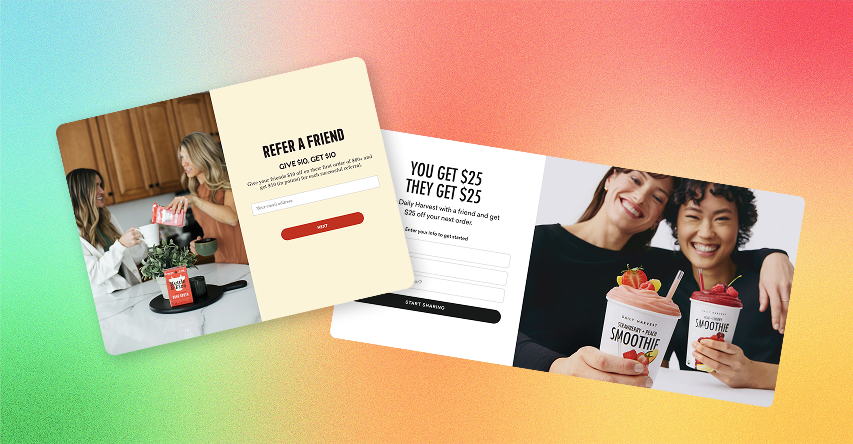

Your best customers already talk about your brand. A referral program gives them a reason to do it more often—and rewards them when those conversations turn into sales.
This guide breaks down 12 ecommerce referral programs that are driving real results, what makes each one effective, and how to apply those lessons to your own program.
Why Ecommerce Brands Invest in Referral Programs
Many of the top ecommerce brands today use double-sided referral rewards to encourage customers to share products with friends. A double-sided reward gives something to both the person sharing (the advocate) and the friend receiving the recommendation. Allbirds, for example, offers $15 off for both people. Casper gives friends 15% off while advocates receive a $75 gift card. American Giant takes a similar approach with 15% off for friends and $15 cash or credit for advocates.
This structure works because both parties benefit from the exchange. When a friend knows they’re getting a real discount, they’re more likely to follow through on the purchase. And when advocates know their friends are also winning, sharing feels less like a sales pitch and more like a genuine recommendation.
For ecommerce brands—where customer acquisition costs now average $68–$84—referral programs offer a few distinct advantages:
- Repeat purchases become more likely: Store credit and discounts give customers a reason to come back, turning one-time buyers into regulars.
- Referred customers often spend more: Someone who arrives through a trusted recommendation already has confidence in the brand, which tends to translate into higher order values over time.
- Trust transfers from friend to brand: A recommendation from someone you know generates more than twice the sales of an ad. That built-in trust shortens the path to purchase.
- Growth compounds over time: Referred customers are more likely to refer others, creating a cycle where each new customer can bring in the next.
What Makes an Ecommerce Referral Program Successful
Before looking at specific examples, it helps to understand what separates programs that perform well from those that don’t get much traction. A few common elements show up again and again in the most effective ecommerce referral programs.
Clear and Compelling Incentives
The reward has to feel worth the effort. For some brands, that’s a percentage discount. For others, it’s store credit, a free product, or a third-party gift card. The key is matching the reward to what your customers actually value, and making the offer easy to understand at a glance.
Simple Sharing Mechanics
The easier it is to share, the more people will do it. The best programs let customers share through unique links, email, social media, or QR codes, all within a few clicks. Friction at this stage tends to reduce participation.
High Visibility Across the Customer Journey
Programs that are tucked away in a footer or hidden deep in account settings rarely get noticed. The most successful brands surface their referral programs at key moments: on the order confirmation page, in the account dashboard, through email, and inside mobile apps.
On-Brand Design and Messaging
A referral experience that looks and sounds like the rest of your brand builds trust. Consistent design and tone help customers feel confident sharing, and help referred friends recognize the brand immediately.
Double-Sided Rewards That Motivate Both Parties
When both the advocate and the friend receive something, conversion rates for referred friends tend to improve. People feel more comfortable sharing when they know their friend is getting a deal too, not just helping them earn a reward.
Highly Integrated for a Seamless Experience
The best referral programs connect directly to your ecommerce platform and marketing tools. Rewards get fulfilled automatically, customer data flows into your CRM, and the experience feels native rather than bolted on. Extole, for instance, integrates with Shopify, BigCommerce, Klaviyo, Braze, and Attentive to support this kind of seamless setup.
Ecommerce Referral Program Examples That Drive Results
Here are 12 ecommerce brands running referral programs worth studying. For each, we’ll look at the incentive structure, what makes the program effective, and a specific tactic worth noting.
Girlfriend Collective
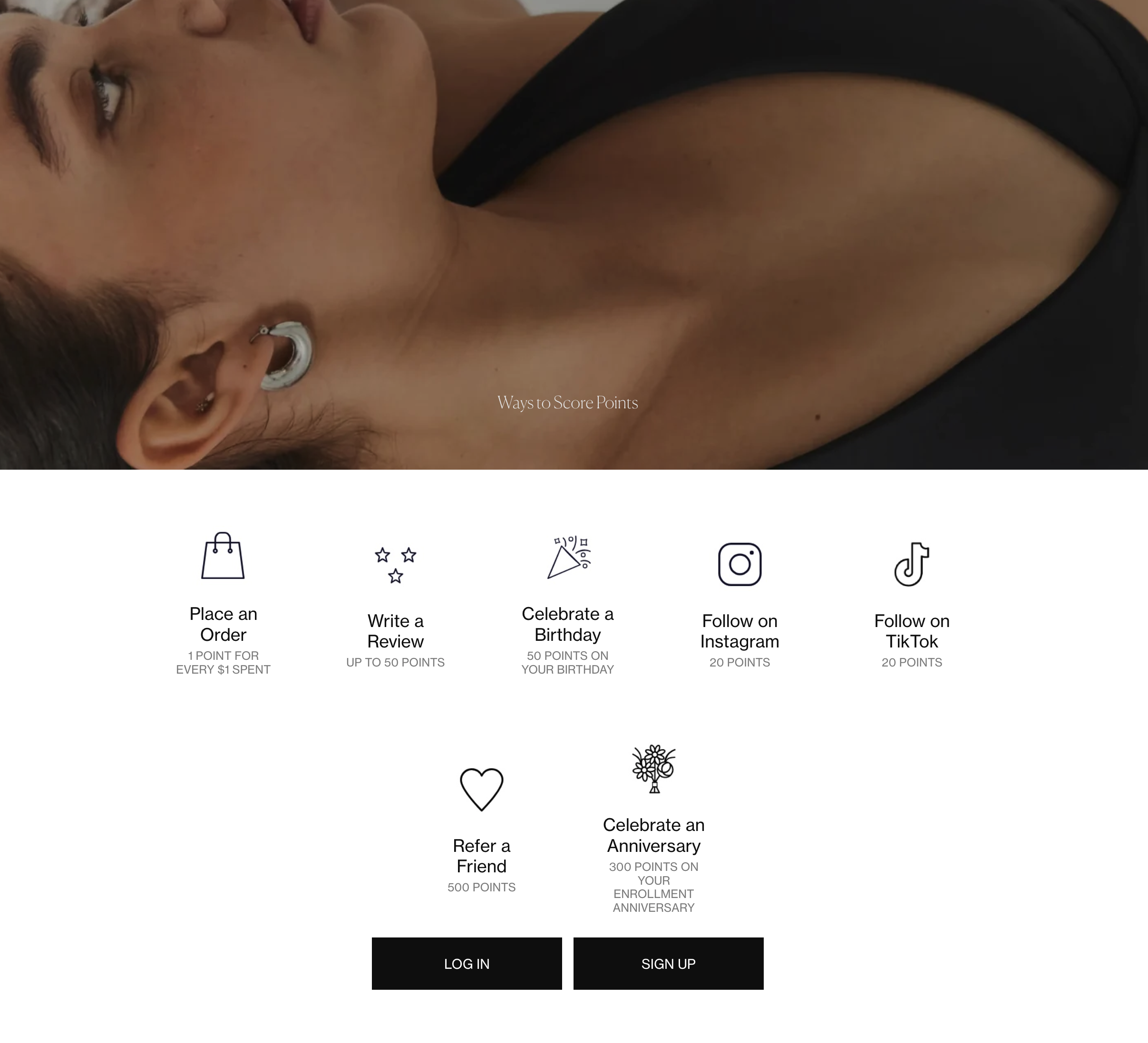
This sustainable activewear brand offers $10 off for both the advocate and the referred friend. What stands out is how the referral messaging reinforces the brand’s eco-conscious identity. Sharing feels like an extension of the brand’s values rather than a transactional ask.
Everlane
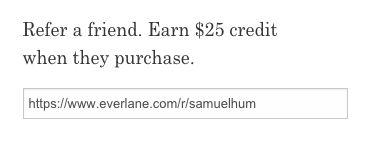
Everlane built its reputation on “radical transparency” in pricing, and the referral program reflects that same ethos. Advocates earn a $25 credit when friends make their first purchase. The offer is straightforward, with no complicated tiers or conditions.
Allbirds
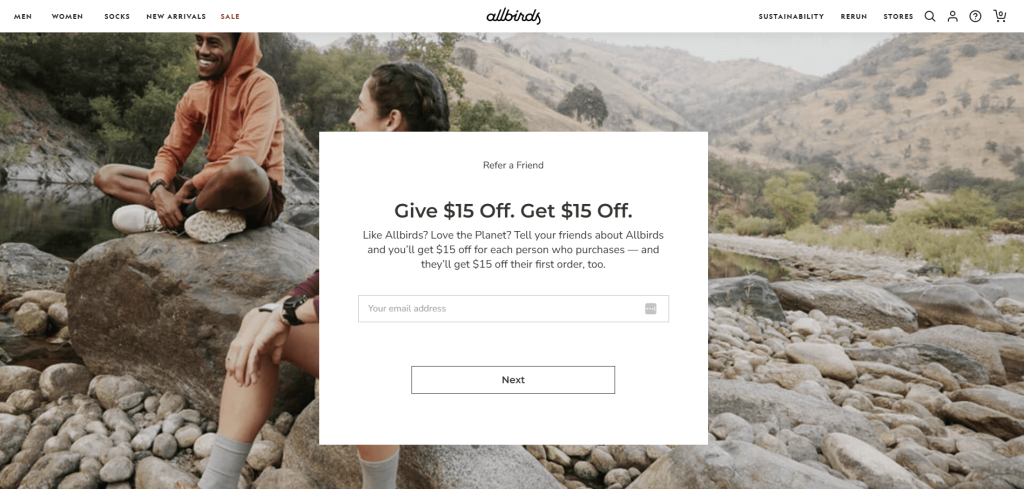
Allbirds runs a simple $15 give / $15 get program. The referral landing page is minimal and well-designed, matching the brand’s aesthetic. Customers immediately understand the offer and can share in seconds.
Glossier
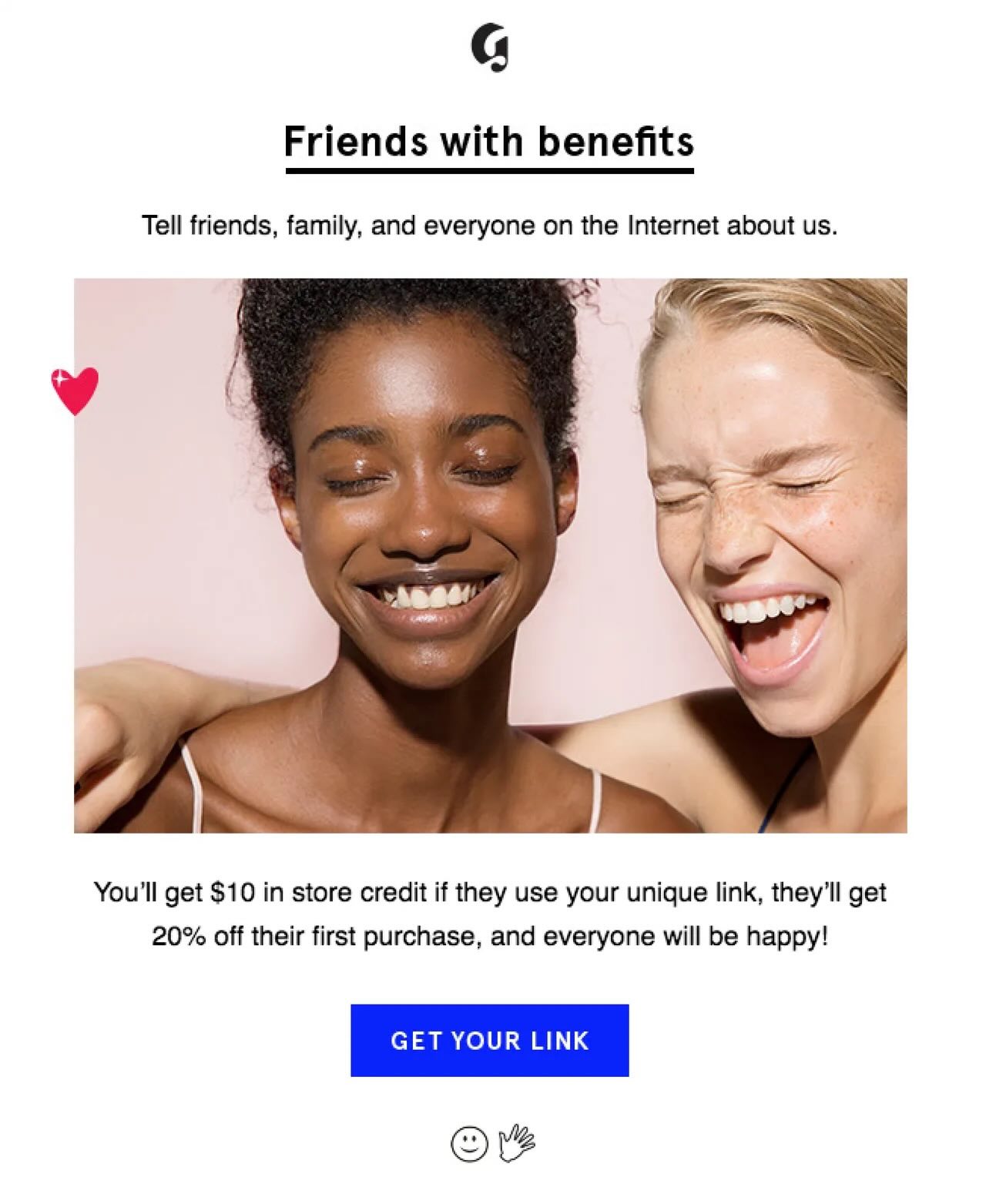
Glossier grew through word-of-mouth from the beginning, so their referral program feels like a natural fit. Advocates share a link, friends get 10% off, and advocates earn store credit. The program mirrors how Glossier customers already talk about the brand.
The Honest Company
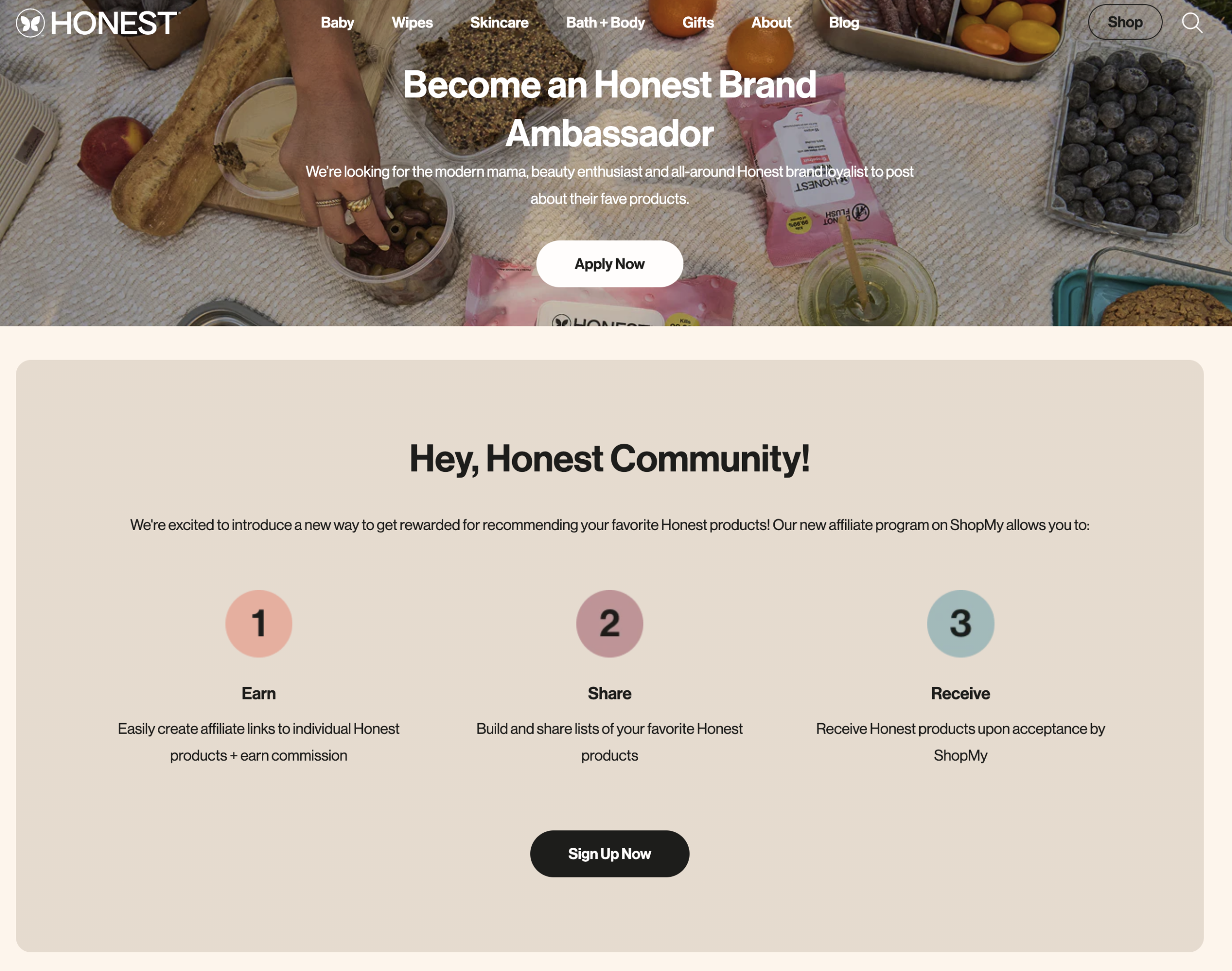
This baby and household brand offers a rewards program that awards points for every dollar spent, encouraging repeat purchases. This model aligns well with the product offering, as customers are likely to return to trusted brands when they run out of their favorite product. An additional affiliate program targets customers interested in sharing the brand in a more systemic way via custom social media links that earn them commission on every conversion. This dual rewards program model gives customers a variety of ways to earn rewards, a critical part of broadening program reach.
Harry’s
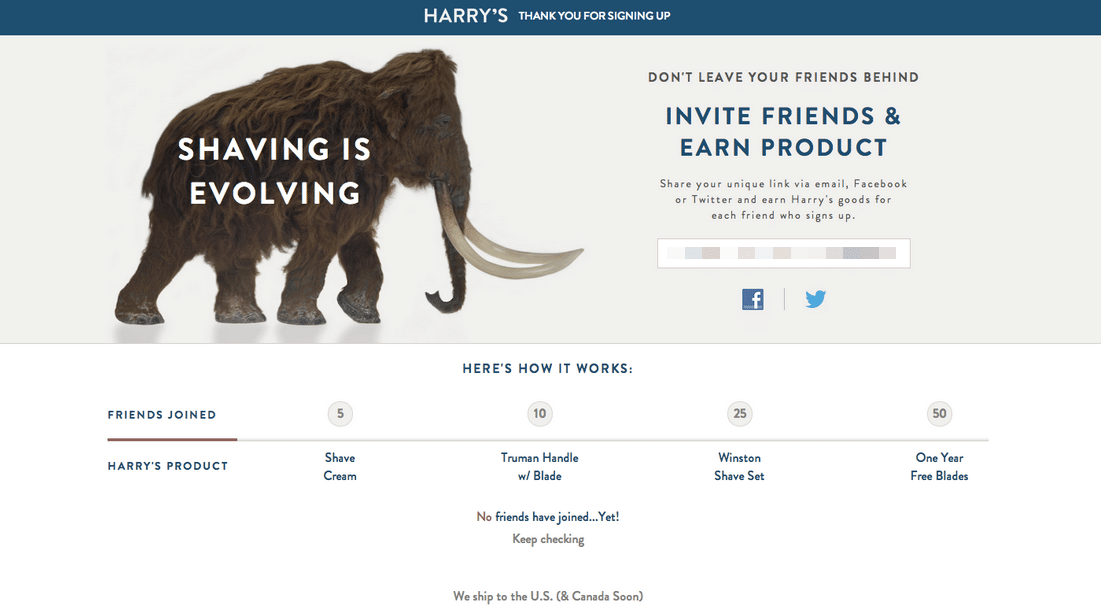
Harry’s became well-known for their viral pre-launch referral campaign. The program used tiered rewards to encourage more shares: the more friends you referred, the bigger the reward. This milestone structure created urgency and drove significant early growth.
Casper
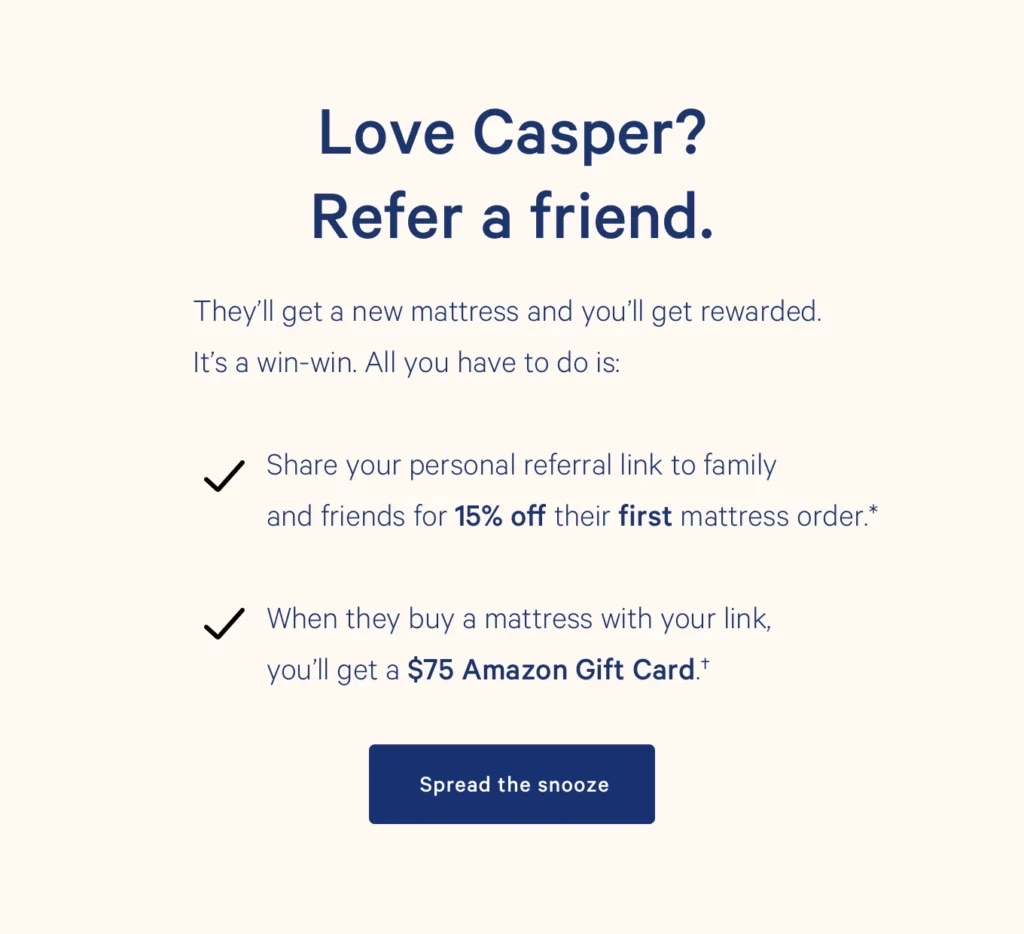
For a high-consideration purchase like a mattress, Casper offers third-party gift cards (like Amazon) as referral rewards rather than store credit. Since most people don’t buy mattresses frequently, a universally useful reward increases the incentive to share.
Brooklinen
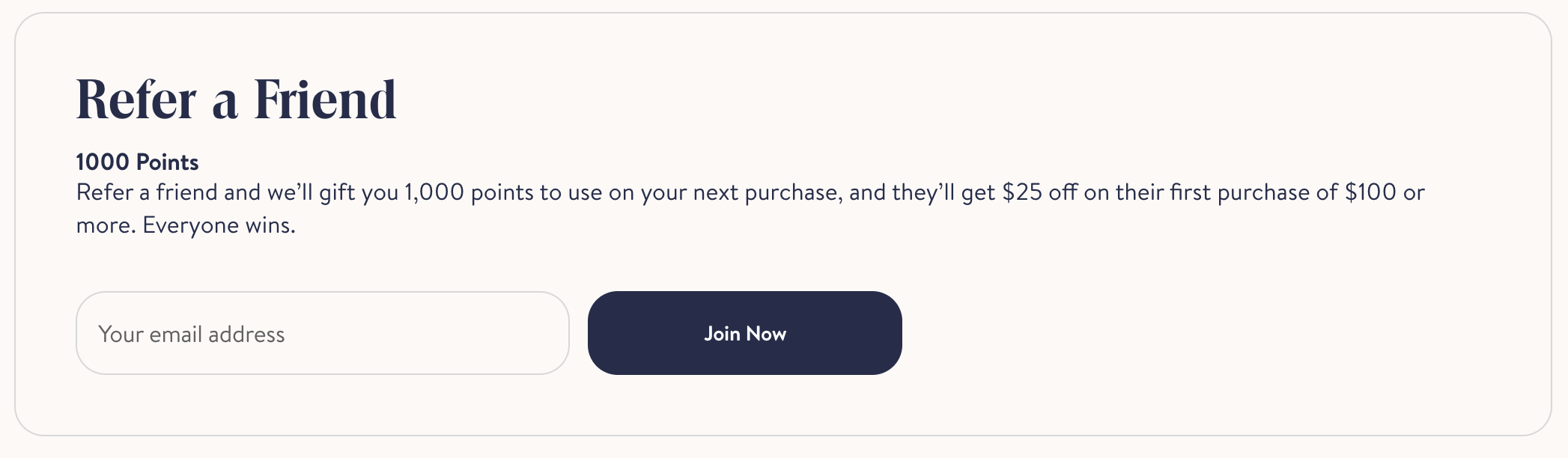
Brooklinen’s referral program feels as approachable as their brand. Friends will receive $25 off their first purchase, while advocates earn points that can be saved up and redeemed on their terms. The program is prominently featured in post-purchase emails when customers are most excited about their new bedding.
The Sill
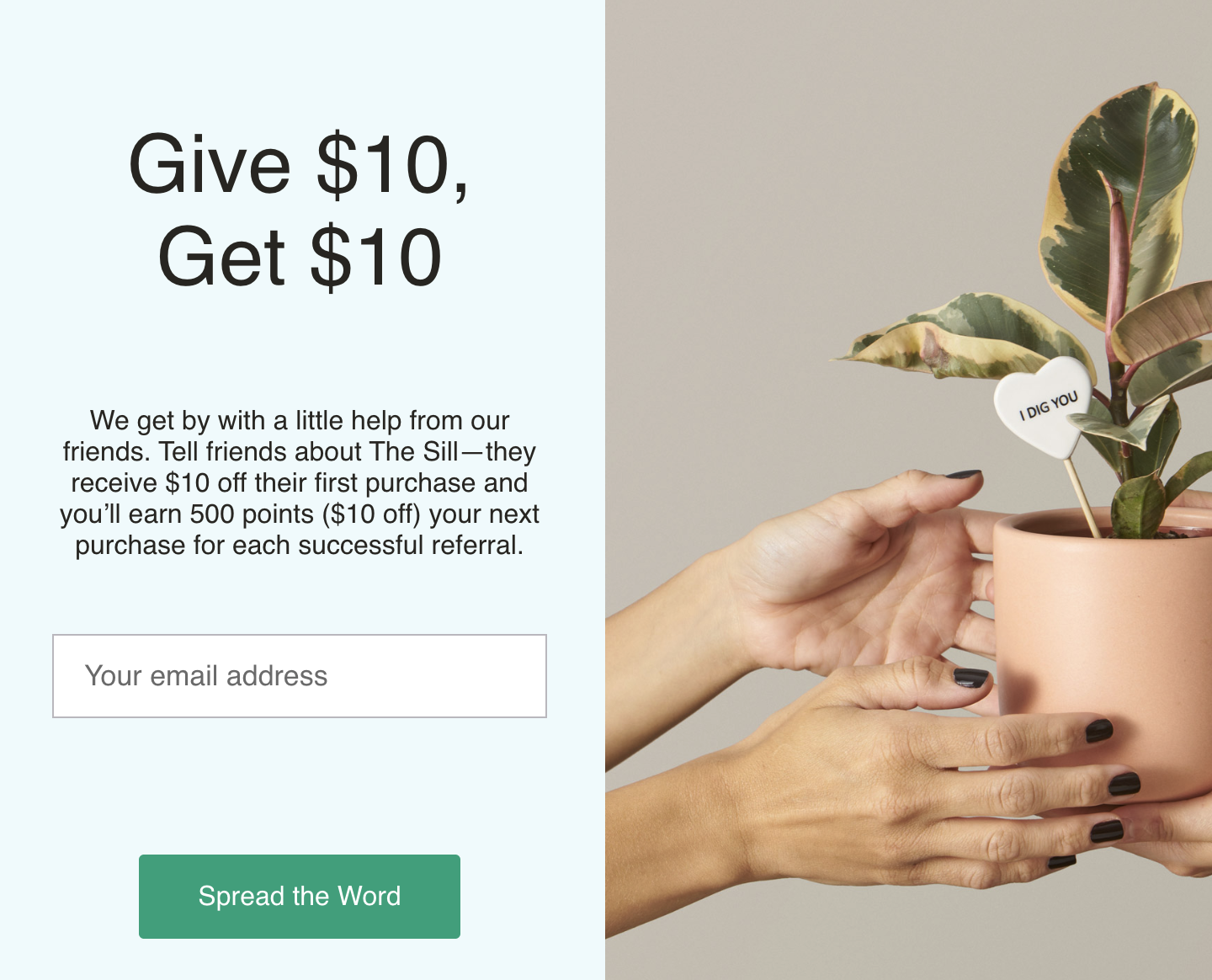
Plant delivery company The Sill uses a visually appealing referral landing page that makes sharing feel fun. The design matches their playful brand personality, and the $10 give / $10 get structure is easy to understand.
Kettle and Fire
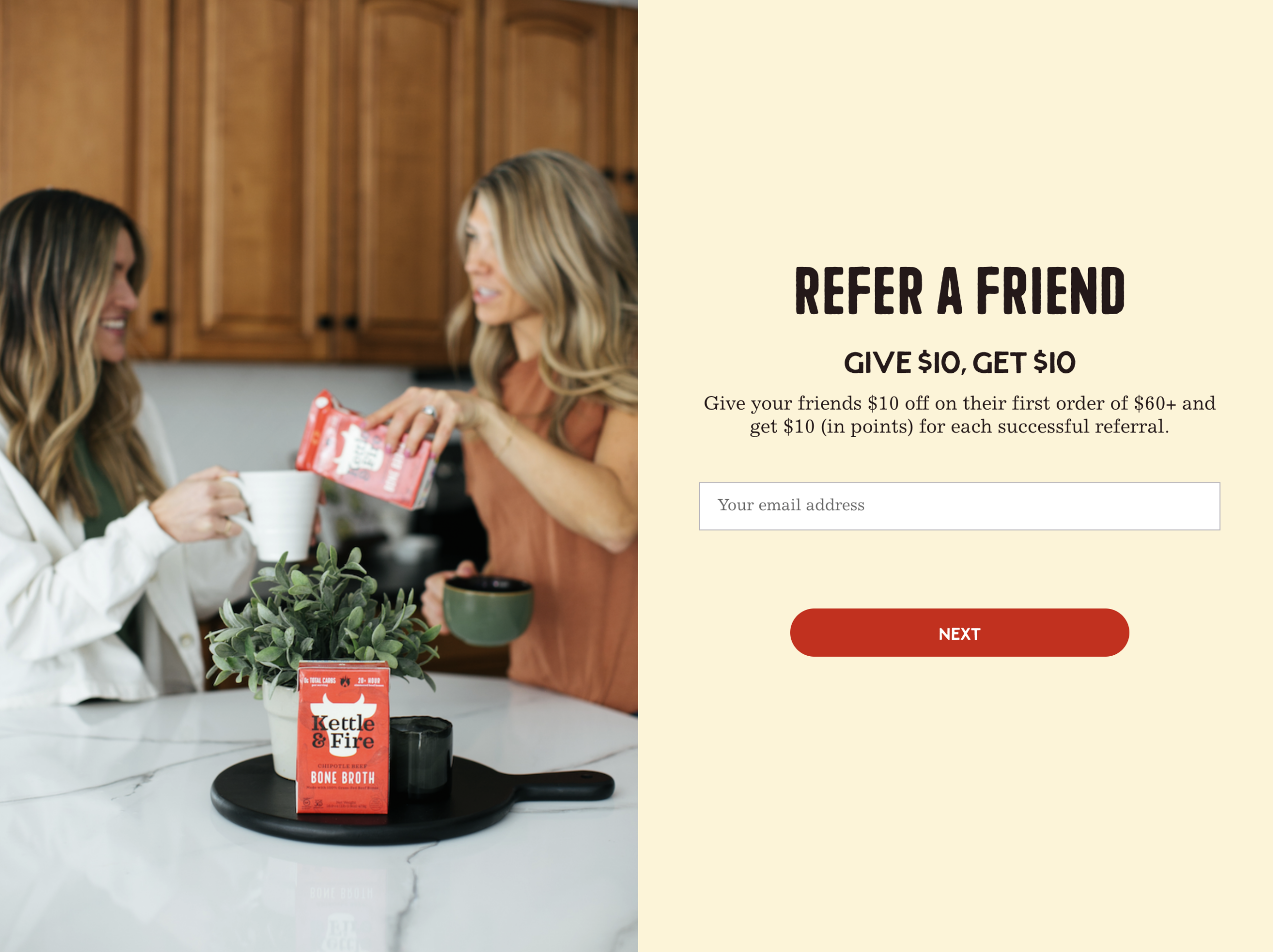
This bone broth subscription brand uses referrals to drive subscription growth rather than one-time purchases. Advocates earn credits toward future subscription orders, which reinforces the recurring purchase model.
Thrive Market
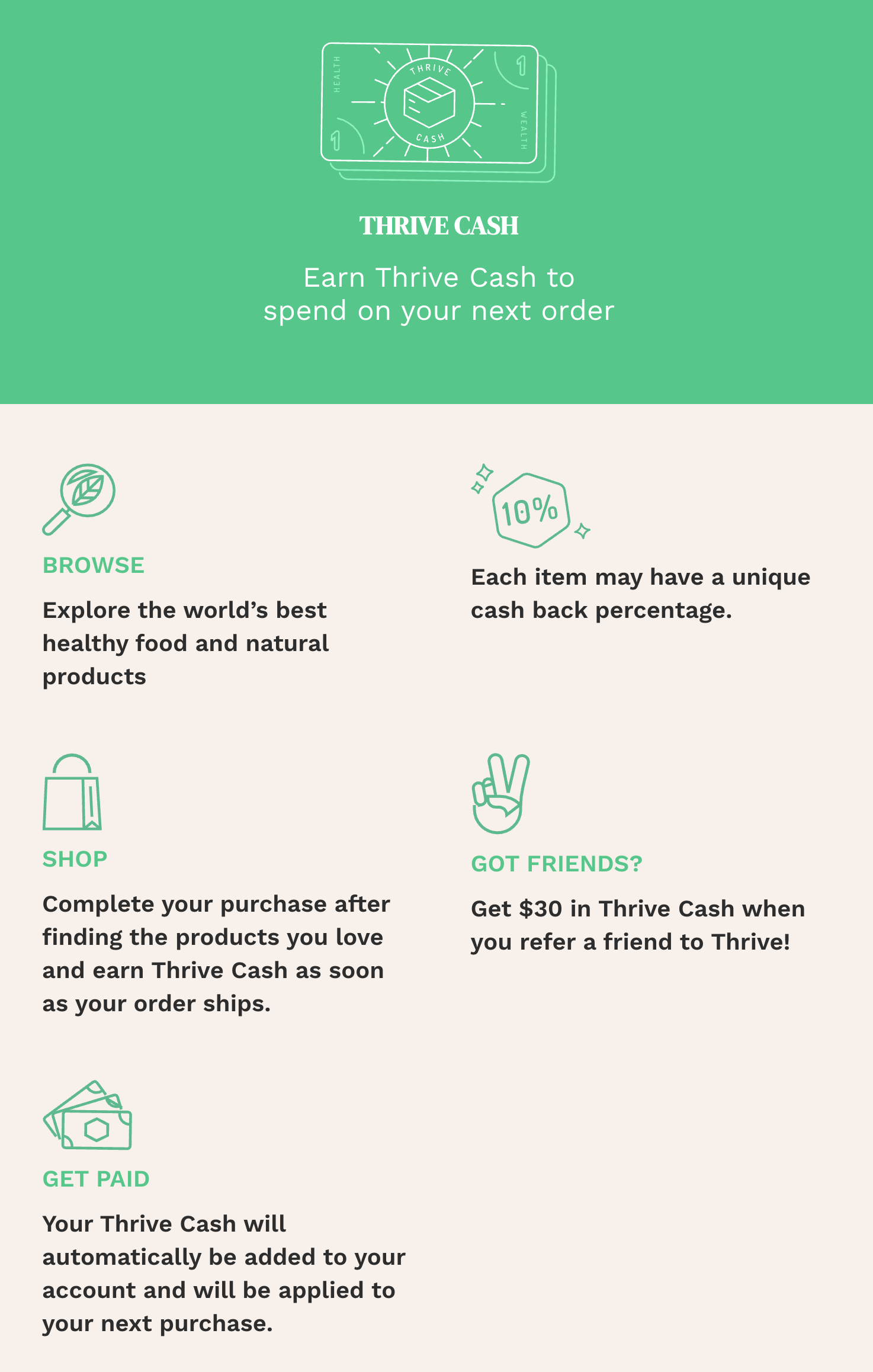
As a membership-based healthy grocery service, Thrive Market uses referrals to reduce friction around their membership model. Advocates can gift free memberships or credits to friends, lowering the barrier to entry. They’ll also receive rewards in the form of “Thrive Cash” to use on future purchases, driving cLTV and longterm loyalty.
Daily Harvest
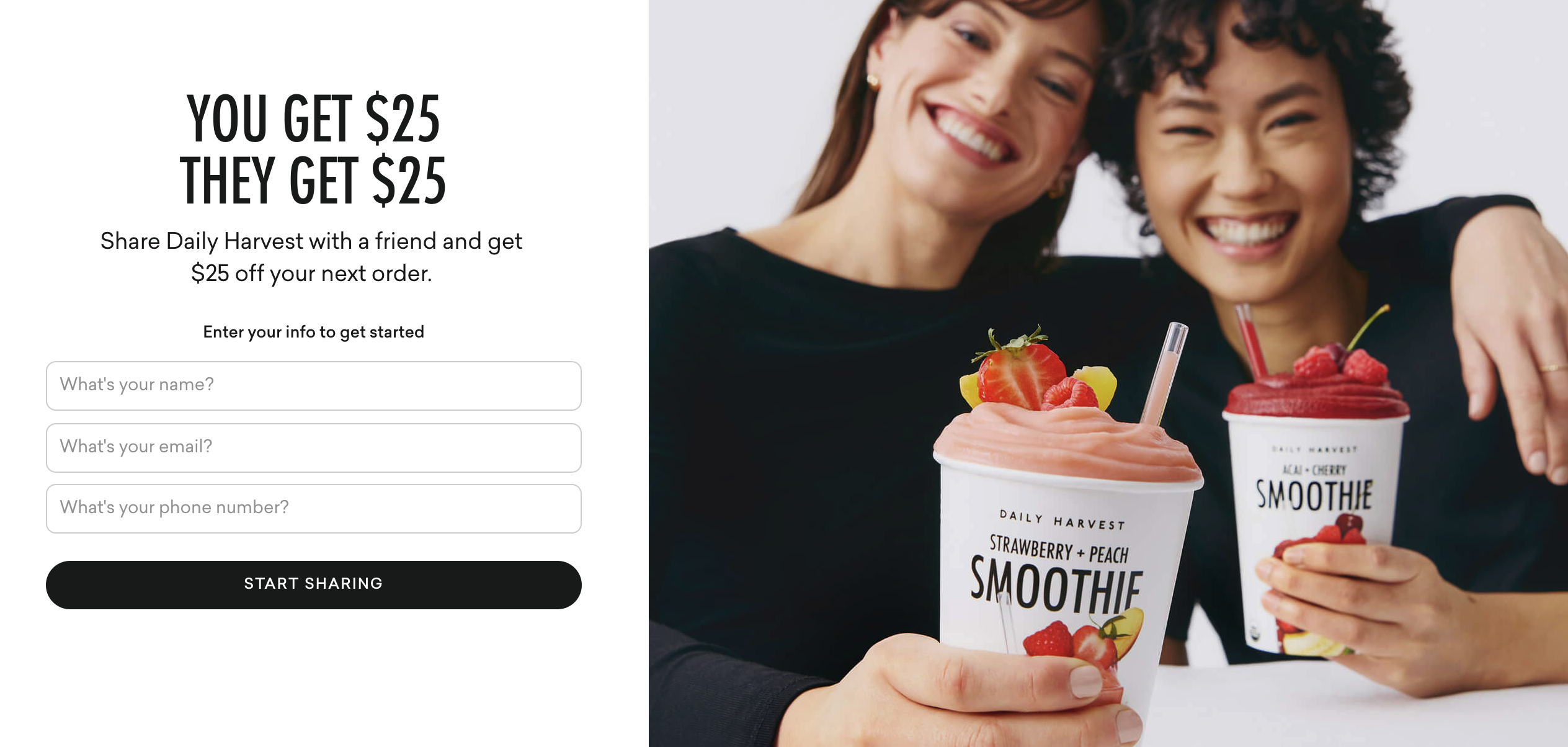
Daily Harvest, the trendy meal delivery service, offers $25 referral credits that apply to future orders, encouraging repeat purchases and subscription retention. The program is integrated directly into their app, making it easy for customers to share between deliveries.
Best Practices for Ecommerce Referral Programs
Looking across the examples above, a few patterns emerge. Here’s what the most effective programs tend to have in common.
Make Your Referral Program Easy to Find
Visibility drives participation. The most successful programs appear at multiple touchpoints throughout the customer journey:
- Post-purchase confirmation pages: This is when customers feel most excited about their purchase.
- Account dashboard: A dedicated referral section gives customers a place to track rewards and share links.
- Email campaigns: Order confirmations, shipping updates, and marketing emails all offer opportunities to promote referrals.
- Mobile app integration: Embedding sharing directly in the app makes it easy for customers to refer on the go.
Match Rewards to Your Customers’ Preferences
The right reward depends on your product and audience.
| Reward Type | Works Well For |
|---|---|
| Store credit | Brands with high repeat purchase potential |
| Percentage discounts | Higher-priced items where a flat dollar amount feels small |
| Free products | Creating excitement and encouraging product trial |
| Third-party gift cards | Products that aren’t frequently repurchased |
Use Clear CTAs and Simple Language
Referral messaging works best when it’s direct and action-oriented. Compare “Participate in our referral program to earn rewards” with “Give $15, Get $15.” The second version tells customers exactly what to do and what they’ll receive.
Test and Optimize Your Referral Offers
Even small changes to incentive amounts, messaging, or placement can affect results. A/B testing helps identify what resonates with your specific audience. Enterprise platforms like Extole include built-in experimentation tools that let teams test without engineering support.
Integrate Referrals Across Email and Mobile
Customers interact with brands across multiple channels. A referral program works best when it meets customers wherever they are. Someone who sees a referral prompt in your app and then receives a reminder email is more likely to share than someone who only encounters the program once.
How to Launch Your Ecommerce Referral Program
If you’re ready to build your own program, here’s a step-by-step framework to guide the process.
1. Define Your Referral Goals and Metrics
Start by clarifying what success looks like. Common KPIs include new customers acquired through referrals, revenue attributed to the program, advocate participation rate, and share-to-conversion rate. Having clear metrics from the beginning makes optimization easier later.
2. Choose Your Incentive Structure
Decide whether you’ll offer single-sided rewards (only the advocate earns) or double-sided rewards (both parties earn). Then choose the reward type and whether rewards are fixed or tiered based on the number of referrals.
3. Integrate with Existing Platforms
The best referral programs connect directly to your ecommerce platform, CRM, and marketing automation tools. This ensures rewards are fulfilled automatically, customer data stays in sync, and the referral experience feels native to your brand.
4. Design Your Referral Experience
Your referral landing page, sharing mechanics, and reward redemption flow all contribute to the customer experience. Prioritize mobile responsiveness, on-brand design, and clear messaging that explains the offer quickly.
5. Promote Your Program Across Channels
Launch with an email announcement to existing customers, add website banners and in-app notifications, and mention the program on social media. Ongoing promotion matters as much as the initial launch.
6. Track Performance and Iterate
Real-time analytics help you understand what’s working and where to improve. Look at advocate participation, share rates, conversion rates, and program ROI. Platforms like Extole provide detailed reporting on advocate behavior and program performance.
Build a Referral Program That Turns Customers Into Advocates
The ecommerce brands seeing the strongest results from referrals treat them as a strategic growth channel rather than a set-it-and-forget-it feature. They invest in programs that feel native to the customer experience, offer rewards that genuinely motivate sharing, and continuously optimize based on real data.
Extole’s enterprise referral platform helps ecommerce brands launch, manage, and optimize referral programs with advanced segmentation, fraud protection, and analytics, all while integrating with your existing tech stack.
FAQs About Ecommerce Referral Programs
What is the best incentive for an ecommerce referral program?
The best incentive depends on your product and customer behavior. Store credit works well for brands with high repeat purchase potential, while discounts or free products may drive higher initial conversion for first-time buyers.
How can ecommerce brands prevent referral fraud?
Enterprise referral platforms include fraud prevention features like identity verification, reward caps, velocity checks, and behavioral analysis. These tools help ensure rewards go to legitimate referrals.
Should ecommerce brands build a referral program in-house or use a platform?
Building in-house requires significant engineering resources for tracking, rewards fulfillment, fraud prevention, and analytics. Enterprise referral platforms provide this infrastructure out of the box, along with ongoing optimization support and integrations.
How do ecommerce brands measure referral program ROI?
ROI is typically measured by comparing customer acquisition cost from referrals to other channels, tracking referred customer lifetime value, and monitoring program participation rates and share-to-conversion metrics.