Blog
Customer EngagementOffer Management
Building Data-Driven Incentive Strategies That Convert
Courtenay Roche


Products
Enterprise platform
Platform features
Acquisition programs
Retention programs
Learn
Resources
Developers
Documentation
SDKs & GitHub
Blog
Courtenay Roche
Customer incentives work best when there is an actual strategy behind them. The difference shows up in conversion rates, customer lifetime value, and whether your rewards budget generates measurable returns or just disappears into discount codes that would have converted anyway. So what do effective incentive strategies look like? This guide covers the core incentive types, a step-by-step framework for building programs that convert, and the data, metrics, and infrastructure that separate high-performing incentive strategies from expensive guesswork.
An incentive strategy aligns financial and non-financial rewards with clear organizational goals to boost engagement, productivity, and retention. Rather than handing out random discounts or year-end bonuses, a thoughtful incentive strategy determines exactly who receives what reward, when they receive it, and under what conditions. Here's a simple way to think about the terminology:
The distinction between these three terms can be broken down even more simply: An incentive is like a carrot; a strategy is the plan for using that carrot to drive specific outcomes; and a program is how you actually make it happen day-to-day. Companies with structured incentive plans see 79% higher engagement than those relying on traditional bonuses alone. That gap comes down to intentionality—when rewards connect directly to behaviors that matter, customers and employees alike respond differently.
Different incentive types serve different purposes. The right choice depends on where customers are in their journey and what action you want them to take next.
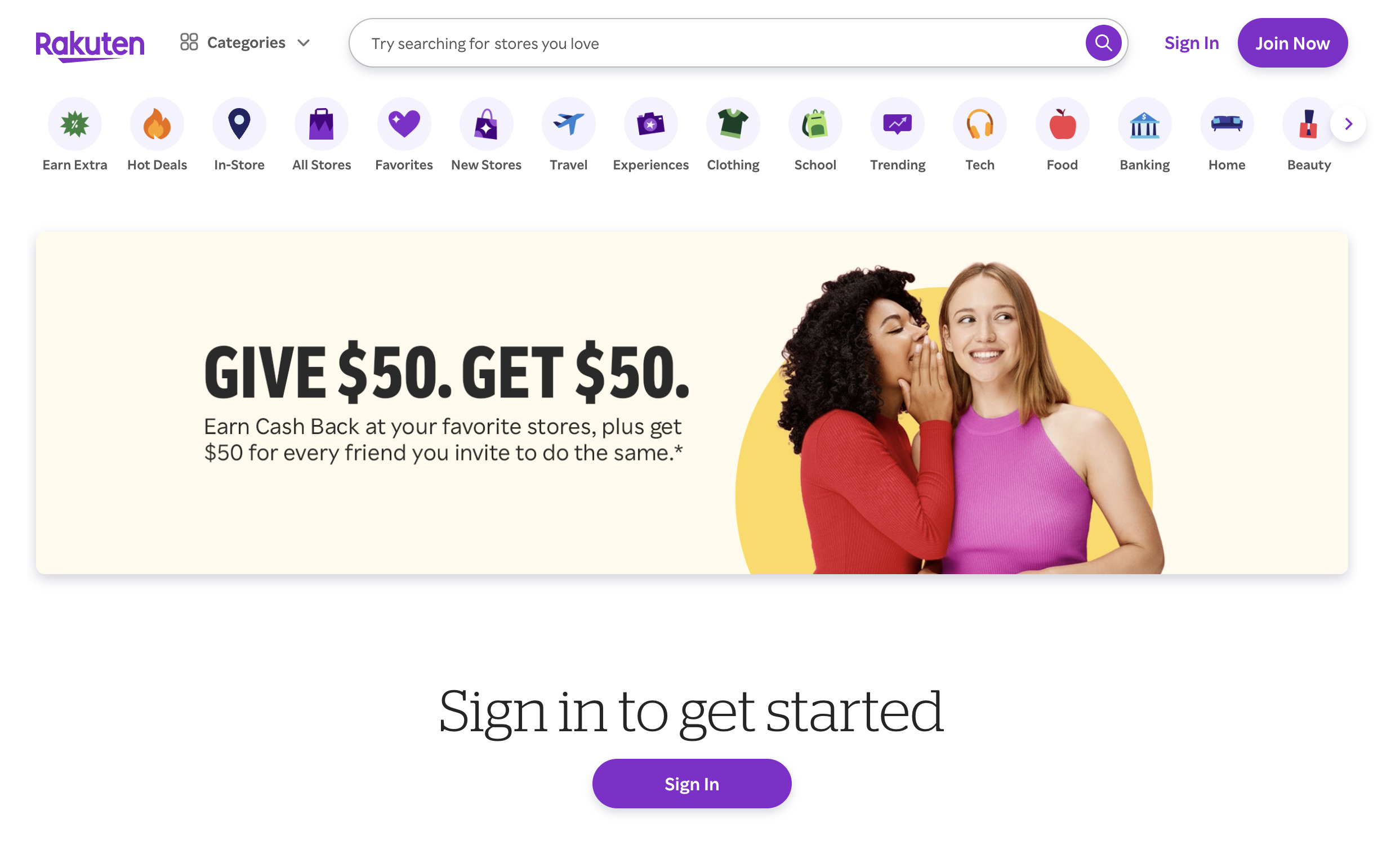 Referral incentives reward existing customers for bringing in new ones. The most effective versions offer two-sided rewards, like the example above from Rakuten, meaning that both the advocate and the referred friend receive something valuable. This creates a natural motivation for both parties in the transaction.
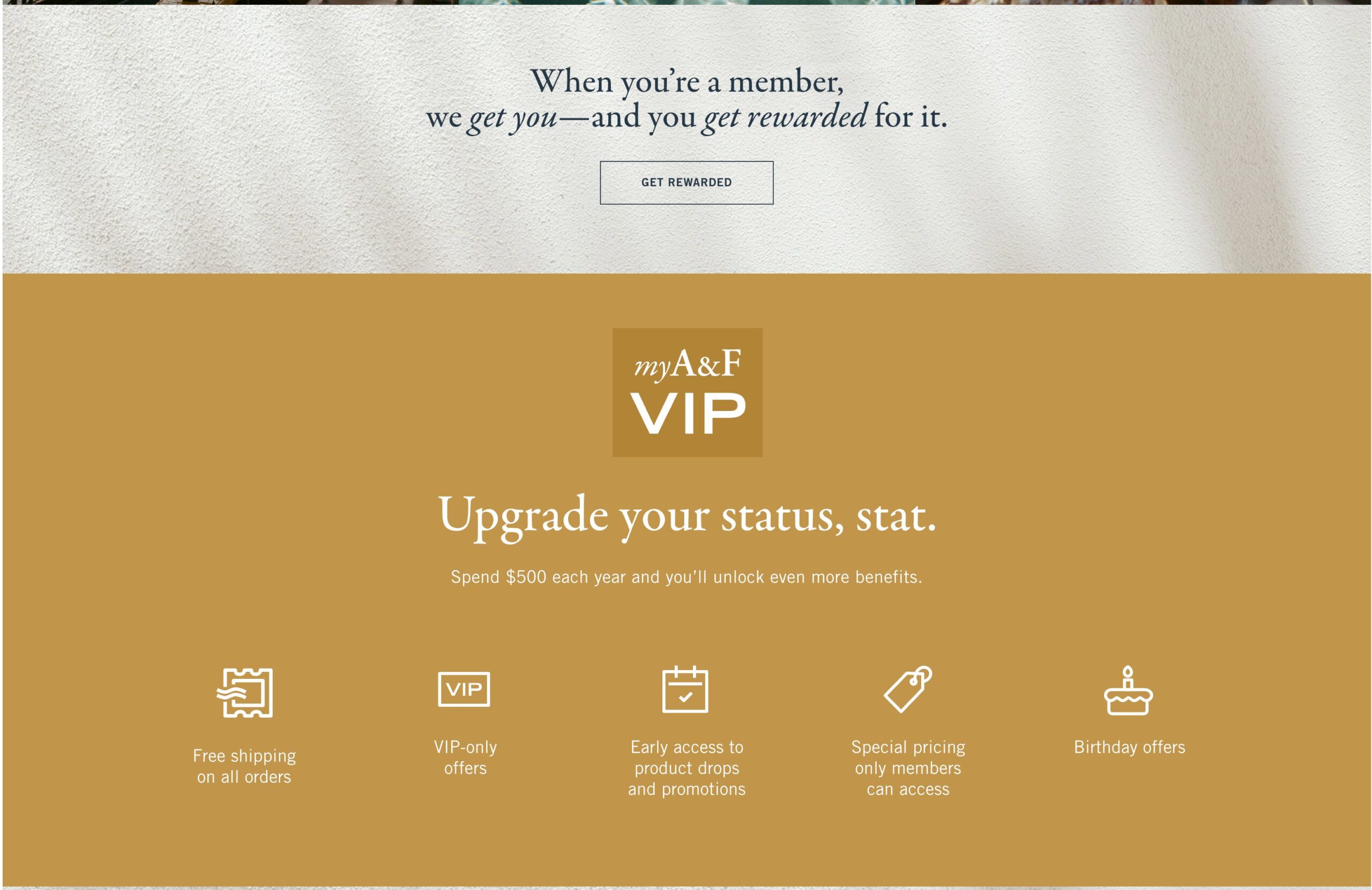 Loyalty incentives reward customers for engagement and advocacy over time. This often looks like reward points that accumulate, tiered benefits, or exclusive perks for long-term customers, as shown in this example from retailer Abercrombie & Fitch. Customers who are enrolled in a brand's loyalty program are 70% more likely to continue purchasing from that brand, so the focus here is retention and lifetime value rather than acquisition.
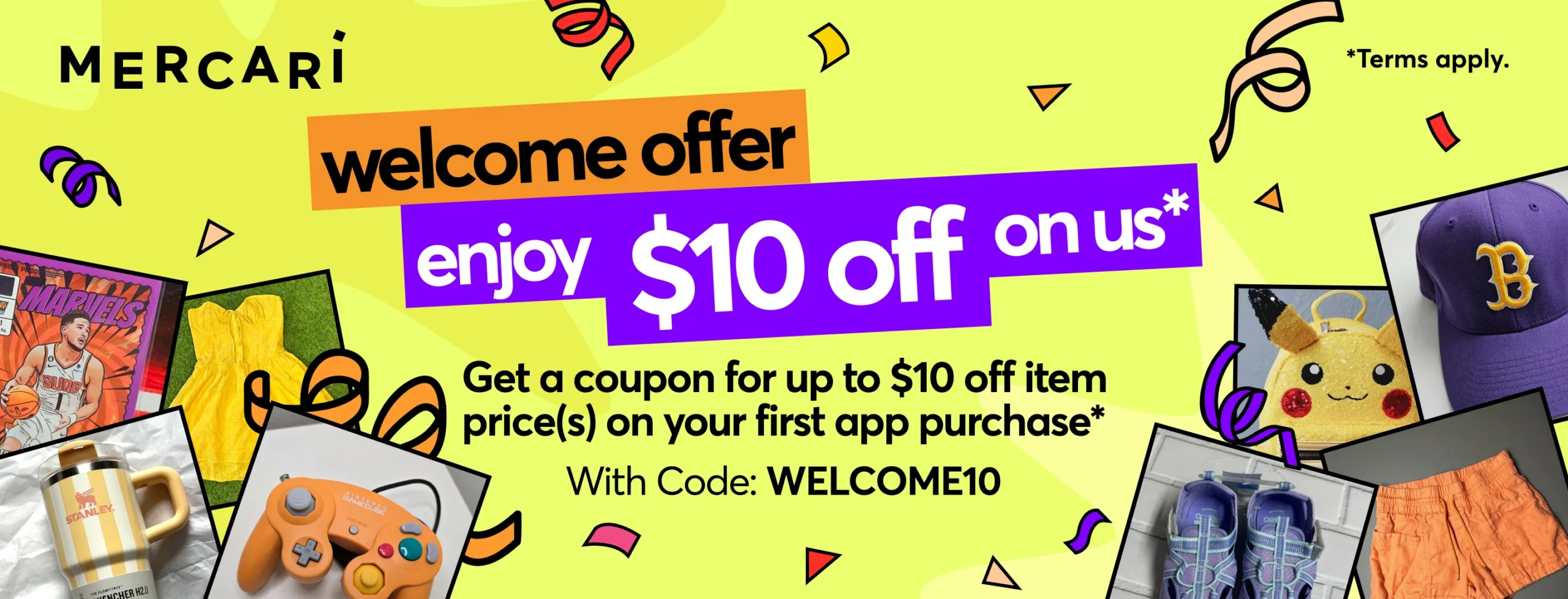 Welcome offers target first-time customers with time-sensitive incentives. A signup bonus, a first-purchase discount, or a limited-time promotion creates urgency and reduces friction for new customers deciding whether to take that first step.
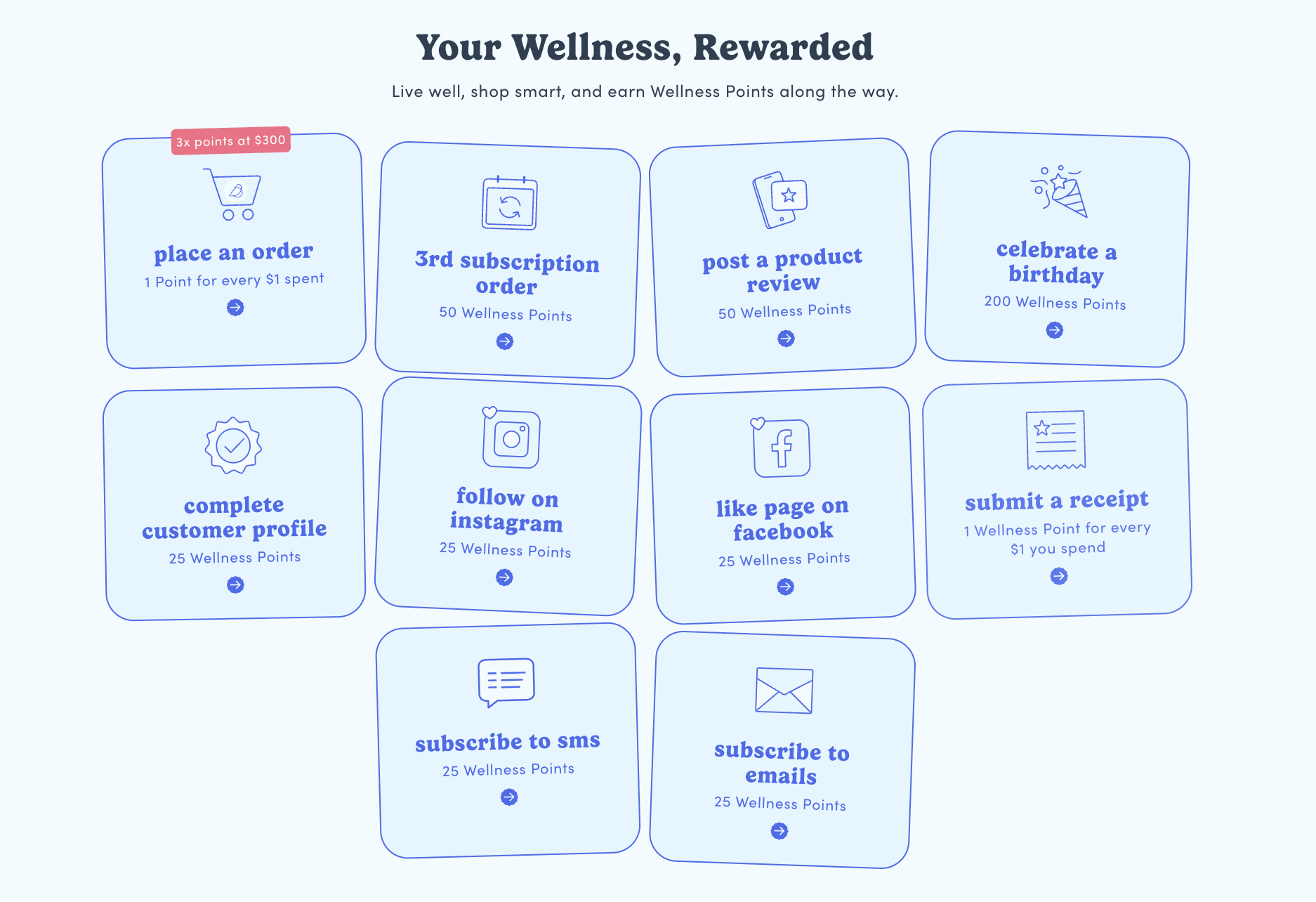 Event-triggered incentives fire when customers complete specific actions, such as filling out a profile, leaving a review, renewing a subscription, or reaching an account anniversary. The connection between behavior and reward is immediate and clear. In the example above, lifecycle rewards are tied to a points-based loyalty strategy, with each action worth a preassigned number of wellness points.
 Ambassador programs engage high-value customers or influencers who promote your brand on an ongoing basis. Unlike one-time referrals, ambassador relationships involve sustained engagement and often include elevated rewards, exclusive access, or public recognition. Bumble's "Bumble Honey" program is an example of an effective ambassador strategy with highly recognizable branding that drives widespread brand awareness. Incentive Type Ambassador programs engage high-value customers or influencers who promote your brand on an ongoing basis. Unlike one-time referrals, ambassador relationships involve sustained engagement and often include elevated rewards, exclusive access, or public recognition. Bumble's "Bumble Honey" program is an example of an effective ambassador strategy with highly recognizable branding that drives widespread brand awareness. Incentive Type |
Primary Goal | Typical Trigger |
|---|---|---|
| Referral | Acquisition | Customer shares with friend |
| Loyalty | Retention | Repeat purchase or engagement |
| Welcome Offer | Conversion | First visit or signup |
| Lifecycle | Engagement | Specific behavior completed |
| Ambassador | Advocacy | Ongoing brand promotion |
Building an effective incentive strategy follows a logical sequence. Each step builds on the one before it.
Start by identifying whether you're optimizing for acquisition, retention, engagement, or reactivation. A referral program serves acquisition. A loyalty program serves retention. Clarity at this stage prevents wasted effort later.
Specify the exact customer action you want to incentivize. "Complete first purchase" is measurable. "Engage more" is not. The behavior you choose to reward shapes everything else about program design.
New customers, loyal customers, and at-risk customers respond to different offers. A first-time buyer might respond to a welcome discount, while a long-term customer might prefer exclusive early access. Using customer data to match offers to audiences consistently outperforms one-size-fits-all approaches.
Match the reward to the audience and behavior. Options include discounts, cash rewards, points, exclusive access, or gift cards. What motivates a first-time buyer often differs from what motivates someone who's been with you for years.
Define who qualifies, what conditions trigger fulfillment, and how rewards get delivered. Configurable rules allow programs to adapt as business priorities shift, without requiring engineering resources for every change.
Pilot programs with a subset of customers before full rollout. Run A/B tests, gather performance data, identify friction points, and refine based on results. The best incentive strategies improve continuously through ongoing optimization.
Data transforms generic offers into targeted, relevant incentives. Personalization separates high-performing programs from underperformers.
Real-time events can trigger personalized incentives automatically. Cart abandonment, account anniversaries, and service completions all represent moments where a timely, relevant offer can influence behavior. When a customer takes a specific action (or fails to), the system responds with an appropriate incentive.
Segmenting by purchase history, engagement level, or demographic data enables different incentives for different customer groups. A high-value customer might receive exclusive early access, while a lapsed customer might receive a reactivation offer. The same reward rarely works equally well for everyone.
Incentives can be delivered contextually across web, mobile, email, and in-app experiences based on customer behavior and channel preference. Consistency across touchpoints reinforces the offer and increases the likelihood that customers actually redeem it. Key data sources for personalization include:
Measuring success requires tracking specific KPIs tied to program goals. Different metrics answer different questions about program health.
Conversion rate measures the percentage of customers who complete the incentivized action. Redemption rate tracks how many earned rewards are actually claimed. Low redemption often signals friction in the fulfillment process or rewards that don't resonate with the audience.
Calculate the total cost of acquiring customers through incentive programs, including rewards, operations, and technology. Then compare that cost against customer lifetime value. Programs that acquire high-value customers at reasonable cost compound over time.
Track repeat purchase rate, program participation rate, and customer retention among incentivized customers versus non-incentivized customers. These metrics reveal whether incentives drive lasting behavior change or just one-time actions.
Monitoring suspicious activity, duplicate accounts, and reward abuse protects incentive spend. Programs without proper controls can lose significant value to fraud. Enterprise platforms use rules-based systems to validate that each incentive is earned legitimately before fulfillment occurs.
Even well-intentioned programs can underperform. Here are patterns worth recognizing.
Blanket discounts underperform compared to targeted, relevant incentives. McKinsey found that personalization can lift revenues by 5 to 15%, and using customer data to personalize offers, even through simple segmentation, consistently improves conversion and redemption rates.
Programs without proper verification lose value to abuse. Implementing eligibility rules, duplicate detection, and reward authorization controls protects program integrity and budget.
Incentives without clear KPIs cannot demonstrate ROI. Tying every program to specific, trackable goals enables optimization and justifies continued investment.
Managing eligibility, fulfillment, attribution, and reporting at scale requires robust infrastructure. Using a platform designed for incentive program management reduces operational burden compared to building custom solutions from scratch.
Enterprise incentive strategies require technical foundations that support complexity, scale, and reliability.
APIs and SDKs connect incentive programs to existing customer systems like CRMs, CDPs, commerce platforms, and mobile apps. Developer-ready platforms with comprehensive documentation enable teams to embed incentives directly into digital experiences rather than treating them as standalone campaigns.
Configurable offer logic allows teams to create business-specific programs without custom development for every change. Eligibility rules, reward authorization, and fulfillment workflows can all adapt as programs evolve. Platforms like Extole provide this flexibility while remaining accessible to both marketers and developers.
Programs involving financial rewards require permissions, audit trails, and compliance controls. Deterministic execution, where the same inputs always produce the same outputs, builds trust and enables governance at scale.
Effective incentive strategies are not one-time campaigns. They're ongoing programs that compound over time, turning customers into advocates and advocacy into sustainable growth. The shift from transactional discounts to strategic customer engagement requires the right infrastructure. When incentives are personalized, properly governed, and tied to measurable outcomes, they become a reliable growth lever rather than a cost center. Request a demo to see how configurable offer infrastructure can support complex incentive programs across your customer lifecycle.
The four main types are monetary incentives (cash, discounts, credits), reward-based incentives (points, gift cards), experiential incentives (exclusive access, early releases), and recognition-based incentives (status tiers, public acknowledgment). Most effective programs combine multiple types based on audience preferences.
Calculate ROI by comparing the total cost of the incentive program against the incremental revenue or customer value generated. Track metrics like customer acquisition cost, redemption rates, and lifetime value of incentivized customers versus non-incentivized customers.
Yes, effective incentive strategies deliver consistent offers across web, mobile, email, in-app, and even offline channels. This requires infrastructure that can personalize and track incentives in real time regardless of where the customer engages.
Fraud prevention requires eligibility verification, duplicate detection, reward authorization controls, and audit trails. Enterprise platforms use rules-based systems to validate that each incentive is earned legitimately before fulfillment occurs.
Referral incentives reward customers for bringing in new customers, focusing on acquisition at a 5–10x lower cost than paid channels. Loyalty rewards incentivize repeat behavior from existing customers, focusing on retention and engagement. Many brands use both as part of a comprehensive incentive strategy.

For most B2C brands, lower customer acquisition costs and higher retention rates are the driving force behind every marketing decision. The best referral programs accomplish…

Credit unions are built on the trust of their member communities. As such, they are uniquely positioned to leverage the benefits of word-of-mouth growth by building an…

A referral channel is simply the pathway an existing customer uses to recommend your brand to a friend or family member. Each share channel behaves differently, and the most…